
Paper List
-
A Unified Variational Principle for Branching Transport Networks: Wave Impedance, Viscous Flow, and Tissue Metabolism
This paper solves the core problem of predicting the empirically observed branching exponent (α≈2.7) in mammalian arterial trees, which neither Murray...
-
Household Bubbling Strategies for Epidemic Control and Social Connectivity
This paper addresses the core challenge of designing household merging (social bubble) strategies that effectively control epidemic risk while maximiz...
-
Empowering Chemical Structures with Biological Insights for Scalable Phenotypic Virtual Screening
This paper addresses the core challenge of bridging the gap between scalable chemical structure screening and biologically informative but resource-in...
-
A mechanical bifurcation constrains the evolution of cell sheet folding in the family Volvocaceae
This paper addresses the core problem of why there is an evolutionary gap in species with intermediate cell numbers (e.g., 256 cells) in Volvocaceae, ...
-
Bayesian Inference in Epidemic Modelling: A Beginner’s Guide Illustrated with the SIR Model
This guide addresses the core challenge of estimating uncertain epidemiological parameters (like transmission and recovery rates) from noisy, real-wor...
-
Geometric framework for biological evolution
This paper addresses the fundamental challenge of developing a coordinate-independent, geometric description of evolutionary dynamics that bridges gen...
-
A multiscale discrete-to-continuum framework for structured population models
This paper addresses the core challenge of systematically deriving uniformly valid continuum approximations from discrete structured population models...
-
Whole slide and microscopy image analysis with QuPath and OMERO
使QuPath能够直接分析存储在OMERO服务器中的图像而无需下载整个数据集,克服了大规模研究的本地存储限制。
Vessel Network Topology in Molecular Communication: Insights from Experiments and Theory
Friedrich-Alexander-Universität Erlangen-Nürnberg (FAU)
30秒速读
IN SHORT: This work addresses the critical lack of experimentally validated channel models for molecular communication within complex vessel networks, which is a prerequisite for designing reliable biomedical applications.
核心创新
- Methodology Proposes a novel, comprehensive channel model for molecular communication in vessel networks, incorporating advection, molecular/turbulent diffusion, and adsorption/desorption at vessel walls.
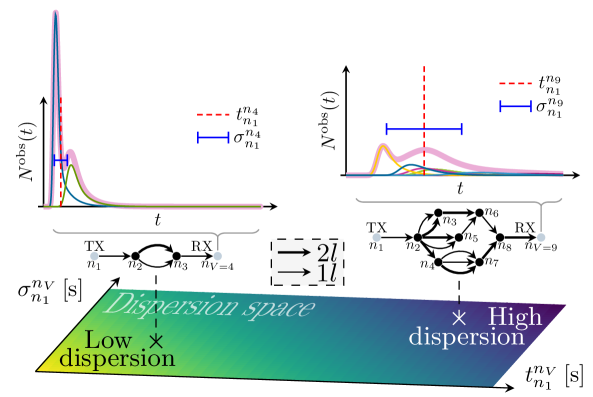
- Methodology Introduces two novel metrics—molecule delay and multi-path spread—to quantify the impact of vessel network topology on signal dispersion and the resulting signal-to-noise ratio (SNR).
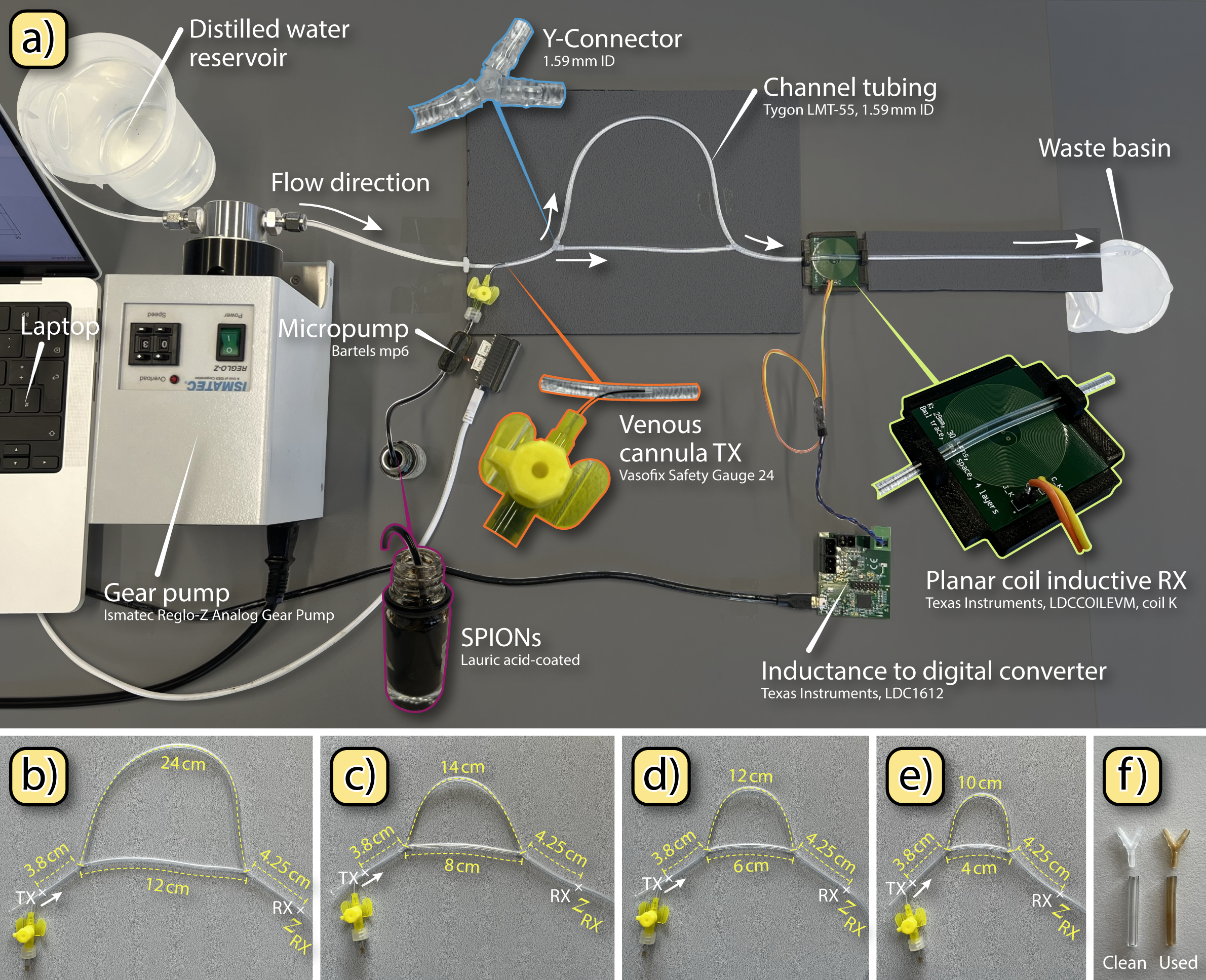
- Methodology Provides the first end-to-end experimental validation of a molecular communication model in branched vessel network topologies using a dedicated SPION (superparamagnetic iron-oxide nanoparticle) testbed.
主要结论
- The proposed channel model, validated against experimental data from branched topologies, accurately captures key transport dynamics (advection, diffusion, sorption) in vessel networks.
- The introduced metrics (molecule delay, multi-path spread) successfully establish a quantifiable link between vessel network structure and the resulting signal-to-noise ratio (SNR) at the receiver.
- The framework enables practical applications such as optimizing sensor placement in the cardiovascular system under specific SNR constraints and guiding the design of experimental testbeds.
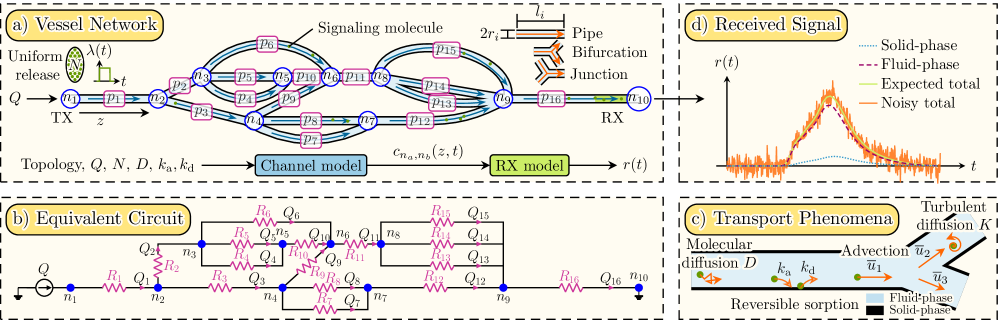
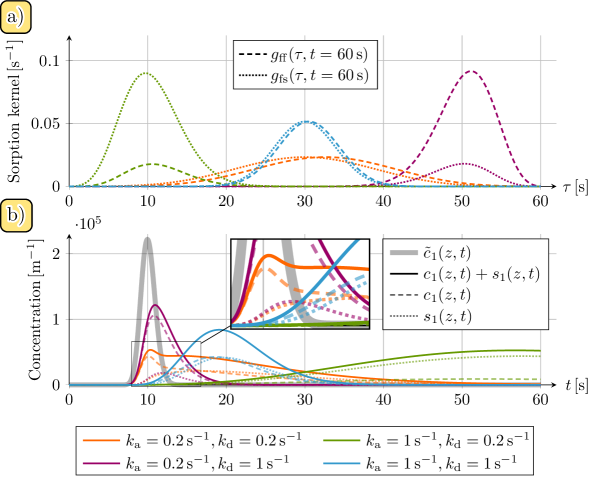
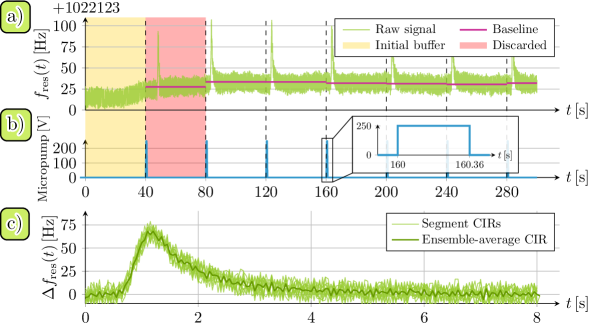
摘要: The notion of synthetic molecular communication (MC) refers to the transmission of information via signaling molecules and is foreseen to enable innovative medical applications in the human cardiovascular system (CVS). Crucially, the design of such applications requires accurate and experimentally validated channel models that characterize the propagation of signaling molecules, not just in individual blood vessels, but in complex vessel networks, as prevalent in the CVS. However, experimentally validated models for MC in VNs remain scarce. To address this gap, we propose a novel channel model for MC in complex VN topologies, which captures molecular transport via advection, molecular and turbulent diffusion, as well as adsorption and desorption at the vessel walls. We specialize this model for superparamagnetic iron-oxide nanoparticles as signaling molecules by introducing a new receiver (RX) model for planar coil inductive sensors, enabling end-to-end experimental validation with a dedicated SPION testbed. Validation covers a range of channel topologies, from single-vessel topologies to branched VNs with multiple paths between transmitter (TX) and RX. Additionally, to quantify how the VN topology impacts signal quality, and inspired by multi-path propagation models in conventional wireless communications, we introduce two metrics, namely molecule delay and multi-path spread. We show that these metrics link the VN structure to molecule dispersion induced by the VN and mediately to the resulting signal-to-noise ratio (SNR) at the RX. The proposed VN structure-SNR link is validated experimentally, demonstrating that the proposed framework can support tasks such as optimal sensor placement in the CVS or the identification of suitable testbed topologies for specific SNR requirements. All experimental data are openly available on Zenodo.