
Paper List
-
A Unified Variational Principle for Branching Transport Networks: Wave Impedance, Viscous Flow, and Tissue Metabolism
This paper solves the core problem of predicting the empirically observed branching exponent (α≈2.7) in mammalian arterial trees, which neither Murray...
-
Household Bubbling Strategies for Epidemic Control and Social Connectivity
This paper addresses the core challenge of designing household merging (social bubble) strategies that effectively control epidemic risk while maximiz...
-
Empowering Chemical Structures with Biological Insights for Scalable Phenotypic Virtual Screening
This paper addresses the core challenge of bridging the gap between scalable chemical structure screening and biologically informative but resource-in...
-
A mechanical bifurcation constrains the evolution of cell sheet folding in the family Volvocaceae
This paper addresses the core problem of why there is an evolutionary gap in species with intermediate cell numbers (e.g., 256 cells) in Volvocaceae, ...
-
Bayesian Inference in Epidemic Modelling: A Beginner’s Guide Illustrated with the SIR Model
This guide addresses the core challenge of estimating uncertain epidemiological parameters (like transmission and recovery rates) from noisy, real-wor...
-
Geometric framework for biological evolution
This paper addresses the fundamental challenge of developing a coordinate-independent, geometric description of evolutionary dynamics that bridges gen...
-
A multiscale discrete-to-continuum framework for structured population models
This paper addresses the core challenge of systematically deriving uniformly valid continuum approximations from discrete structured population models...
-
Whole slide and microscopy image analysis with QuPath and OMERO
使QuPath能够直接分析存储在OMERO服务器中的图像而无需下载整个数据集,克服了大规模研究的本地存储限制。
Pharmacophore-based design by learning on voxel grids
AIDD, Genentech
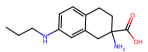
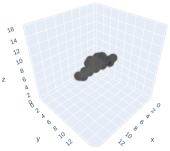
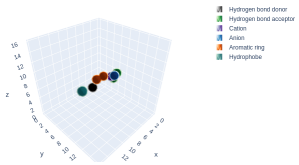
30秒速读
IN SHORT: This paper addresses the computational bottleneck and limited novelty in conventional pharmacophore-based virtual screening by introducing a voxel captioning method that generates novel molecules directly from 3D pharmacophore-shape profiles.
核心创新
- Methodology Proposes VoxCap, the first voxel captioning method for generating SMILES strings from voxelized 3D pharmacophore-shape profiles, bridging 3D structural information with 1D string generation.
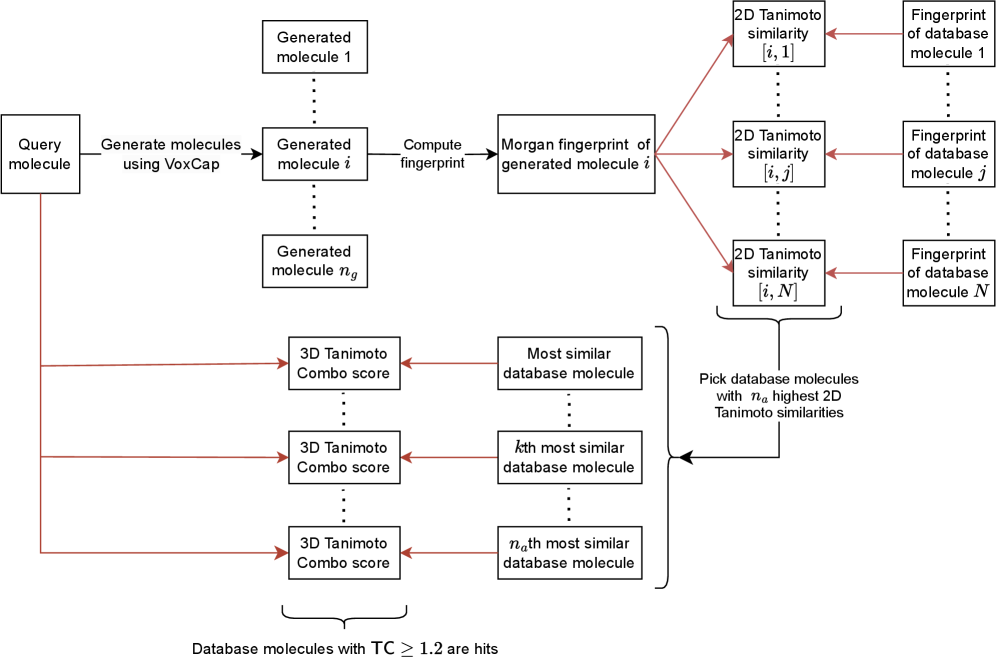
- Methodology Introduces a 'fast search' workflow that reduces computational complexity from O(database size) to O(n_g × n_a), enabling screening of billion-compound libraries previously considered intractable.
- Biology Demonstrates superior performance in generating diverse, novel scaffolds with high pharmacophore-shape similarity (Tanimoto Combo score ≥1.2), addressing both in-distribution and out-of-distribution query molecules.
主要结论
- VoxCap generates significantly more hits than baseline methods, with median hits per query increasing from 0 (baseline) to 116.5 on GEOM-drugs and from 0 to 115 on ChEMBL (p<0.001).
- The model produces diverse scaffolds, with median unique scaffold hits of 55.5 (GEOM-drugs) and 72 (ChEMBL), compared to 0 for baselines and 7-8.5 for PGMG.
- The fast search workflow reduces computational requirements by orders of magnitude while maintaining hit rates, enabling practical screening of billion-compound libraries like Enamine Real (60B compounds).
摘要: Ligand-based drug discovery (LBDD) relies on making use of known binders to a protein target to find structurally diverse molecules similarly likely to bind. This process typically involves a brute force search of the known binder (query) against a molecular library using some metric of molecular similarity. One popular approach overlays the pharmacophore-shape profile of the known binder to 3D conformations enumerated for each of the library molecules, computes overlaps, and picks a set of diverse library molecules with high overlaps. While this virtual screening workflow has had considerable success in hit diversification, scaffold hopping, and patent busting, it scales poorly with library sizes and restricts candidate generation to existing library compounds. Leveraging recent advances in voxel-based generative modelling, we propose a pharmacophore-based generative model and workflows that address the scaling and fecundity issues of conventional pharmacophore-based virtual screening. We introduce VoxCap, a voxel captioning method for generating SMILES strings from voxelised molecular representations.We propose two workflows as practical use cases as well as benchmarks for pharmacophore-based generation: de-novo design, in which we aim to generate new molecules with high pharmacophore-shape similarities to query molecules, and fast search, which aims to combine generative design with a cheap 2D substructure similarity search for efficient hit identification. Our results show that VoxCap significantly outperforms previous methods in generating diverse de-novo hits. When combined with our fast search workflow, VoxCap reduces computational time by orders of magnitude while returning hits for all query molecules, enabling the search of large libraries that are intractable to search by brute force.