
Paper List
-
A Unified Variational Principle for Branching Transport Networks: Wave Impedance, Viscous Flow, and Tissue Metabolism
This paper solves the core problem of predicting the empirically observed branching exponent (α≈2.7) in mammalian arterial trees, which neither Murray...
-
Household Bubbling Strategies for Epidemic Control and Social Connectivity
This paper addresses the core challenge of designing household merging (social bubble) strategies that effectively control epidemic risk while maximiz...
-
Empowering Chemical Structures with Biological Insights for Scalable Phenotypic Virtual Screening
This paper addresses the core challenge of bridging the gap between scalable chemical structure screening and biologically informative but resource-in...
-
A mechanical bifurcation constrains the evolution of cell sheet folding in the family Volvocaceae
This paper addresses the core problem of why there is an evolutionary gap in species with intermediate cell numbers (e.g., 256 cells) in Volvocaceae, ...
-
Bayesian Inference in Epidemic Modelling: A Beginner’s Guide Illustrated with the SIR Model
This guide addresses the core challenge of estimating uncertain epidemiological parameters (like transmission and recovery rates) from noisy, real-wor...
-
Geometric framework for biological evolution
This paper addresses the fundamental challenge of developing a coordinate-independent, geometric description of evolutionary dynamics that bridges gen...
-
A multiscale discrete-to-continuum framework for structured population models
This paper addresses the core challenge of systematically deriving uniformly valid continuum approximations from discrete structured population models...
-
Whole slide and microscopy image analysis with QuPath and OMERO
使QuPath能够直接分析存储在OMERO服务器中的图像而无需下载整个数据集,克服了大规模研究的本地存储限制。
Mapping of Lesion Images to Somatic Mutations
University of Illinois at Chicago | University of Texas MD Anderson Cancer Center
30秒速读
IN SHORT: This paper addresses the critical bottleneck of delayed genetic analysis in cancer diagnosis by predicting a patient's full somatic mutation profile directly from medical lesion images, enabling earlier targeted treatment decisions.
核心创新
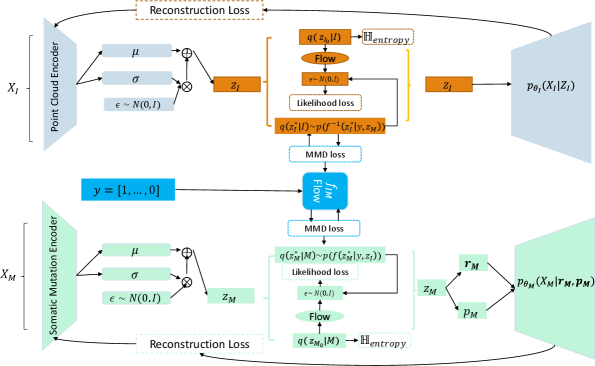
- Methodology Proposes LLOST, a novel architecture with dual VAEs and a separate, cancer-type-conditioned shared latent space, coupled with domain-specific conditional Normalizing Flow priors to handle heterogeneous data distributions.
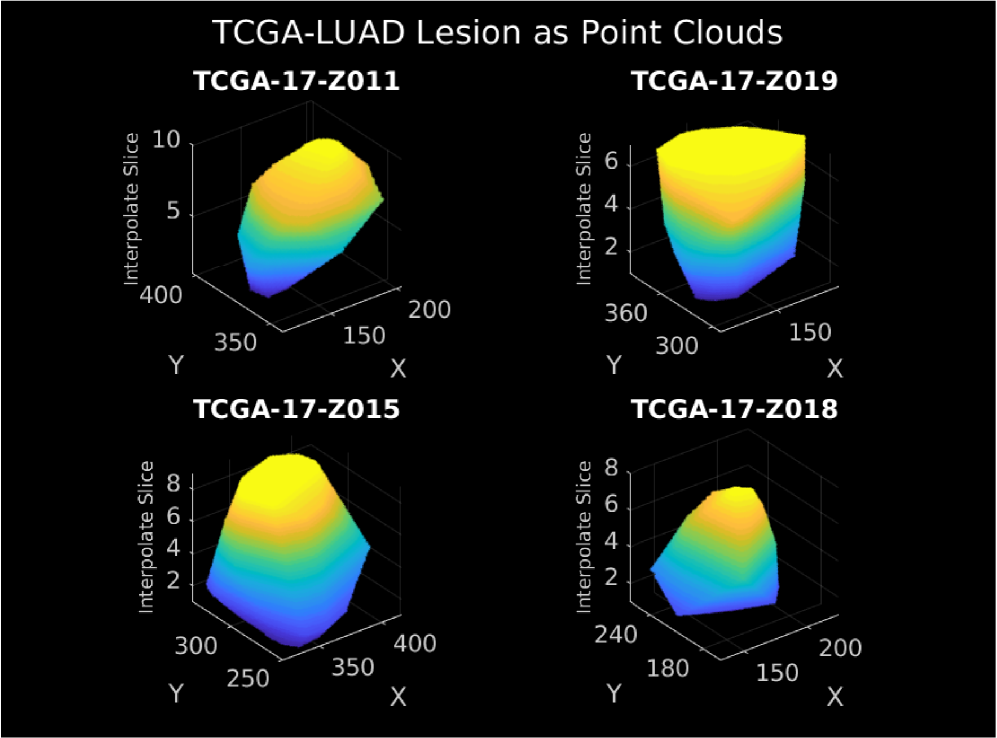
- Methodology Introduces a modality-invariant point cloud representation for lesion images, overcoming challenges of multi-slice, multi-modal (CT/MRI) medical imaging data.
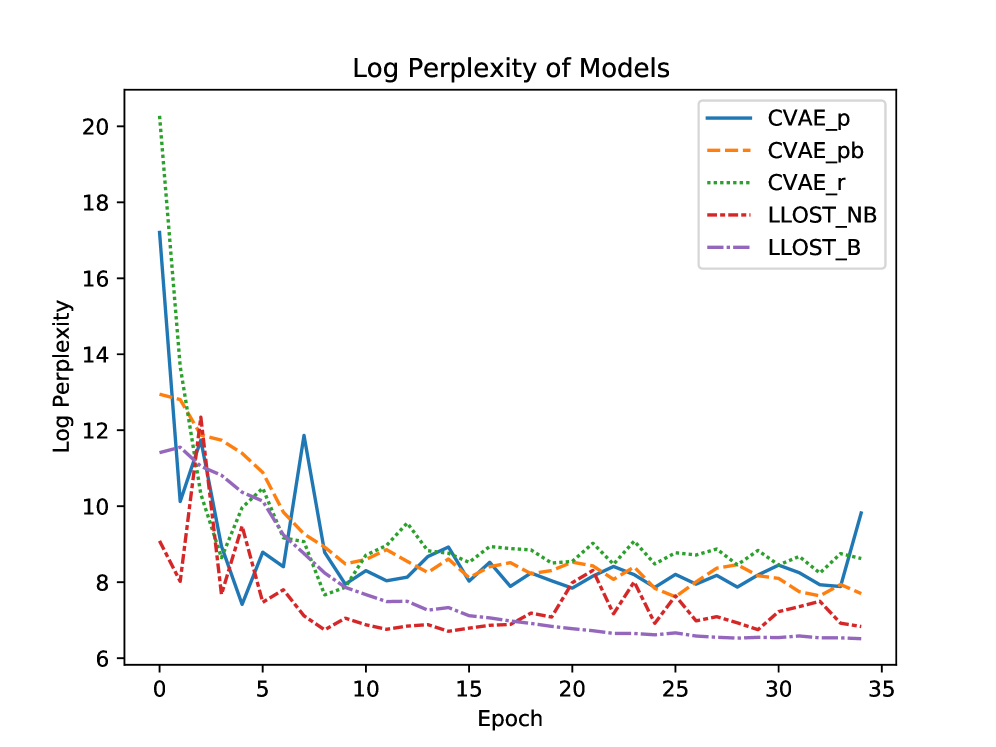
- Methodology Employs a Negative-Binomial likelihood within the mutation VAE to effectively model the high-dimensional, sparse, and discrete nature of somatic mutation count data.
主要结论
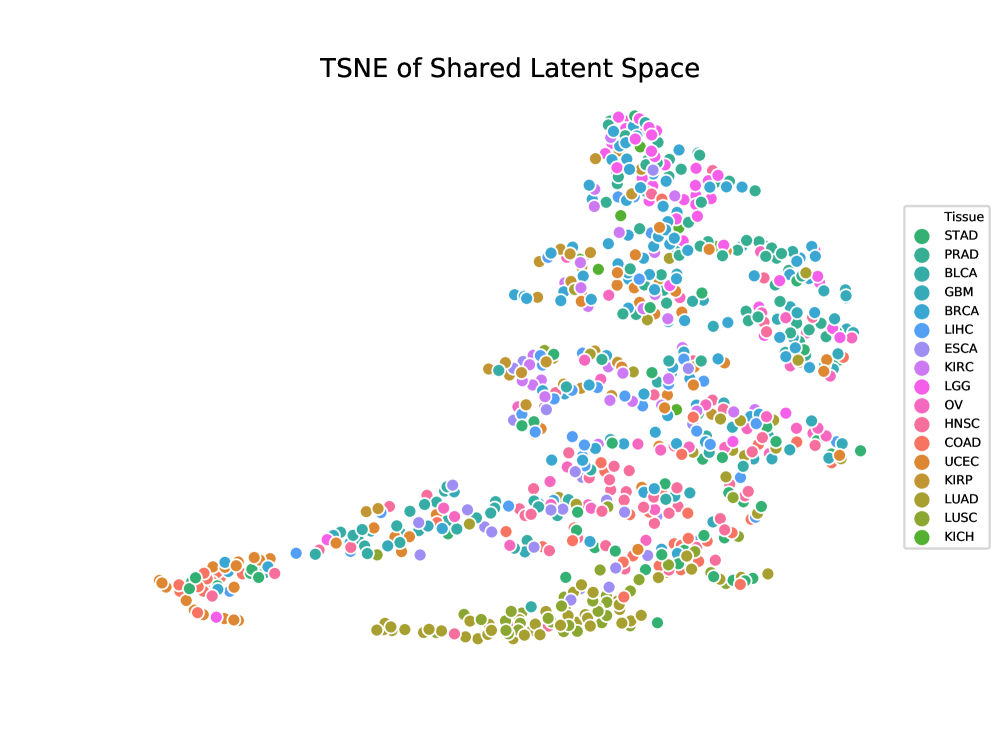
- LLOST successfully learns a shared latent representation between lesion point clouds and somatic mutation counts, capturing cancer-type-specific patterns across these disparate domains.
- The model demonstrates predictive capability for both mutation occurrence (binary prediction) and mutation counts, validated on a dataset of 1342 patients across 18 cancer types from TCGA/TCIA.
- The use of conditional Normalizing Flow priors and a separate shared latent space allows the model to account for and bridge the complex, distinct distributions of imaging and genomic data.
摘要: Medical imaging is a critical initial tool used by clinicians to determine a patient’s cancer diagnosis, allowing for faster intervention and more reliable patient prognosis. At subsequent stages of patient diagnosis, genetic information is extracted to help select specific patient treatment options. As the efficacy of cancer treatment often relies on early diagnosis and treatment, we build a deep latent variable model to determine patients’ somatic mutation profiles based on their corresponding medical images. We first introduce a point cloud representation of lesions images to allow for invariance to the imaging modality. We then propose, LLOST, a model with dual variational autoencoders coupled together by a separate shared latent space that unifies features from the lesion point clouds and counts of distinct somatic mutations. Therefore our model consists of three latent space, each of which is learned with a conditional normalizing flow prior to account for the diverse distributions of each domain. We conduct qualitative and quantitative experiments on de-identified medical images from The Cancer Imaging Archive and the corresponding somatic mutations from the Pan Cancer dataset of The Cancer Genomic Archive. We show the model’s predictive performance on the counts of specific mutations as well as it’s ability to accurately predict the occurrence of mutations. In particular, shared patterns between the imaging and somatic mutation domain that reflect cancer type. We conclude with a remark on how to improve the model and possible future avenues of research to include other genetic domains.