
Paper List
-
Ill-Conditioning in Dictionary-Based Dynamic-Equation Learning: A Systems Biology Case Study
This paper addresses the critical challenge of numerical ill-conditioning and multicollinearity in library-based sparse regression methods (e.g., SIND...
-
Hybrid eTFCE–GRF: Exact Cluster-Size Retrieval with Analytical pp-Values for Voxel-Based Morphometry
This paper addresses the computational bottleneck in voxel-based neuroimaging analysis by providing a method that delivers exact cluster-size retrieva...
-
abx_amr_simulator: A simulation environment for antibiotic prescribing policy optimization under antimicrobial resistance
This paper addresses the critical challenge of quantitatively evaluating antibiotic prescribing policies under realistic uncertainty and partial obser...
-
PesTwin: a biology-informed Digital Twin for enabling precision farming
This paper addresses the critical bottleneck in precision agriculture: the inability to accurately forecast pest outbreaks in real-time, leading to su...
-
Equivariant Asynchronous Diffusion: An Adaptive Denoising Schedule for Accelerated Molecular Conformation Generation
This paper addresses the core challenge of generating physically plausible 3D molecular structures by bridging the gap between autoregressive methods ...
-
Omics Data Discovery Agents
This paper addresses the core challenge of making published omics data computationally reusable by automating the extraction, quantification, and inte...
-
Single-cell directional sensing at ultra-low chemoattractant concentrations from extreme first-passage events
This work addresses the core challenge of how a cell can rapidly and accurately determine the direction of a chemoattractant source when the signal is...
-
SDSR: A Spectral Divide-and-Conquer Approach for Species Tree Reconstruction
This paper addresses the computational bottleneck in reconstructing species trees from thousands of species and multiple genes by introducing a scalab...
An AI Implementation Science Study to Improve Trustworthy Data in a Large Healthcare System
Georgia Institute of Technology, Atlanta, GA, USA | Shriners Hospitals for Children, Tampa, FL, USA
30秒速读
IN SHORT: This paper addresses the critical gap between theoretical AI research and real-world clinical implementation by providing a practical framework for assessing and improving healthcare data quality using trustworthy AI principles.
核心创新
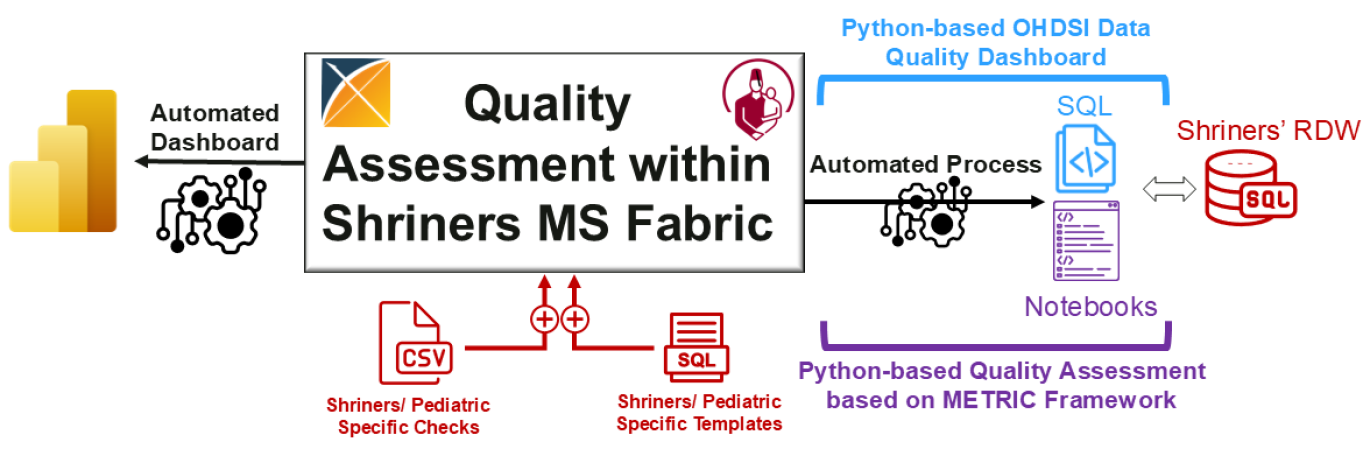
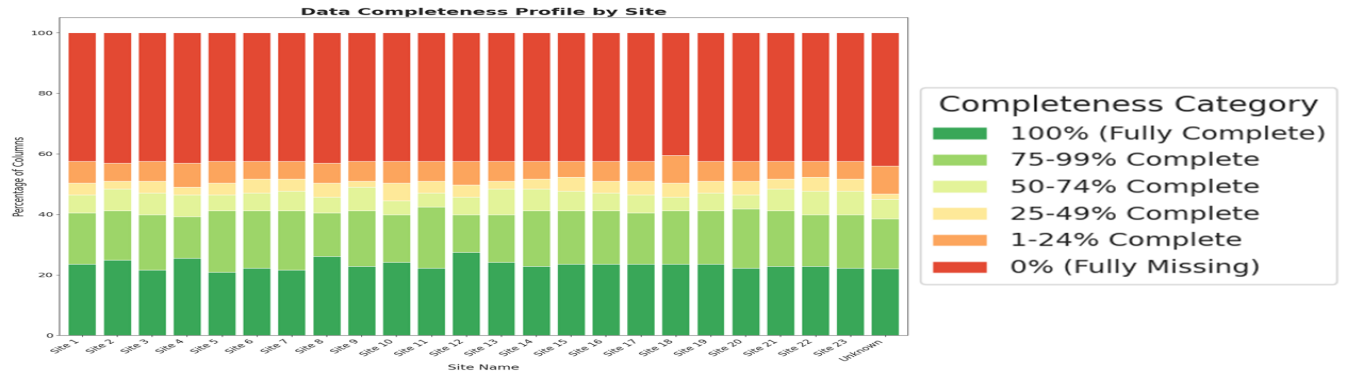
- Methodology Developed a Python-based extension of OHDSI's Data Quality Dashboard (DQD) that integrates the METRIC framework for trustworthy AI assessment, addressing informative missingness, timeliness, and distribution consistency.
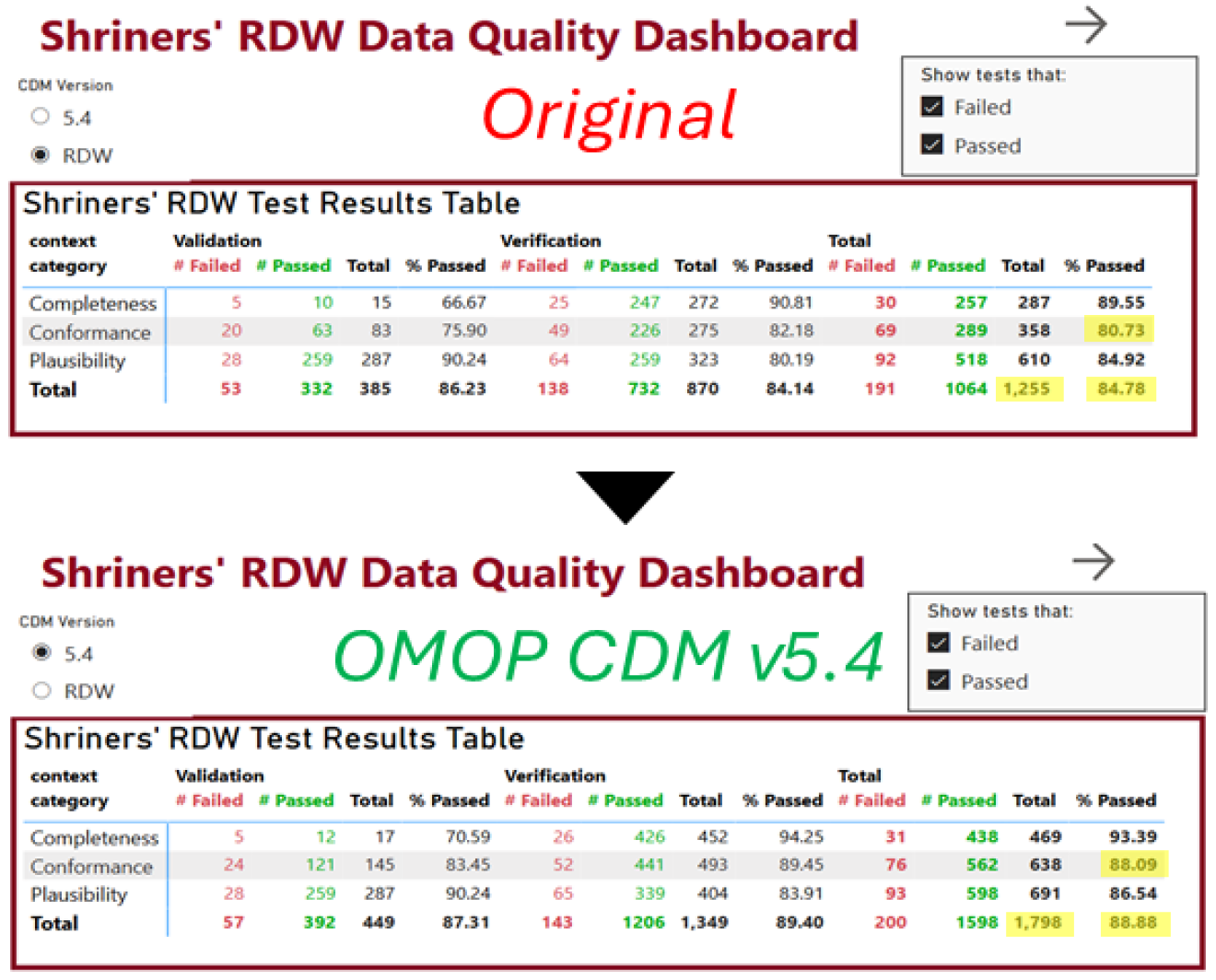
- Methodology Implemented a real-world case study modernizing a large pediatric healthcare system's Research Data Warehouse from OMOP CDM v5.1/5.2 to v5.4 within Microsoft Fabric, achieving 4% improvement in data quality test success rate (84.78% to 88.88%).
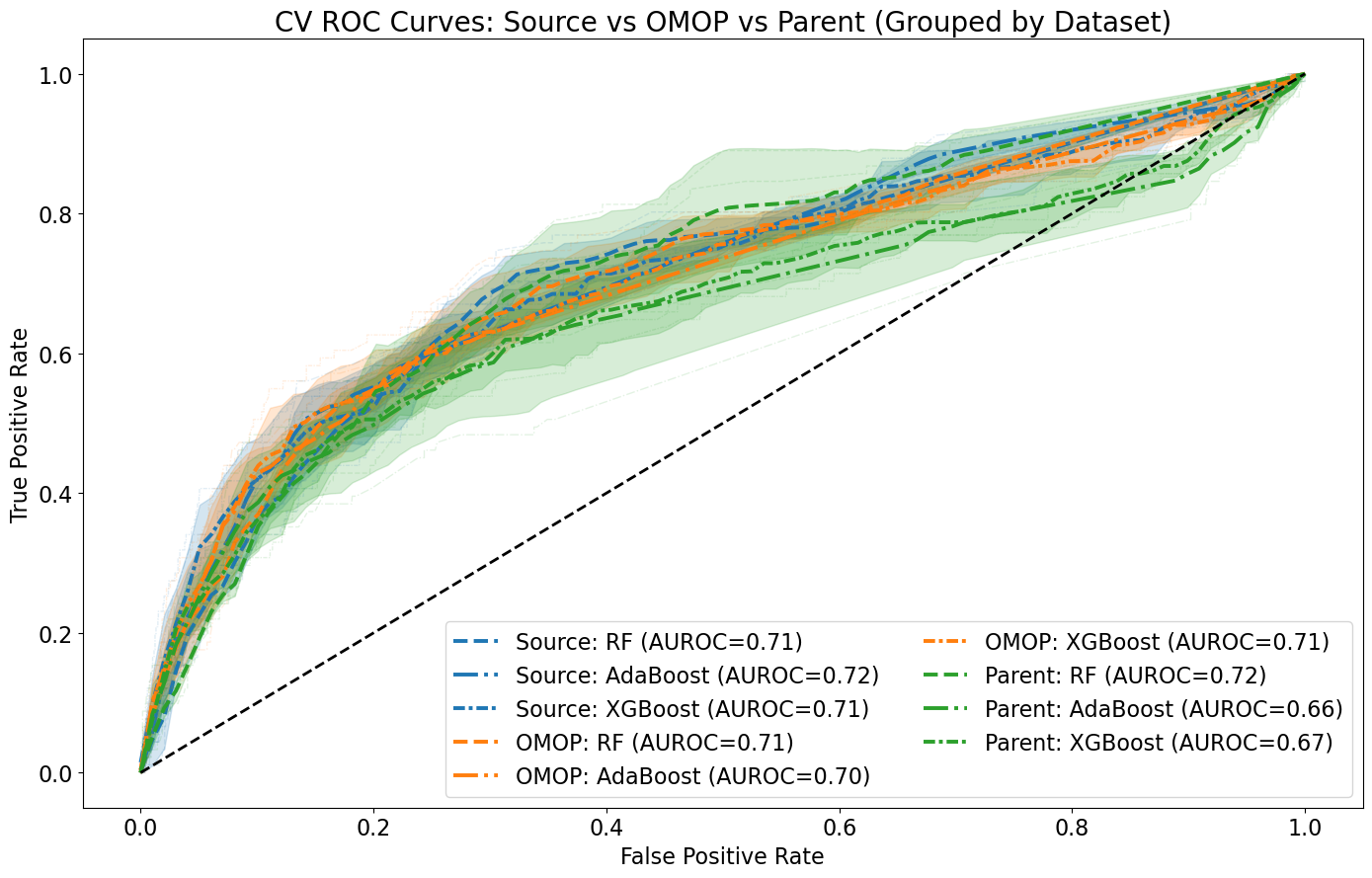
- Biology Demonstrated that data harmonization using OMOP CDM concept codes does not significantly impact AI model performance (mean AUROC: 71.3% with source codes vs. 70.0% with OMOP codes) while increasing interoperability for Craniofacial Microsomia case study.
主要结论
- Modernizing SC's OMOP CDM database from v5.1/5.2 to v5.4 improved overall data quality by 4% (84.78% to 88.88% success rate) and conformance by 8% (80.73% to 88.09%).
- Data harmonization using OMOP CDM concept codes maintained comparable AI model performance (mean AUROC difference: 1.3%) while enabling better interoperability across healthcare systems.
- Only 50% of ICD-9 codes shared common mappings with ICD-10 codes, revealing significant vocabulary transition challenges that could degrade AI model performance when encountering mixed coding systems.
摘要: The rapid growth of Artificial Intelligence (AI) in healthcare has sparked interest in Trustworthy AI and AI Implementation Science, both of which are essential for accelerating clinical adoption. Yet, barriers such as strict regulations, gaps between research and clinical settings, and challenges in evaluating AI systems hinder real-world implementation. This study presents an AI implementation case study within Shriners Children’s (SC), a large multisite pediatric system, showcasing the modernization of SC’s Research Data Warehouse (RDW) to OMOP CDM v5.4 within a secure Microsoft Fabric environment. We introduce a Python-based data quality assessment tool compatible with SC’s infrastructure, an extension of OHDSI’s R/Java-based Data Quality Dashboard (DQD) that integrates Trustworthy AI principles using the METRIC framework. This extension enhances data quality evaluation by addressing informative missingness, redundancy, timeliness, and distributional consistency. We also compare systematic and case-specific AI implementation strategies for Craniofacial Microsomia (CFM) using the FHIR standard. Our contributions include a real-world evaluation of AI implementations, integration of Trustworthy AI in data quality assessment, and evidence-based insights into hybrid implementation strategies, highlighting the need to blend systematic infrastructure with use-case-driven approaches to advance AI in healthcare.