
Paper List
-
SpikGPT: A High-Accuracy and Interpretable Spiking Attention Framework for Single-Cell Annotation
This paper addresses the core challenge of robust single-cell annotation across heterogeneous datasets with batch effects and the critical need to ide...
-
Unlocking hidden biomolecular conformational landscapes in diffusion models at inference time
This paper addresses the core challenge of efficiently and accurately sampling the conformational landscape of biomolecules from diffusion-based struc...
-
Personalized optimization of pediatric HD-tDCS for dose consistency and target engagement
This paper addresses the critical limitation of one-size-fits-all HD-tDCS protocols in pediatric populations by developing a personalized optimization...
-
Realistic Transition Paths for Large Biomolecular Systems: A Langevin Bridge Approach
This paper addresses the core challenge of generating physically realistic and computationally efficient transition paths between distinct protein con...
-
Consistent Synthetic Sequences Unlock Structural Diversity in Fully Atomistic De Novo Protein Design
This paper addresses the core pain point of low sequence-structure alignment in existing synthetic datasets (e.g., AFDB), which severely limits the pe...
-
MoRSAIK: Sequence Motif Reactor Simulation, Analysis and Inference Kit in Python
This work addresses the computational bottleneck in simulating prebiotic RNA reactor dynamics by developing a Python package that tracks sequence moti...
-
On the Approximation of Phylogenetic Distance Functions by Artificial Neural Networks
This paper addresses the core challenge of developing computationally efficient and scalable neural network architectures that can learn accurate phyl...
-
EcoCast: A Spatio-Temporal Model for Continual Biodiversity and Climate Risk Forecasting
This paper addresses the critical bottleneck in conservation: the lack of timely, high-resolution, near-term forecasts of species distribution shifts ...
An AI Implementation Science Study to Improve Trustworthy Data in a Large Healthcare System
Georgia Institute of Technology, Atlanta, GA, USA | Shriners Hospitals for Children, Tampa, FL, USA
30秒速读
IN SHORT: This paper addresses the critical gap between theoretical AI research and real-world clinical implementation by providing a practical framework for assessing and improving healthcare data quality using trustworthy AI principles.
核心创新
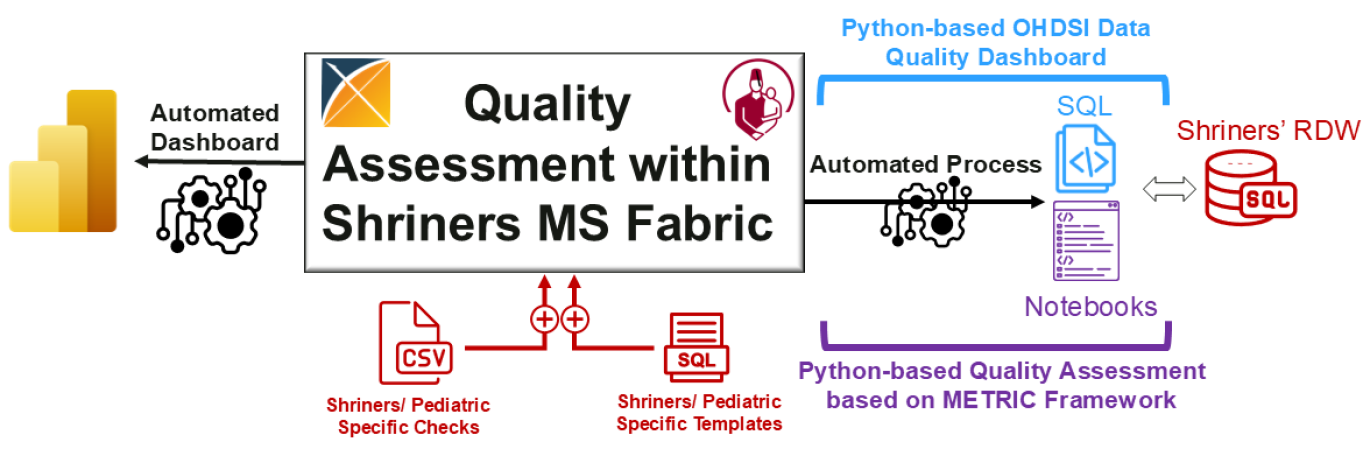
- Methodology Developed a Python-based extension of OHDSI's Data Quality Dashboard (DQD) that integrates the METRIC framework for trustworthy AI assessment, addressing informative missingness, timeliness, and distribution consistency.
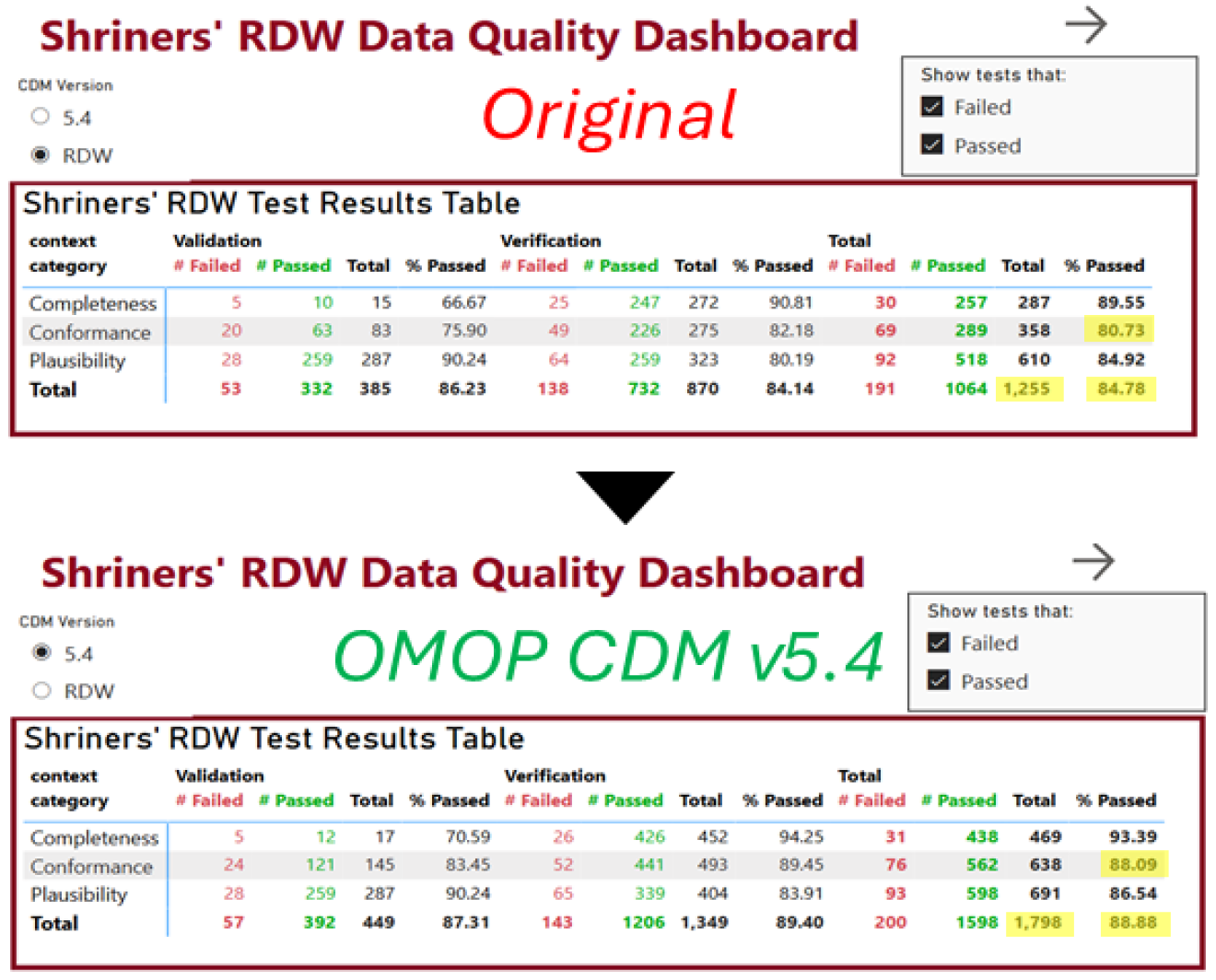
- Methodology Implemented a real-world case study modernizing a large pediatric healthcare system's Research Data Warehouse from OMOP CDM v5.1/5.2 to v5.4 within Microsoft Fabric, achieving 4% improvement in data quality test success rate (84.78% to 88.88%).
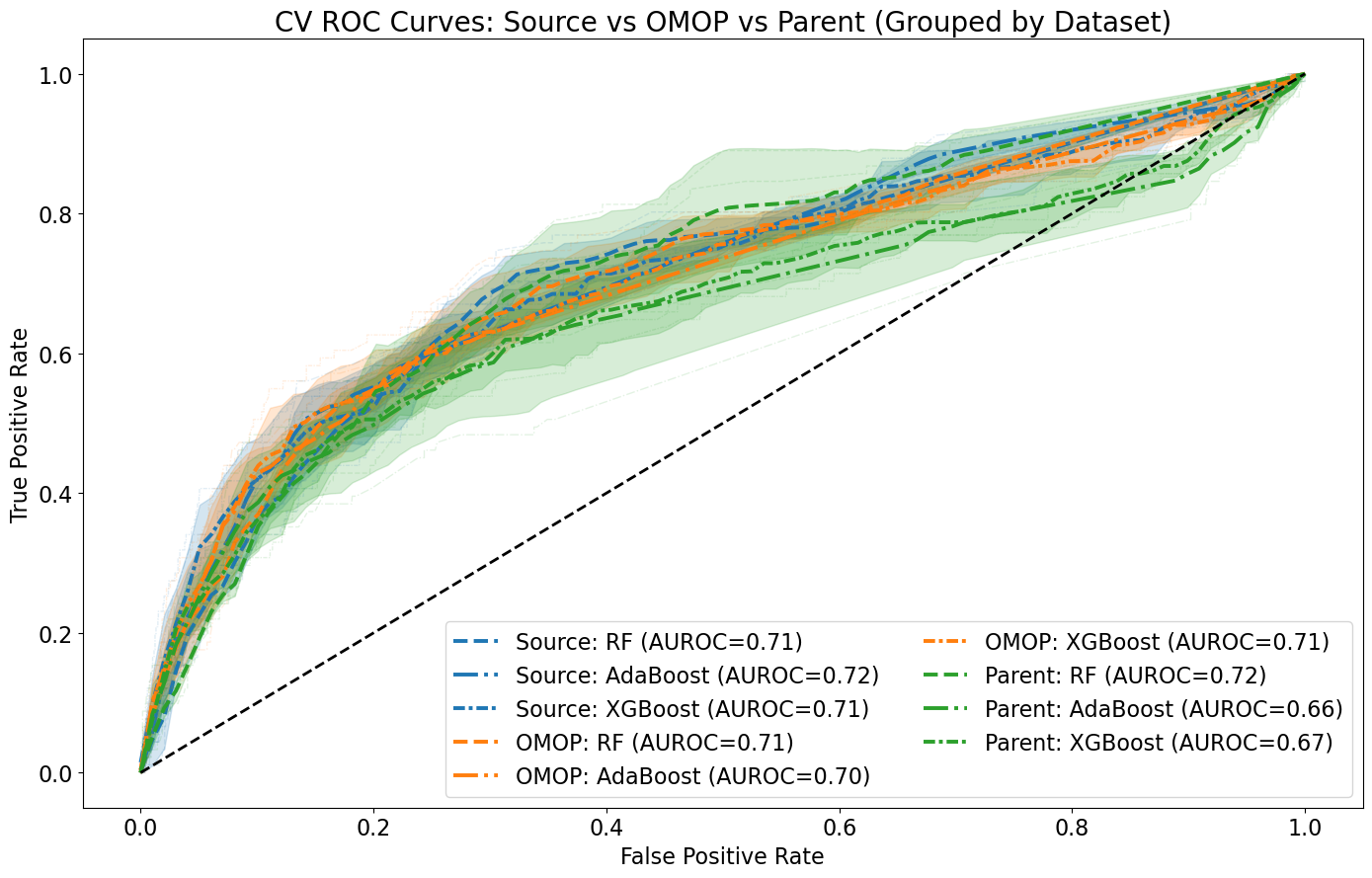
- Biology Demonstrated that data harmonization using OMOP CDM concept codes does not significantly impact AI model performance (mean AUROC: 71.3% with source codes vs. 70.0% with OMOP codes) while increasing interoperability for Craniofacial Microsomia case study.
主要结论
- Modernizing SC's OMOP CDM database from v5.1/5.2 to v5.4 improved overall data quality by 4% (84.78% to 88.88% success rate) and conformance by 8% (80.73% to 88.09%).
- Data harmonization using OMOP CDM concept codes maintained comparable AI model performance (mean AUROC difference: 1.3%) while enabling better interoperability across healthcare systems.
- Only 50% of ICD-9 codes shared common mappings with ICD-10 codes, revealing significant vocabulary transition challenges that could degrade AI model performance when encountering mixed coding systems.
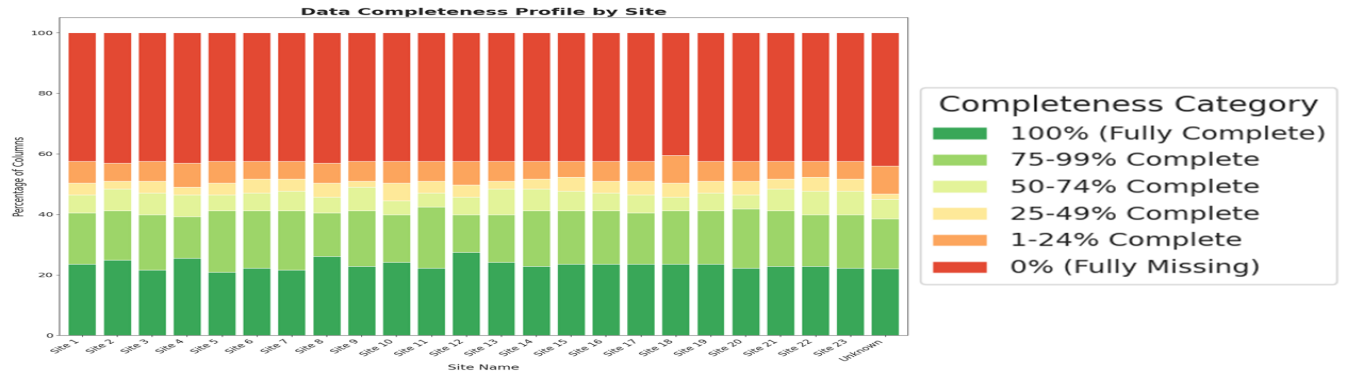
摘要: The rapid growth of Artificial Intelligence (AI) in healthcare has sparked interest in Trustworthy AI and AI Implementation Science, both of which are essential for accelerating clinical adoption. Yet, barriers such as strict regulations, gaps between research and clinical settings, and challenges in evaluating AI systems hinder real-world implementation. This study presents an AI implementation case study within Shriners Children’s (SC), a large multisite pediatric system, showcasing the modernization of SC’s Research Data Warehouse (RDW) to OMOP CDM v5.4 within a secure Microsoft Fabric environment. We introduce a Python-based data quality assessment tool compatible with SC’s infrastructure, an extension of OHDSI’s R/Java-based Data Quality Dashboard (DQD) that integrates Trustworthy AI principles using the METRIC framework. This extension enhances data quality evaluation by addressing informative missingness, redundancy, timeliness, and distributional consistency. We also compare systematic and case-specific AI implementation strategies for Craniofacial Microsomia (CFM) using the FHIR standard. Our contributions include a real-world evaluation of AI implementations, integration of Trustworthy AI in data quality assessment, and evidence-based insights into hybrid implementation strategies, highlighting the need to blend systematic infrastructure with use-case-driven approaches to advance AI in healthcare.