
Paper List
-
STAR-GO: Improving Protein Function Prediction by Learning to Hierarchically Integrate Ontology-Informed Semantic Embeddings
This paper addresses the core challenge of generalizing protein function prediction to unseen or newly introduced Gene Ontology (GO) terms by overcomi...
-
Incorporating indel channels into average-case analysis of seed-chain-extend
This paper addresses the core pain point of bridging the theoretical gap for the widely used seed-chain-extend heuristic by providing the first rigoro...
-
Competition, stability, and functionality in excitatory-inhibitory neural circuits
This paper addresses the core challenge of extending interpretable energy-based frameworks to biologically realistic asymmetric neural networks, where...
-
Enhancing Clinical Note Generation with ICD-10, Clinical Ontology Knowledge Graphs, and Chain-of-Thought Prompting Using GPT-4
This paper addresses the core challenge of generating accurate and clinically relevant patient notes from sparse inputs (ICD codes and basic demograph...
-
Learning From Limited Data and Feedback for Cell Culture Process Monitoring: A Comparative Study
This paper addresses the core challenge of developing accurate real-time bioprocess monitoring soft sensors under severe data constraints: limited his...
-
Cell-cell communication inference and analysis: biological mechanisms, computational approaches, and future opportunities
This review addresses the critical need for a systematic framework to navigate the rapidly expanding landscape of computational methods for inferring ...
-
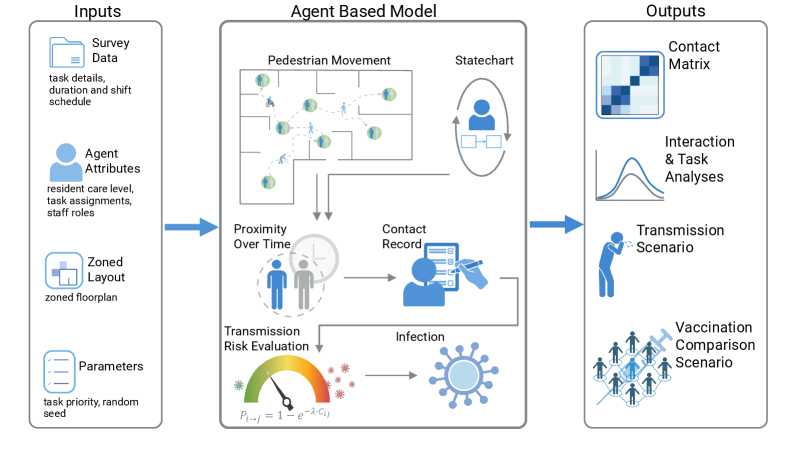
Generating a Contact Matrix for Aged Care Settings in Australia: an agent-based model study
This study addresses the critical gap in understanding heterogeneous contact patterns within aged care facilities, where existing population-level con...
-
Emergent Spatiotemporal Dynamics in Large-Scale Brain Networks with Next Generation Neural Mass Models
This work addresses the core challenge of understanding how complex, brain-wide spatiotemporal patterns emerge from the interaction of biophysically d...
Generating a Contact Matrix for Aged Care Settings in Australia: an agent-based model study
University of New South Wales
30秒速读
IN SHORT: This study addresses the critical gap in understanding heterogeneous contact patterns within aged care facilities, where existing population-level contact matrices fail to capture the nuanced interactions that drive infection transmission in these high-risk environments.
核心创新
- Methodology Developed a transferable agent-based modeling framework specifically for aged care settings, parameterized with empirical survey data from 21 aged care workers to capture realistic staff-resident interaction patterns.
- Methodology Integrated proximity-based contact definitions (1.5m and 3m thresholds with 3-second duration) with temporal analysis to identify high-risk contact clustering during structured daily routines like communal activities and care tasks.
- Biology Demonstrated that medium care residents experience the highest infection risk despite not having the highest contact frequency, revealing non-linear relationships between contact patterns and transmission outcomes.
主要结论
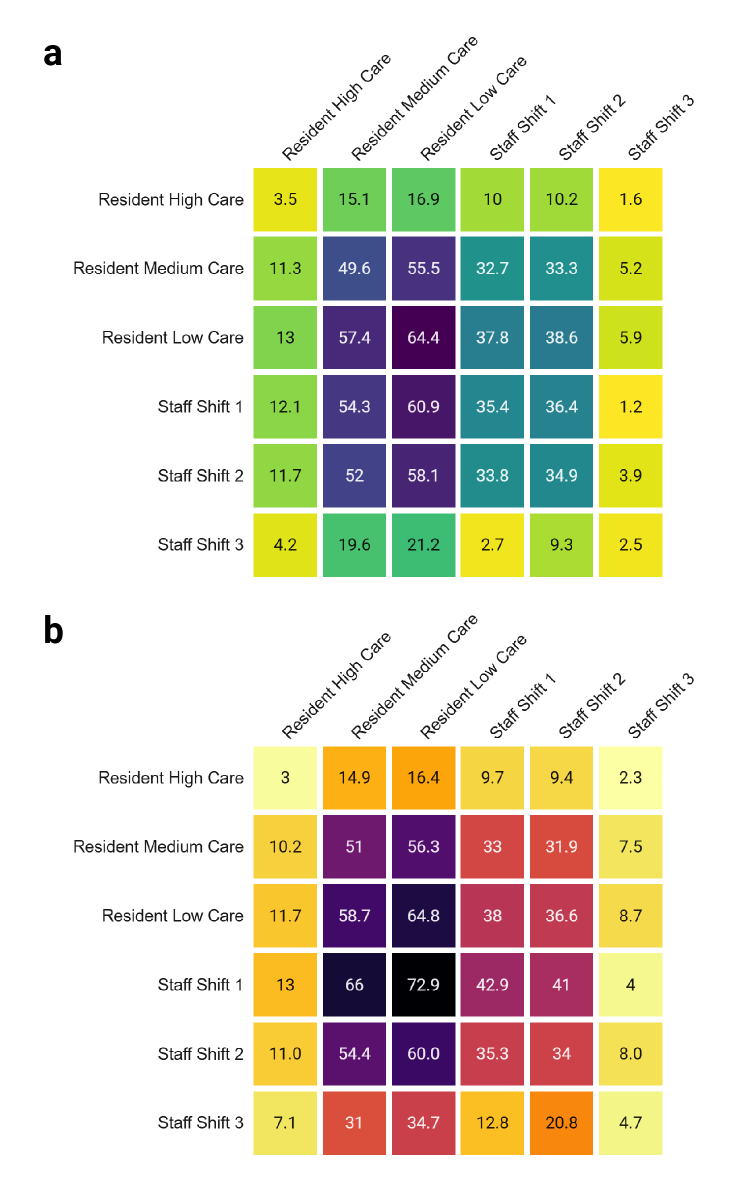
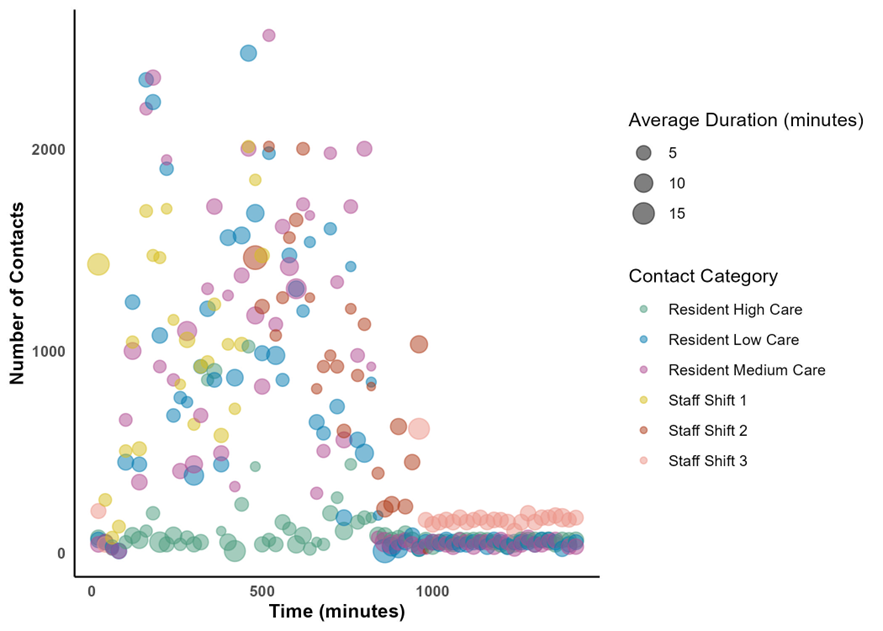
- Low and medium care residents had the highest contact frequencies (particularly with morning/afternoon shift staff), while high care residents and night staff had substantially fewer contacts, with Poisson regression confirming significant variation by care level and shift (p<0.001).
- Vaccination scenarios reduced predicted transmission by up to 68%, with maximum impact achieved when both staff and residents were vaccinated, demonstrating the multiplicative protective effect of comprehensive vaccination coverage.
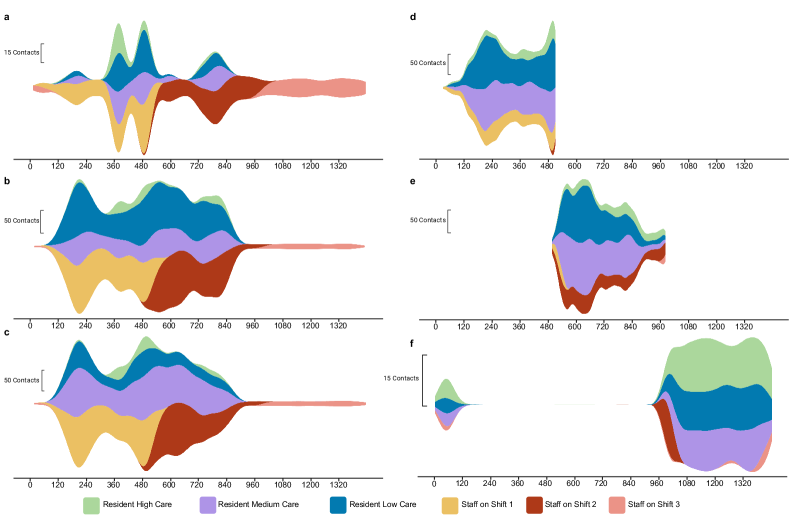
- Temporal analysis revealed clustering of high-risk contacts during structured daily routines, with infection risk highest during high-contact shifts and among medium care residents, highlighting the importance of timing in intervention strategies.
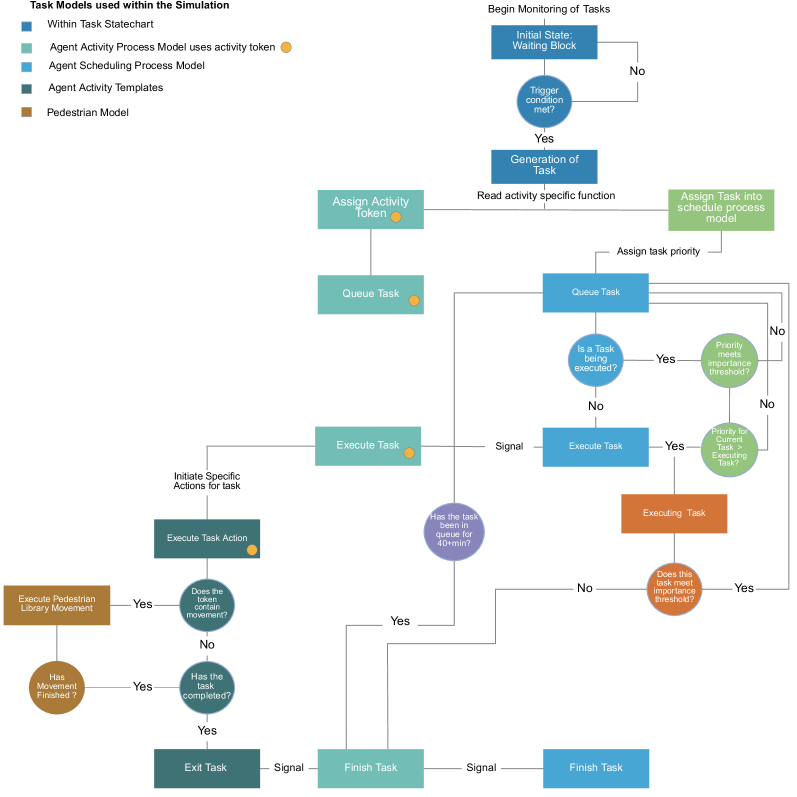
摘要: This study presents an agent-based model (ABM) developed to simulate staff and resident interactions within a synthetic aged care facility, capturing movement, task execution, and proximity-based contact events across three staff shifts and varying levels of resident care. Contacts were defined by spatial thresholds (1.5 m and 3 m) and cumulative duration, enabling the generation of detailed contact matrices. Simulation results showed that low and medium care residents experienced the highest frequency of interactions, particularly with staff on morning and afternoon shifts, while high care residents and night staff had substantially fewer contacts. Contact rates varied significantly by care level and shift, confirmed through Poisson-based regression modelling. Temporal analyses revealed clustering of high-risk contacts during structured daily routines, especially communal and care activities. An integrated airborne transmission module, seeded with a single infectious staff member, demonstrated that infection risk was highest during high-contact shifts and among medium care residents. Vaccination scenarios reduced predicted transmission by up to 68%, with the greatest impact observed when both staff and residents were vaccinated. These findings highlight the importance of accounting for contact heterogeneity in aged care and demonstrate the utility of ABMs for evaluating targeted infection control strategies in high-risk, enclosed environments.