
Paper List
-
Evolutionarily Stable Stackelberg Equilibrium
通过要求追随者策略对突变入侵具有鲁棒性,弥合了斯塔克尔伯格领导力模型与演化稳定性之间的鸿沟。
-
Recovering Sparse Neural Connectivity from Partial Measurements: A Covariance-Based Approach with Granger-Causality Refinement
通过跨多个实验会话累积协方差统计,实现从部分记录到完整神经连接性的重建。
-
Atomic Trajectory Modeling with State Space Models for Biomolecular Dynamics
ATMOS通过提供一个基于SSM的高效框架,用于生物分子的原子级轨迹生成,弥合了计算昂贵的MD模拟与时间受限的深度生成模型之间的差距。
-
Slow evolution towards generalism in a model of variable dietary range
通过证明是种群统计噪声(而非确定性动力学)驱动了模式形成和泛化食性的演化,解决了间接竞争下物种形成的悖论。
-
Grounded Multimodal Retrieval-Augmented Drafting of Radiology Impressions Using Case-Based Similarity Search
通过将印象草稿基于检索到的历史病例,并采用明确引用和基于置信度的拒绝机制,解决放射学报告生成中的幻觉问题。
-
Unified Policy–Value Decomposition for Rapid Adaptation
通过双线性分解在策略和价值函数之间共享低维目标嵌入,实现对新颖任务的零样本适应。
-
Mathematical Modeling of Cancer–Bacterial Therapy: Analysis and Numerical Simulation via Physics-Informed Neural Networks
提供了一个严格的、无网格的PINN框架,用于模拟和分析细菌癌症疗法中复杂的、空间异质的相互作用。
-
Sample-Efficient Adaptation of Drug-Response Models to Patient Tumors under Strong Biological Domain Shift
通过从无标记分子谱中学习可迁移表征,利用最少的临床数据实现患者药物反应的有效预测。
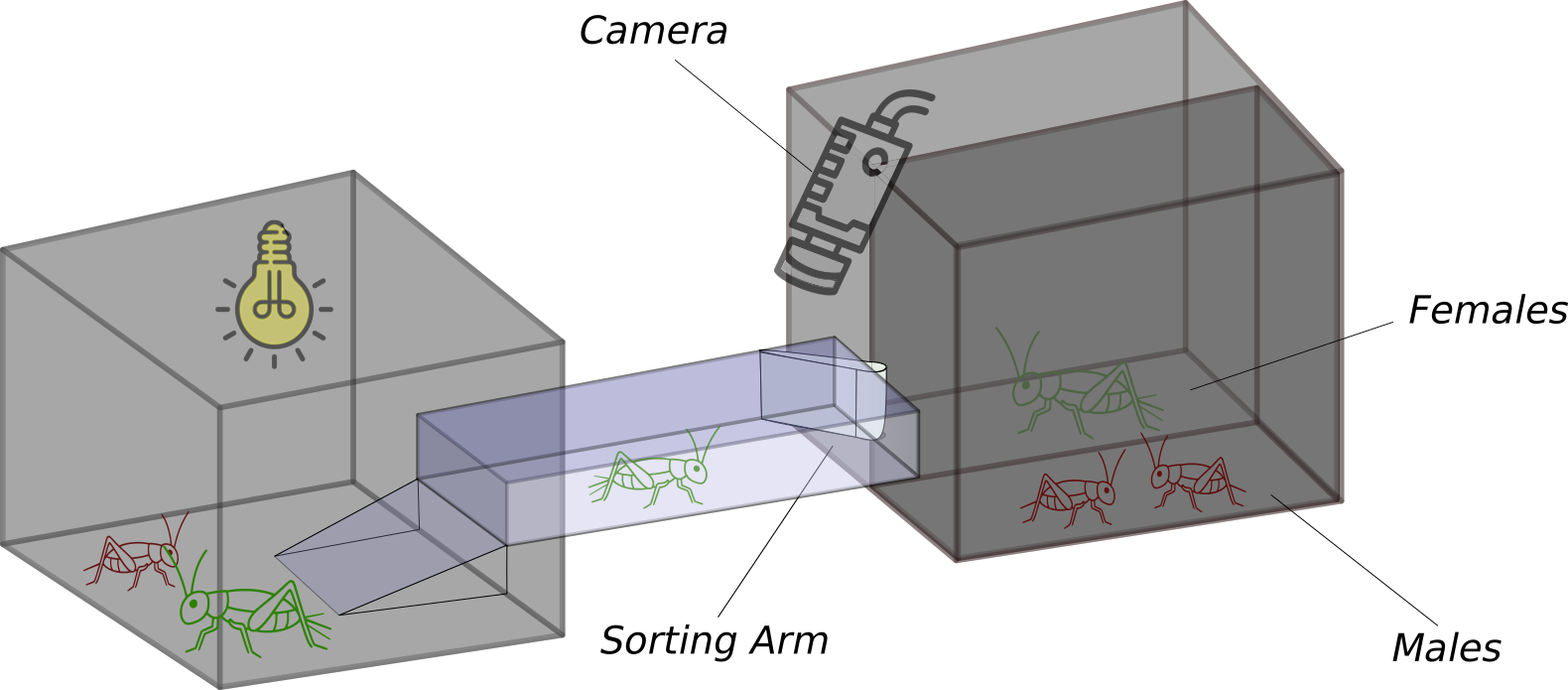
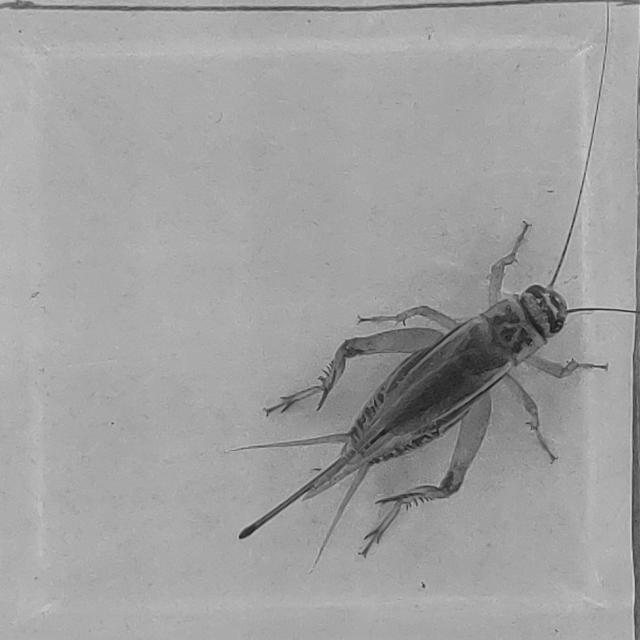
Real-time Cricket Sorting By Sex A low-cost embedded solution using YOLOv8 and Raspberry Pi
Illinois Institute of Technology, Chicago, Illinois | Universidad Politécnica de Madrid, Madrid, Spain
30秒速读
IN SHORT: This paper addresses the critical bottleneck in industrial insect farming: the lack of automated, real-time sex sorting systems for Acheta domesticus crickets, which is essential for selective breeding, optimized reproduction ratios, and nutritional differentiation.
核心创新
- Methodology First integrated system combining embedded computer vision (YOLOv8 nano) with physical actuation for real-time cricket sex sorting, achieving 86.8% overall sorting accuracy.
- Methodology Development of a custom balanced dataset (597 training images) with controlled illumination variability and data augmentation, achieving mAP@0.5 of 0.977 with minimal misclassification (2.3% for females, 2.7% for males).
- Biology Quantitative analysis revealing sex-dependent behavioral differences: males move faster (median 39.5 mm/s vs 18.8 mm/s for females) and are more sensitive to actuator noise, affecting sorting efficiency under different stress conditions.
主要结论
- The system achieved 86.8% overall sorting accuracy across four experiments, with performance varying from 83% under high-stress conditions to 94% under low-stress conditions.
- Movement speed significantly impacts sorting accuracy: misclassified crickets had median speeds of 75.0 mm/s compared to 20.3 mm/s for correctly classified individuals (p<0.05 based on distribution analysis).
- The YOLOv8 nano model demonstrated excellent detection performance with mAP@0.5 of 0.977 and class-wise precision/recall of 0.857-0.878, proving suitable for resource-constrained edge deployment.
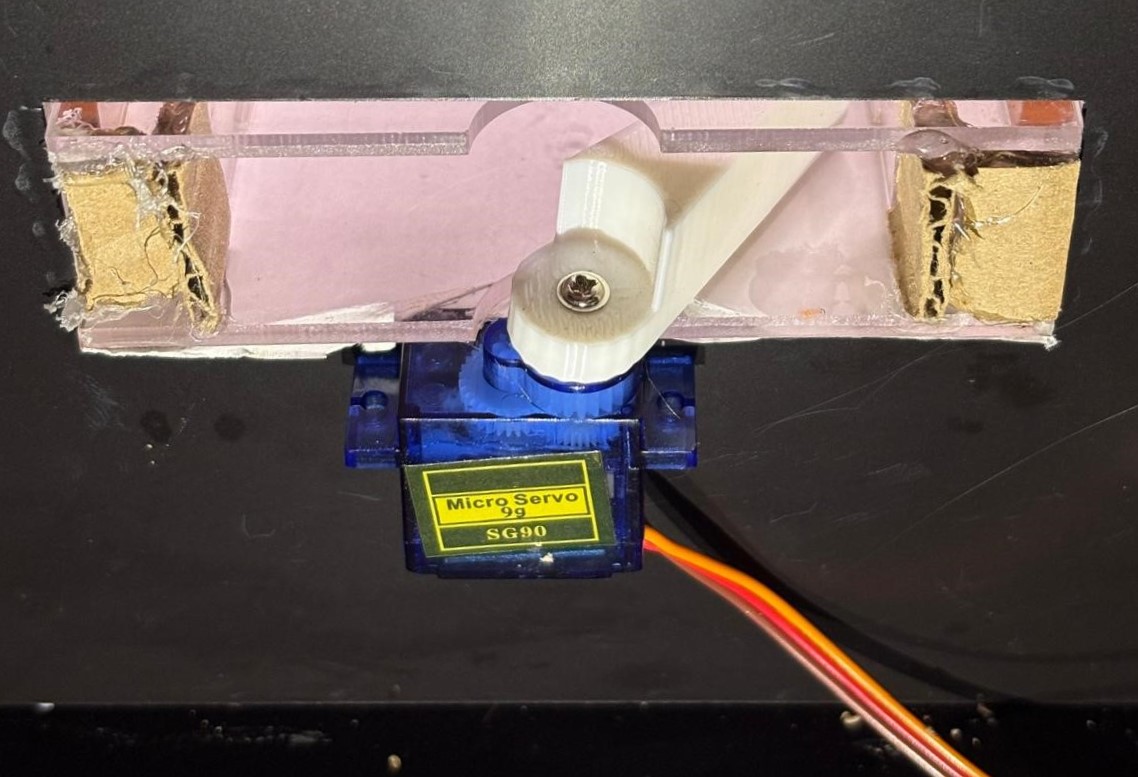
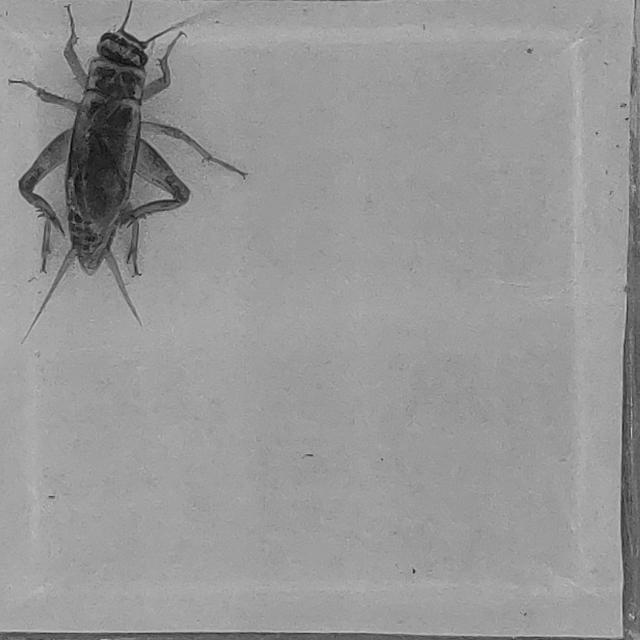
摘要: The global demand for sustainable protein sources is driving increasing interest in edible insects, with Acheta domesticus (house cricket) identified as one of the most suitable species for industrial production. Current farming practices typically rear crickets in mixed-sex populations without automated sex sorting, despite potential benefits such as selective breeding, optimized reproduction ratios, and nutritional differentiation. This work presents a low-cost, real-time system for automated sex-based sorting of Acheta domesticus, combining computer vision and physical actuation. The device integrates a Raspberry Pi 5 with the official Raspberry AI Camera and a custom YOLOv8 nano object detection model, together with a servo-actuated sorting arm. The model reached a mean Average Precision at IoU 0.5 (mAP@0.5) of 0.977 during testing, and real-world experiments with groups of crickets achieved an overall sorting accuracy of 86.8%. These results demonstrate the feasibility of deploying lightweight deep learning models on resource-constrained devices for insect farming applications, offering a practical solution to improve efficiency and sustainability in cricket production.