
Paper List
-
Evolutionarily Stable Stackelberg Equilibrium
通过要求追随者策略对突变入侵具有鲁棒性,弥合了斯塔克尔伯格领导力模型与演化稳定性之间的鸿沟。
-
Recovering Sparse Neural Connectivity from Partial Measurements: A Covariance-Based Approach with Granger-Causality Refinement
通过跨多个实验会话累积协方差统计,实现从部分记录到完整神经连接性的重建。
-
Atomic Trajectory Modeling with State Space Models for Biomolecular Dynamics
ATMOS通过提供一个基于SSM的高效框架,用于生物分子的原子级轨迹生成,弥合了计算昂贵的MD模拟与时间受限的深度生成模型之间的差距。
-
Slow evolution towards generalism in a model of variable dietary range
通过证明是种群统计噪声(而非确定性动力学)驱动了模式形成和泛化食性的演化,解决了间接竞争下物种形成的悖论。
-
Grounded Multimodal Retrieval-Augmented Drafting of Radiology Impressions Using Case-Based Similarity Search
通过将印象草稿基于检索到的历史病例,并采用明确引用和基于置信度的拒绝机制,解决放射学报告生成中的幻觉问题。
-
Unified Policy–Value Decomposition for Rapid Adaptation
通过双线性分解在策略和价值函数之间共享低维目标嵌入,实现对新颖任务的零样本适应。
-
Mathematical Modeling of Cancer–Bacterial Therapy: Analysis and Numerical Simulation via Physics-Informed Neural Networks
提供了一个严格的、无网格的PINN框架,用于模拟和分析细菌癌症疗法中复杂的、空间异质的相互作用。
-
Sample-Efficient Adaptation of Drug-Response Models to Patient Tumors under Strong Biological Domain Shift
通过从无标记分子谱中学习可迁移表征,利用最少的临床数据实现患者药物反应的有效预测。
Tissue stress measurements with Bayesian Inversion Stress Microscopy
Institut Jacques Monod, CNRS, Université Paris Cité | Institut Curie, Paris Université Sciences et Lettres | Friedrich-Alexander Universität Erlangen-Nürnberg | Max-Planck-Zentrum für Physik und Medizin | Physique et Mécanique des Milieux Hétérogènes, CNRS, ESPCI Paris

30秒速读
IN SHORT: This paper addresses the core challenge of measuring absolute, tissue-scale mechanical stress without making assumptions about tissue rheology, which is crucial for understanding mechanobiology in complex, heterogeneous tissues.
核心创新
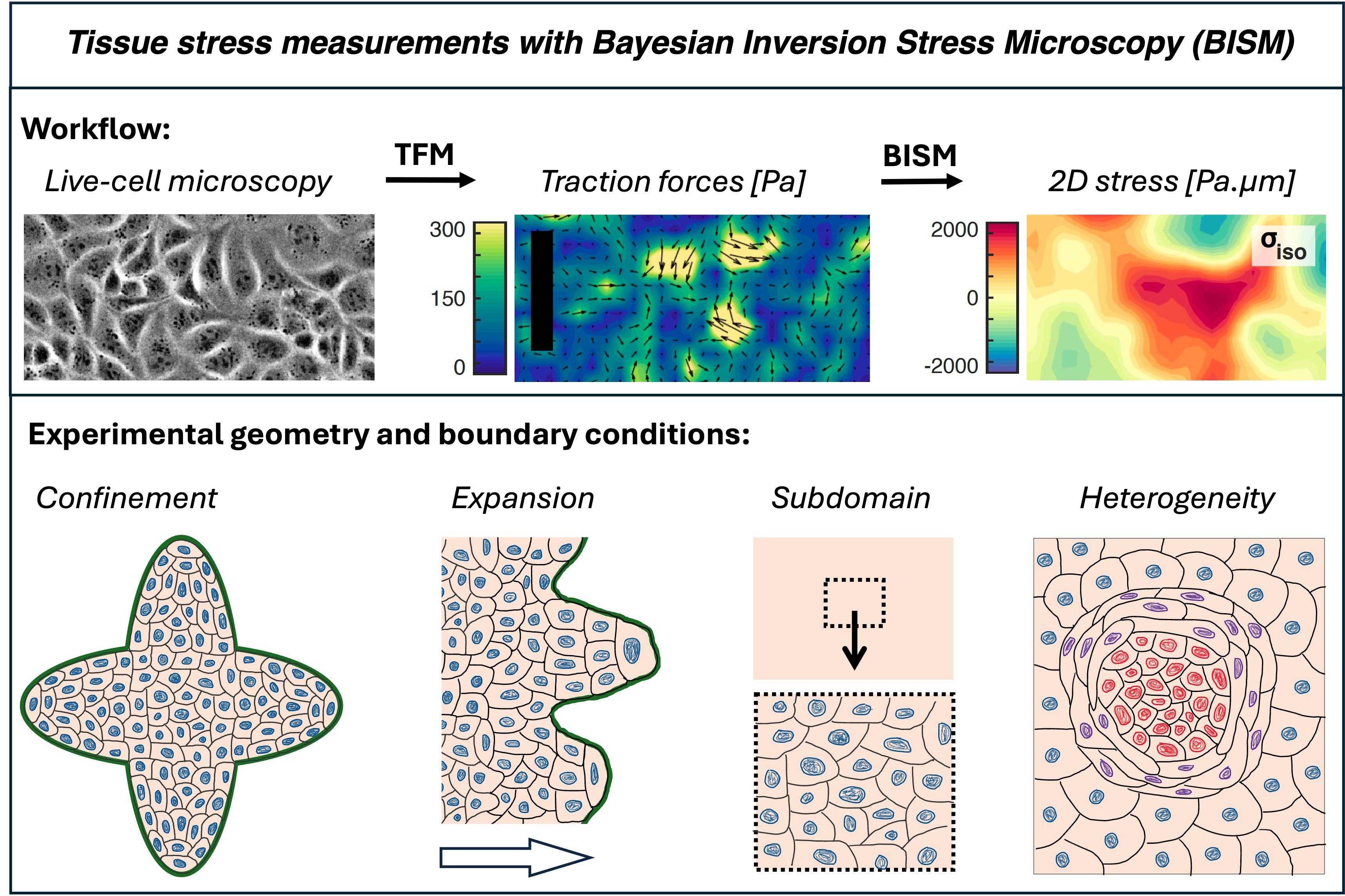
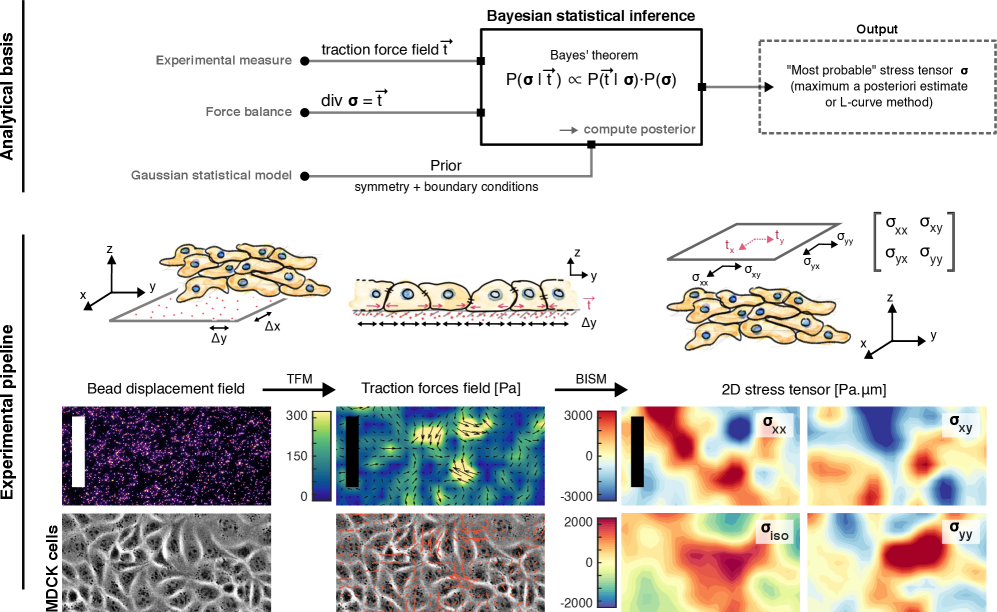
- Methodology Introduces Bayesian Inversion Stress Microscopy (BISM), a method that infers the complete 2D stress tensor (σ_xx, σ_yy, σ_xy) from traction force data by solving an underdetermined inverse problem using Bayesian inference, without requiring rheological assumptions.
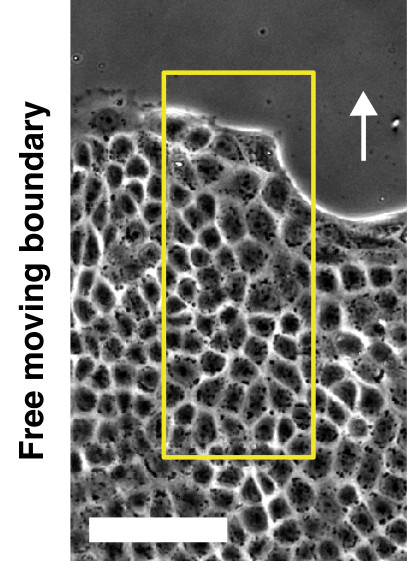
- Methodology Demonstrates robust applicability across diverse experimental geometries and boundary conditions, including confined tissues of arbitrary shape (e.g., star-shaped, elliptic) and systems with free boundaries (e.g., wound healing assays).
- Biology Provides absolute stress measurements, enabling the testing of fundamental assumptions in tissue mechanics. For example, it shows that a fourfold increase in cell density does not necessarily lead to compressive stress (mean tension decreased by a factor of three but remained positive), challenging the simple density-stress paradigm.
主要结论
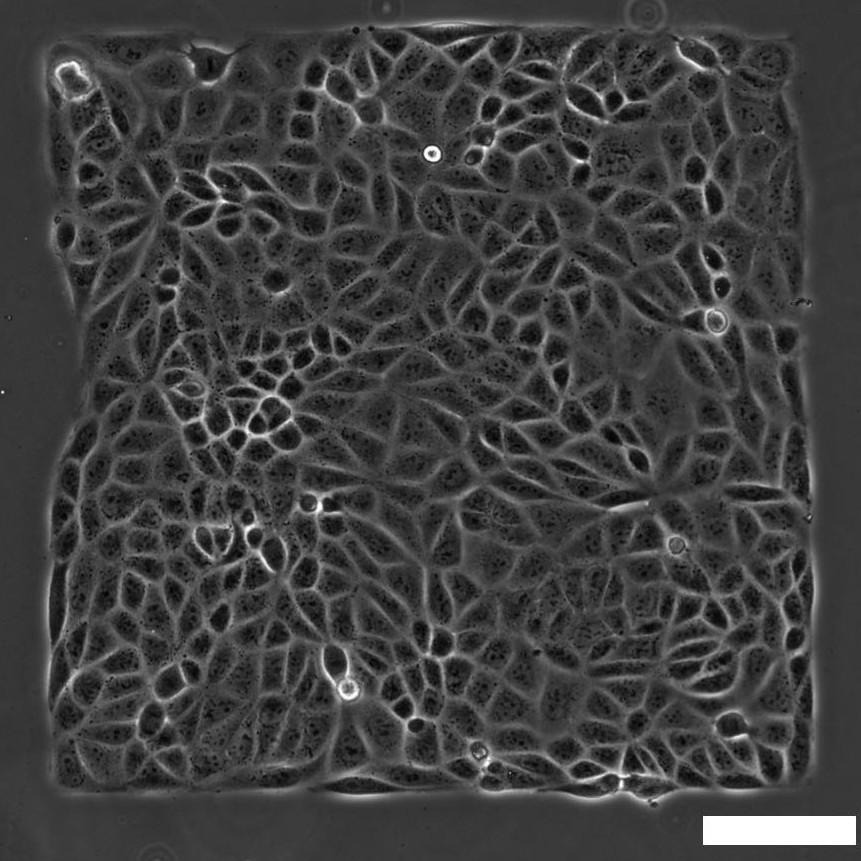
- BISM provides absolute stress measurements validated against traction force moments. In a confined square MDCK monolayer, inferred mean isotropic stress (⟨σ_iso_inf⟩ = 7.76 kPa·μm) closely matched the calculated true value (⟨σ_iso_true⟩ = 7.77 kPa·μm), with a coefficient of determination R_t² = 1.0.
- The method is geometry-agnostic. Applied to a star-shaped MDCK island, BISM inferred stresses (e.g., ⟨σ_iso_inf⟩ = 1.57 kPa·μm) that excellently agreed with traction force moments (⟨σ_iso_true⟩ = 1.56 kPa·μm), demonstrating reliability in arbitrary confined shapes.
- BISM reveals a linear relationship between mean tissue tension and mean traction force amplitude (slope ~15.5 μm, on the order of a cell diameter), providing a quantitative link between external cell-substrate forces and internal tissue stress.
摘要: Cells within biological tissue are constantly subjected to dynamic mechanical forces. Measuring the internal stress of tissues has proven crucial for our understanding of the role of mechanical forces in fundamental biological processes like morphogenesis, collective migration, cell division or cell elimination and death. Previously, we have introduced Bayesian Inversion Stress Microscopy (BISM), which is relying on measuring cell-generated traction forces in vitro and has proven particularly useful to measure absolute stresses in confined cell monolayers. We further demonstrate the applicability and robustness of BISM across various experimental settings with different boundary conditions, ranging from confined tissues of arbitrary shape to monolayers composed of different cell types. Importantly, BISM does not require assumptions on cell rheology. Therefore, it can be applied to complex heterogeneous tissues consisting of different cell types, as long as they can be grown on a flat substrate. Finally, we compare BISM to other common stress measurement techniques using a coherent experimental setup, followed by a discussion on its limitations and further perspectives.