
Paper List
-
SpikGPT: A High-Accuracy and Interpretable Spiking Attention Framework for Single-Cell Annotation
This paper addresses the core challenge of robust single-cell annotation across heterogeneous datasets with batch effects and the critical need to ide...
-
Unlocking hidden biomolecular conformational landscapes in diffusion models at inference time
This paper addresses the core challenge of efficiently and accurately sampling the conformational landscape of biomolecules from diffusion-based struc...
-
Personalized optimization of pediatric HD-tDCS for dose consistency and target engagement
This paper addresses the critical limitation of one-size-fits-all HD-tDCS protocols in pediatric populations by developing a personalized optimization...
-
Realistic Transition Paths for Large Biomolecular Systems: A Langevin Bridge Approach
This paper addresses the core challenge of generating physically realistic and computationally efficient transition paths between distinct protein con...
-
Consistent Synthetic Sequences Unlock Structural Diversity in Fully Atomistic De Novo Protein Design
This paper addresses the core pain point of low sequence-structure alignment in existing synthetic datasets (e.g., AFDB), which severely limits the pe...
-
MoRSAIK: Sequence Motif Reactor Simulation, Analysis and Inference Kit in Python
This work addresses the computational bottleneck in simulating prebiotic RNA reactor dynamics by developing a Python package that tracks sequence moti...
-
On the Approximation of Phylogenetic Distance Functions by Artificial Neural Networks
This paper addresses the core challenge of developing computationally efficient and scalable neural network architectures that can learn accurate phyl...
-
EcoCast: A Spatio-Temporal Model for Continual Biodiversity and Climate Risk Forecasting
This paper addresses the critical bottleneck in conservation: the lack of timely, high-resolution, near-term forecasts of species distribution shifts ...
Influence of Object Affordance on Action Language Understanding: Evidence from Dynamic Causal Modeling Analysis
Centre for Linguistic Science and Technology (CLST), Indian Institute of Technology Guwahati | Neural Engineering Lab, Department of Bio Sciences and Bio Engineering, IIT Guwahati | Biomimetic Robotics and Artificial Intelligence Lab (BRAIL), Department of Mechanical Engineering, IIT Guwahati
30秒速读
IN SHORT: This study addresses the core challenge of moving beyond correlational evidence to establish the *causal direction* and *temporal dynamics* of how object affordance processing in sensorimotor brain regions drives the comprehension of action-related language.
核心创新
- Methodology Applies Dynamic Causal Modeling (DCM) to EEG data to infer *directed, causal connectivity* between key brain regions during affordance-language processing, moving beyond traditional correlational analyses.
- Biology Identifies a specific feedforward causal architecture where the Ventral Premotor Cortex (PMv) acts as a driver, causally influencing the Inferior Parietal Lobule (IPL) and Posterior Superior Temporal Gyrus (pSTG) during action language comprehension.
- Theory Provides direct, mechanistic evidence supporting grounded/embodied cognition theories by showing that affordance-related motor regions (PMv) actively *drive* semantic hubs (pSTG, IPL), rather than merely co-activating with them.
主要结论
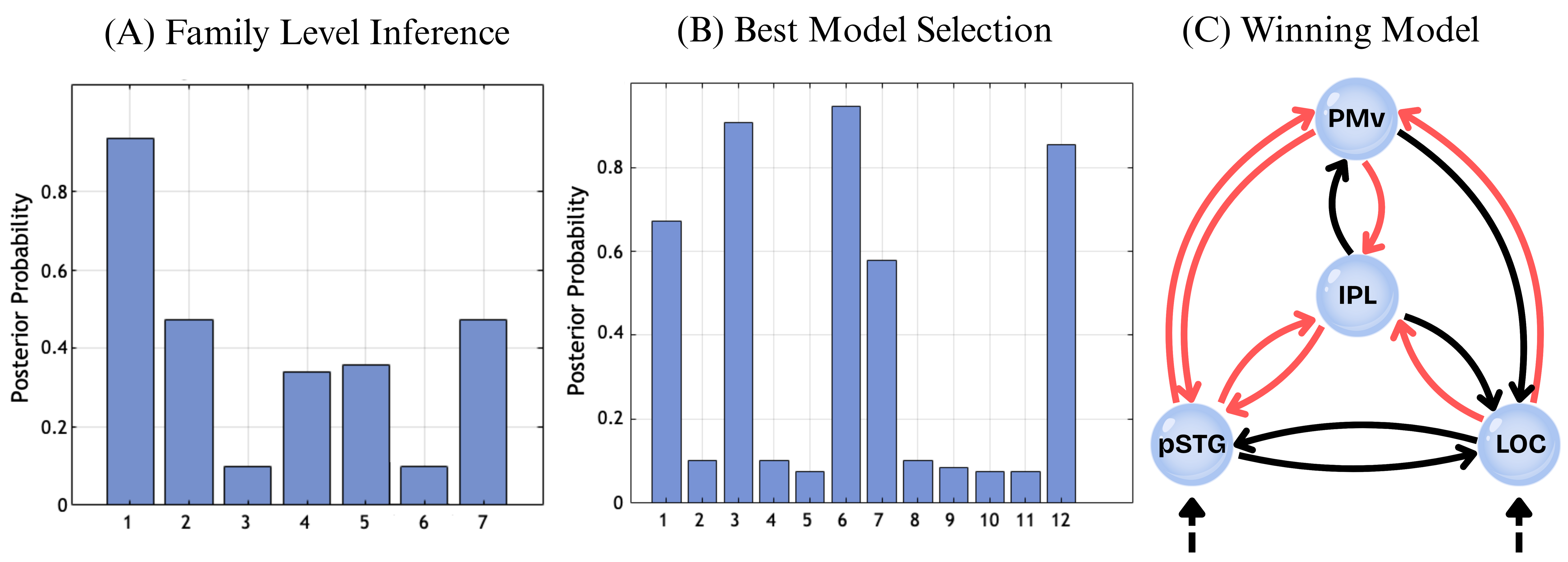
- Bayesian Model Selection identified a dominant model (M6, exceedance probability = 0.91) featuring strong modulatory influences from PMv to IPL (mean coupling strength = 0.28 Hz ± 0.05) and PMv to pSTG, establishing a causal feedforward pathway from motor to semantic regions.
- The video+text condition significantly strengthened the causal influence from PMv to IPL and pSTG compared to the text-only condition, demonstrating that multimodal (visual+linguistic) affordance cues amplify the driving role of premotor cortex.
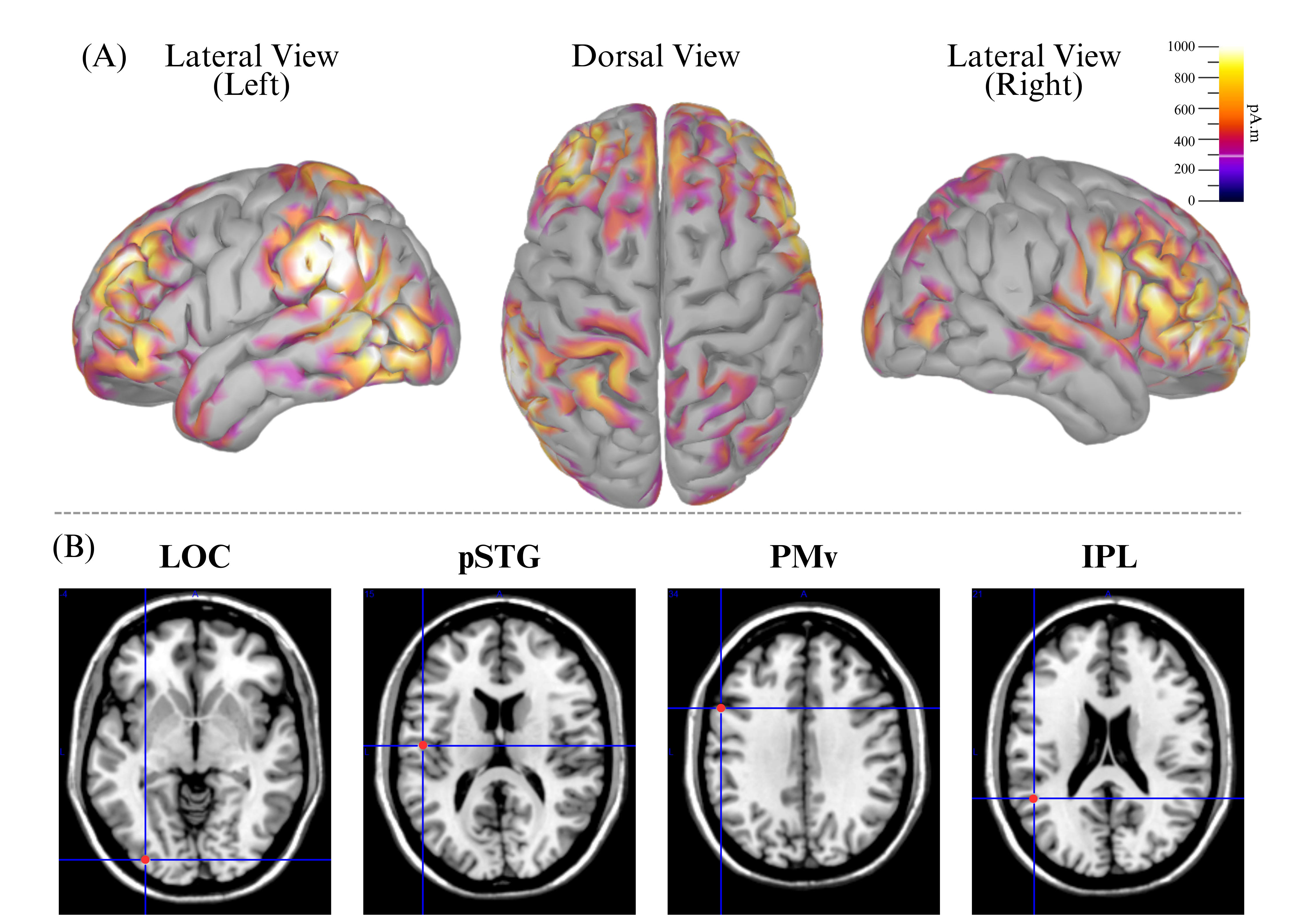
- Source localization (LORETA) and DCM together delineate a core left-hemisphere network (LOC, pSTg, PMv, IPL) where visual input (LOC) feeds into premotor affordance processing (PMv), which in turn causally drives semantic integration in parietal (IPL) and temporal (pSTG) hubs.
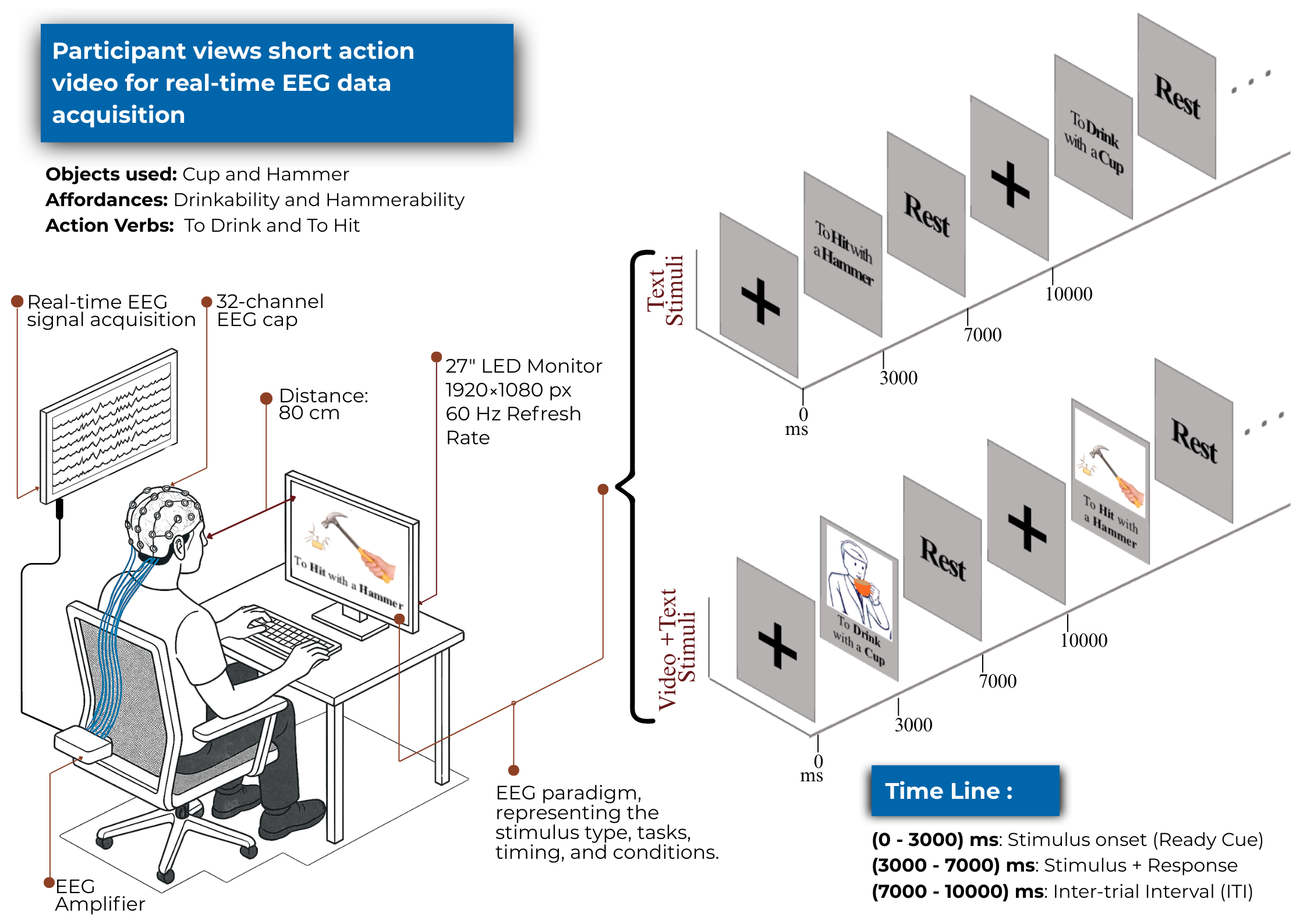
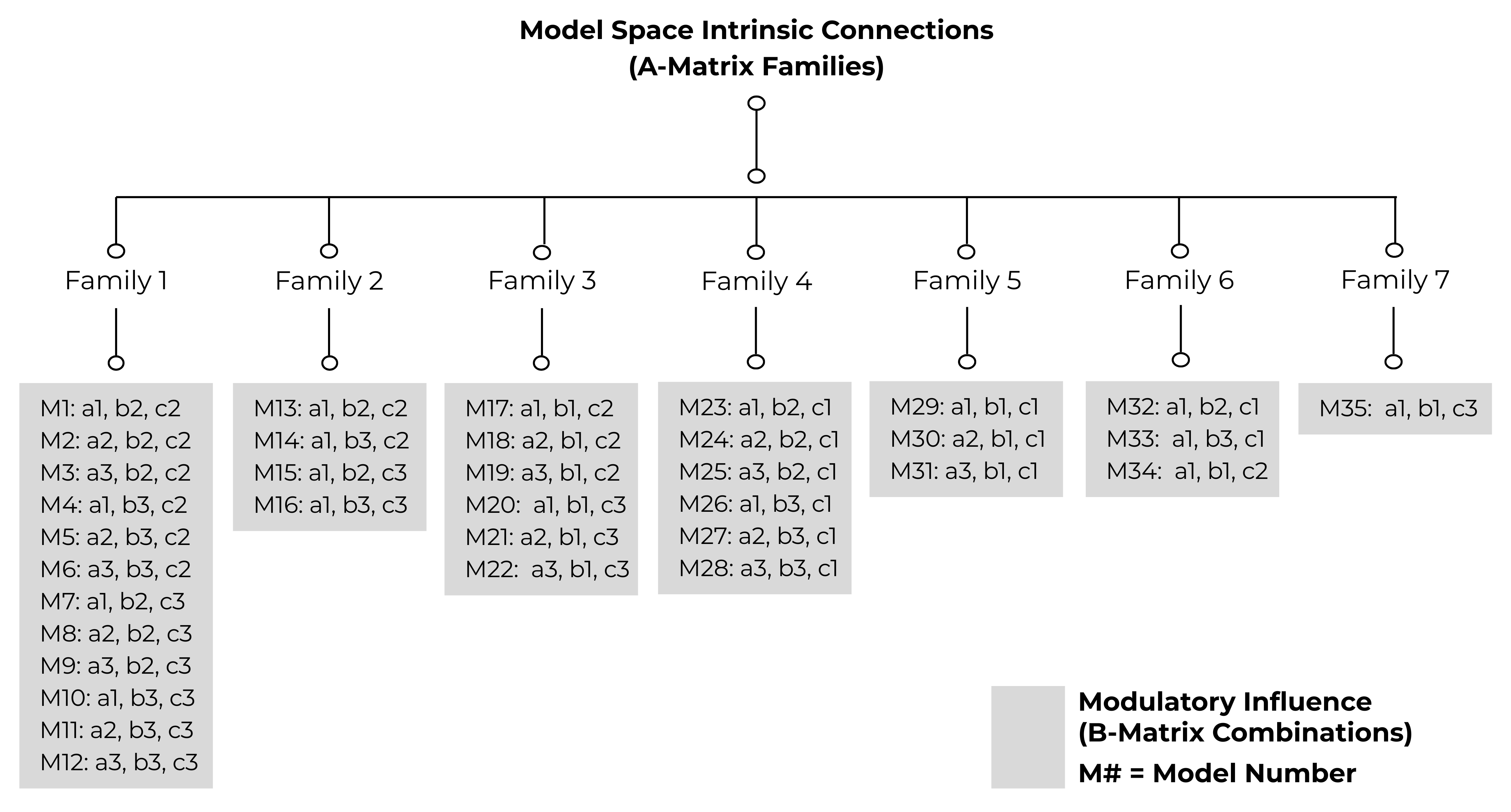
摘要: This study investigates the causal neural dynamics by which affordance representations influence action language comprehension. In this study, 18 participants observed stimuli displayed in two conditions during the experiment: text-only (e.g., ‘Hit with a hammer’) and video+text (visual clips with matching phrases). EEG data were recorded from 32 channels and analyzed for event-related potentials and source localization using LORETA, which identified four left-hemisphere regions of interest: the Lateral Occipital Cortex (LOC), Posterior Superior Temporal Gyrus (pSTG), Ventral Premotor Cortex (PMv), and Inferior Parietal Lobule (IPL). A space of dynamic causal modeling (DCM) was constructed with driving inputs to LOC and pSTG, and multiple connectivity configurations were tested. Bayesian Model Selection revealed a dominant model in which PMv causally influenced IPL and pSTG, reflecting a feedforward architecture from affordance-related motor regions to semantic hubs. Bayesian Model Averaging further confirmed strong endogenous connections from LOC to PMv and IPL, and significant modulation from PMv to IPL. These findings provide direct evidence that affordance processing in premotor regions drives action language understanding by engaging downstream parietal and temporal areas. The results support grounded cognition theories and offer a mechanistic account of how sensorimotor information contributes to linguistic comprehension.