
Paper List
-
Discovery of a Hematopoietic Manifold in scGPT Yields a Method for Extracting Performant Algorithms from Biological Foundation Model Internals
This work addresses the core challenge of extracting reusable, interpretable, and high-performance biological algorithms from the opaque internal repr...
-
MS2MetGAN: Latent-space adversarial training for metabolite–spectrum matching in MS/MS database search
This paper addresses the critical bottleneck in metabolite identification: the generation of high-quality negative training samples that are structura...
-
Toward Robust, Reproducible, and Widely Accessible Intracranial Language Brain-Computer Interfaces: A Comprehensive Review of Neural Mechanisms, Hardware, Algorithms, Evaluation, Clinical Pathways and Future Directions
This review addresses the core challenge of fragmented and heterogeneous evidence that hinders the clinical translation of intracranial language BCIs,...
-
Less Is More in Chemotherapy of Breast Cancer
通过纳入细胞周期时滞和竞争项,解决了现有肿瘤-免疫模型的过度简化问题,以定量比较化疗方案。
-
Fold-CP: A Context Parallelism Framework for Biomolecular Modeling
This paper addresses the critical bottleneck of GPU memory limitations that restrict AlphaFold 3-like models to processing only a few thousand residue...
-
Open Biomedical Knowledge Graphs at Scale: Construction, Federation, and AI Agent Access with Samyama Graph Database
This paper addresses the core pain point of fragmented biomedical data by constructing and federating large-scale, open knowledge graphs to enable sea...
-
Predictive Analytics for Foot Ulcers Using Time-Series Temperature and Pressure Data
This paper addresses the critical need for continuous, real-time monitoring of diabetic foot health by developing an unsupervised anomaly detection fr...
-
Hypothesis-Based Particle Detection for Accurate Nanoparticle Counting and Digital Diagnostics
This paper addresses the core challenge of achieving accurate, interpretable, and training-free nanoparticle counting in digital diagnostic assays, wh...
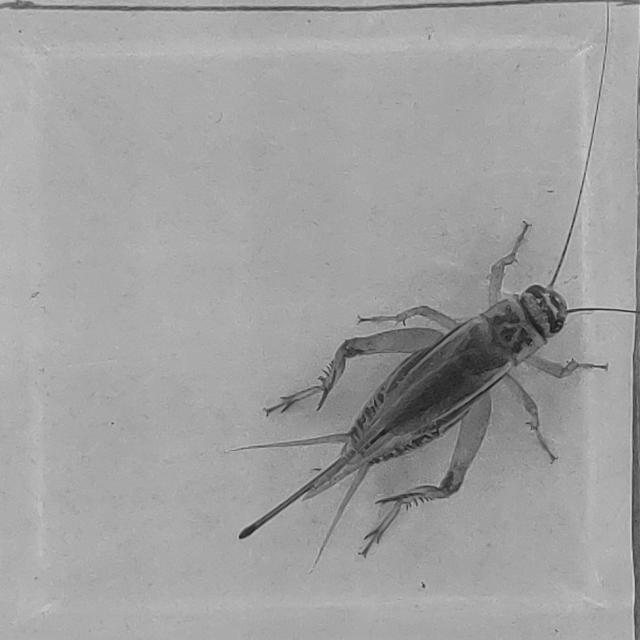
Real-time Cricket Sorting By Sex A low-cost embedded solution using YOLOv8 and Raspberry Pi
Illinois Institute of Technology, Chicago, Illinois | Universidad Politécnica de Madrid, Madrid, Spain
30秒速读
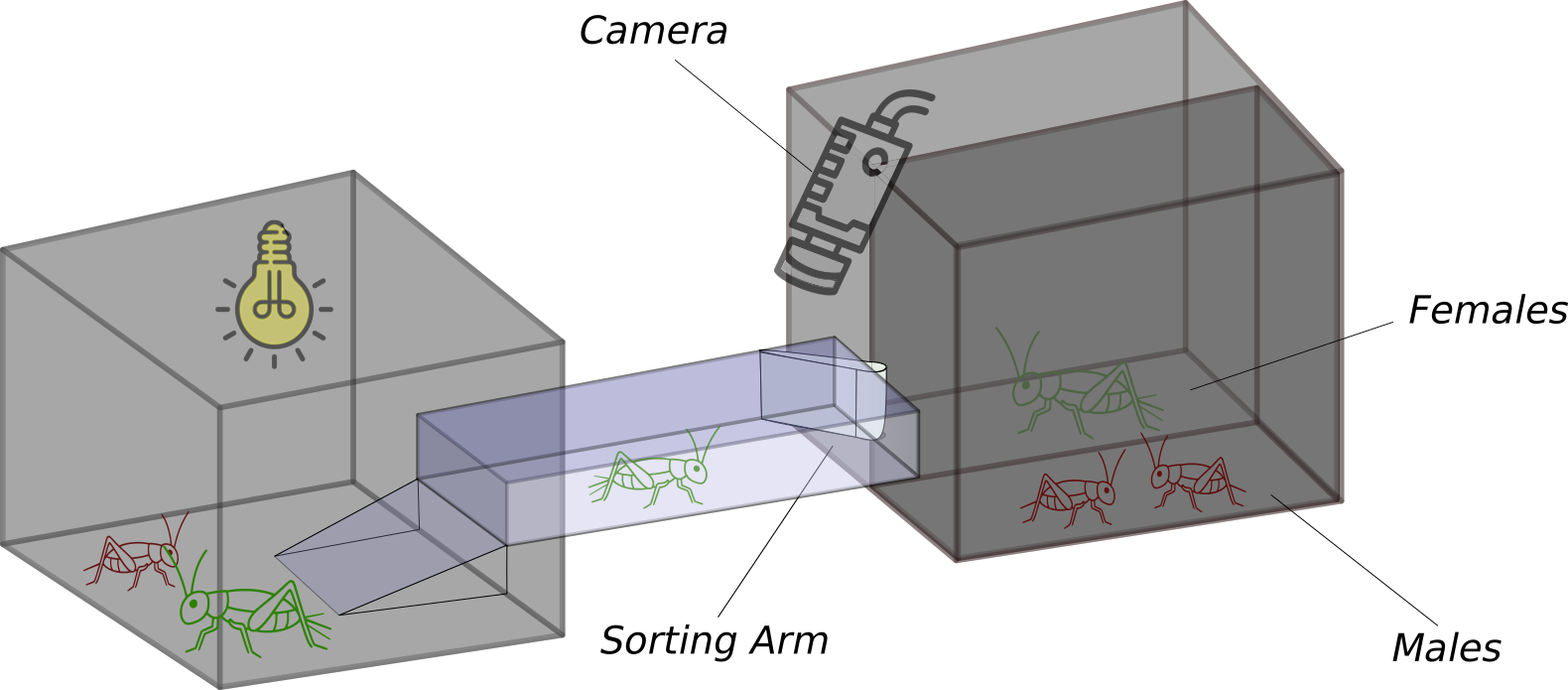
IN SHORT: This paper addresses the critical bottleneck in industrial insect farming: the lack of automated, real-time sex sorting systems for Acheta domesticus crickets, which is essential for selective breeding, optimized reproduction ratios, and nutritional differentiation.
核心创新
- Methodology First integrated system combining embedded computer vision (YOLOv8 nano) with physical actuation for real-time cricket sex sorting, achieving 86.8% overall sorting accuracy.
- Methodology Development of a custom balanced dataset (597 training images) with controlled illumination variability and data augmentation, achieving mAP@0.5 of 0.977 with minimal misclassification (2.3% for females, 2.7% for males).
- Biology Quantitative analysis revealing sex-dependent behavioral differences: males move faster (median 39.5 mm/s vs 18.8 mm/s for females) and are more sensitive to actuator noise, affecting sorting efficiency under different stress conditions.
主要结论
- The system achieved 86.8% overall sorting accuracy across four experiments, with performance varying from 83% under high-stress conditions to 94% under low-stress conditions.
- Movement speed significantly impacts sorting accuracy: misclassified crickets had median speeds of 75.0 mm/s compared to 20.3 mm/s for correctly classified individuals (p<0.05 based on distribution analysis).
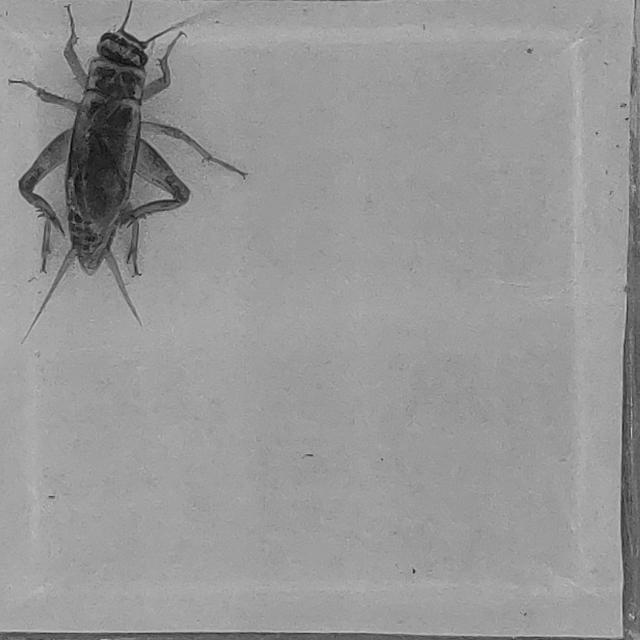
- The YOLOv8 nano model demonstrated excellent detection performance with mAP@0.5 of 0.977 and class-wise precision/recall of 0.857-0.878, proving suitable for resource-constrained edge deployment.
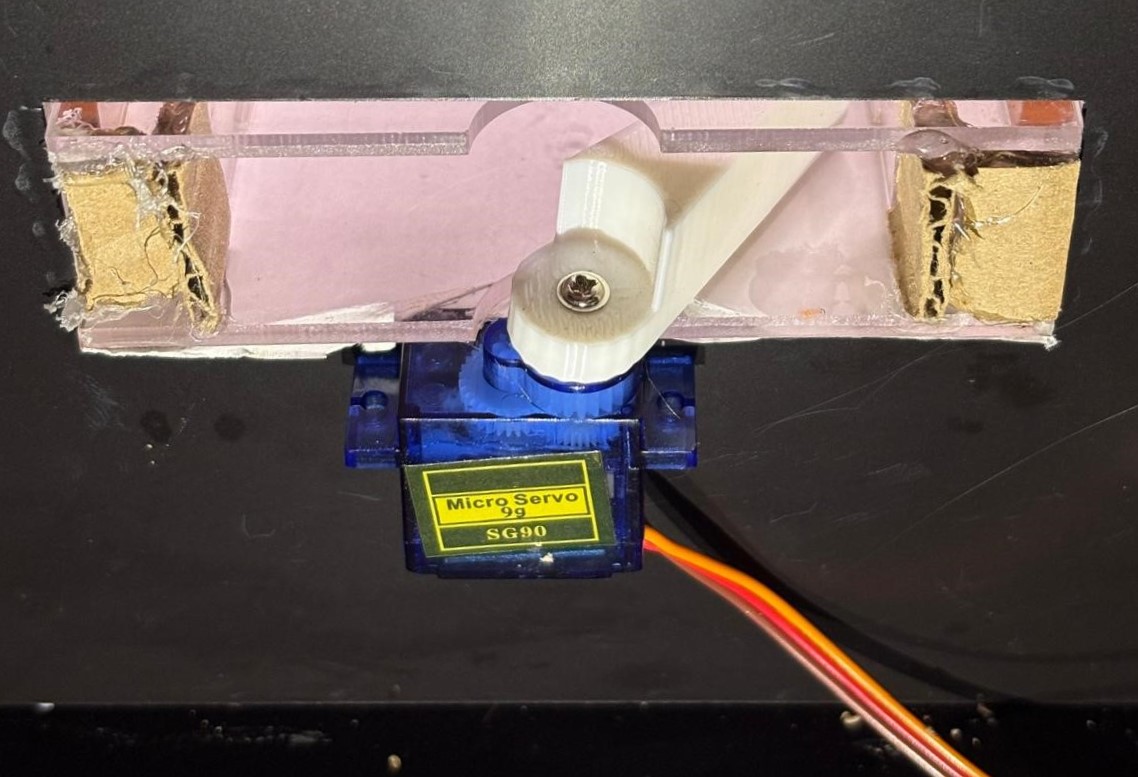
摘要: The global demand for sustainable protein sources is driving increasing interest in edible insects, with Acheta domesticus (house cricket) identified as one of the most suitable species for industrial production. Current farming practices typically rear crickets in mixed-sex populations without automated sex sorting, despite potential benefits such as selective breeding, optimized reproduction ratios, and nutritional differentiation. This work presents a low-cost, real-time system for automated sex-based sorting of Acheta domesticus, combining computer vision and physical actuation. The device integrates a Raspberry Pi 5 with the official Raspberry AI Camera and a custom YOLOv8 nano object detection model, together with a servo-actuated sorting arm. The model reached a mean Average Precision at IoU 0.5 (mAP@0.5) of 0.977 during testing, and real-world experiments with groups of crickets achieved an overall sorting accuracy of 86.8%. These results demonstrate the feasibility of deploying lightweight deep learning models on resource-constrained devices for insect farming applications, offering a practical solution to improve efficiency and sustainability in cricket production.