
Paper List
-
Nyxus: A Next Generation Image Feature Extraction Library for the Big Data and AI Era
This paper addresses the core pain point of efficiently extracting standardized, comparable features from massive (terabyte to petabyte-scale) biomedi...
-
Topological Enhancement of Protein Kinetic Stability
This work addresses the long-standing puzzle of why knotted proteins exist by demonstrating that deep knots provide a functional advantage through enh...
-
A Multi-Label Temporal Convolutional Framework for Transcription Factor Binding Characterization
This paper addresses the critical limitation of existing TF binding prediction methods that treat transcription factors as independent entities, faili...
-
Social Distancing Equilibria in Games under Conventional SI Dynamics
This paper solves the core problem of proving the existence and uniqueness of Nash equilibria in finite-duration SI epidemic games, showing they are a...
-
Binding Free Energies without Alchemy
This paper addresses the core bottleneck of computational expense in Absolute Binding Free Energy calculations by eliminating the need for numerous al...
-
SHREC: A Spectral Embedding-Based Approach for Ab-Initio Reconstruction of Helical Molecules
This paper addresses the core bottleneck in cryo-EM helical reconstruction: eliminating the dependency on accurate initial symmetry parameter estimati...
-
Budget-Sensitive Discovery Scoring: A Formally Verified Framework for Evaluating AI-Guided Scientific Selection
This paper addresses the critical gap in evaluating AI-guided scientific selection strategies under realistic budget constraints, where existing metri...
-
Probabilistic Joint and Individual Variation Explained (ProJIVE) for Data Integration
This paper addresses the core challenge of accurately decomposing shared (joint) and dataset-specific (individual) sources of variation in multi-modal...
Human-Centred Evaluation of Text-to-Image Generation Models for Self-expression of Mental Distress: A Dataset Based on GPT-4o
School of Culture and Communication, Swansea University, United Kingdom | Department of Informatics, University of Oslo, Norway

30秒速读
IN SHORT: This paper addresses the critical gap in evaluating how AI-generated images can effectively support cross-cultural mental distress communication, particularly for international students facing linguistic and cultural barriers.
核心创新
- Methodology Introduces the first publicly available text-to-image evaluation dataset with human judgment scores specifically for mental health communication, comprising 100 textual descriptions, 400 AI-generated images, and 400 categorical evaluation scores.
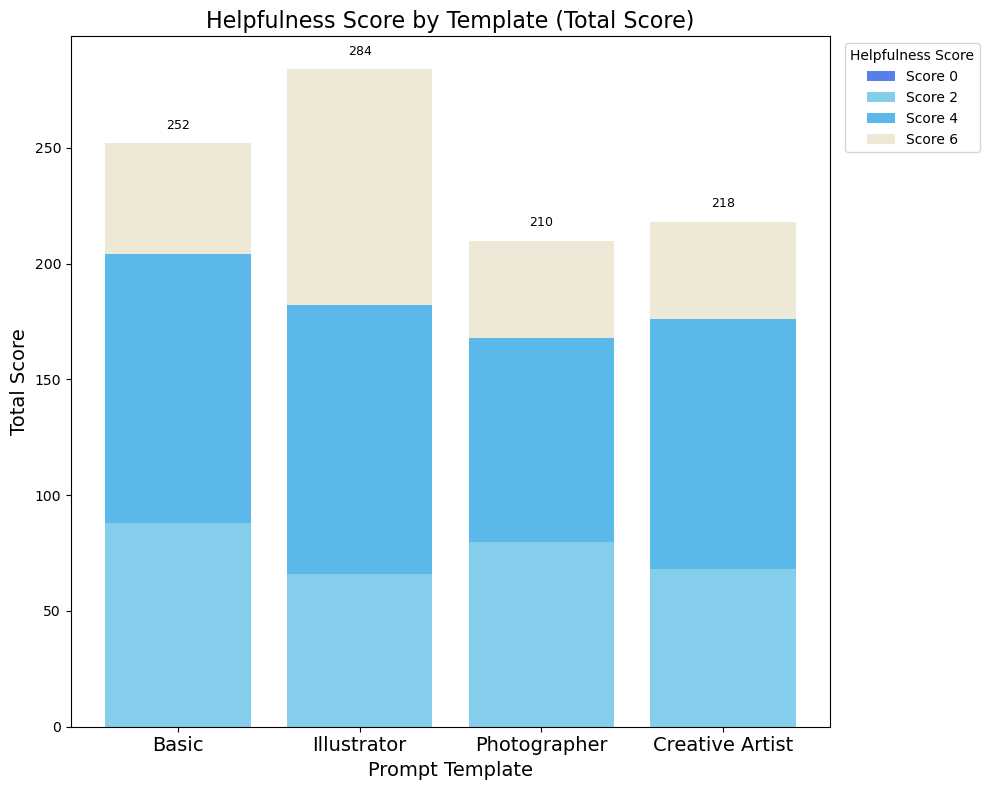
- Methodology Develops and evaluates four persona-based prompt templates (basic, illustrator, photographer, creative artist) rooted in contemporary counselling practices, with the illustrator persona achieving the highest total helpfulness score (284 out of possible 600).
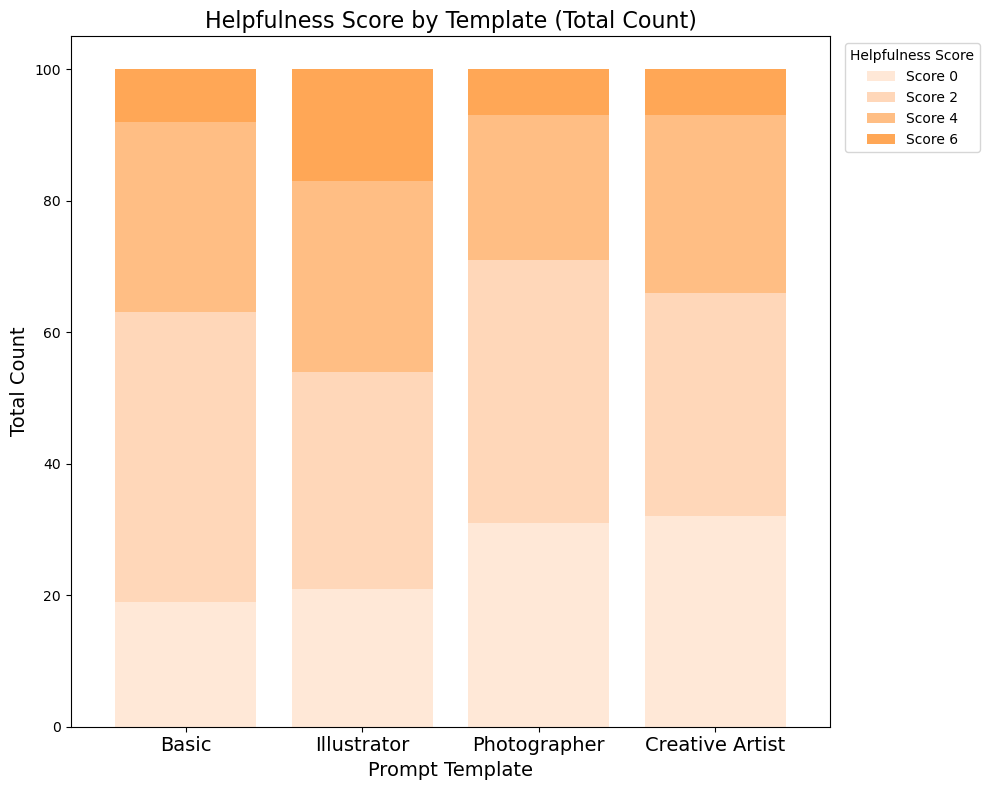
- Biology Demonstrates that AI-generated images can facilitate self-expression of mental distress, with 44% of images rated as 'slightly helpful' and 27% as 'helpful', achieving a mean helpfulness score of 2.4 on a 0-6 scale.
主要结论
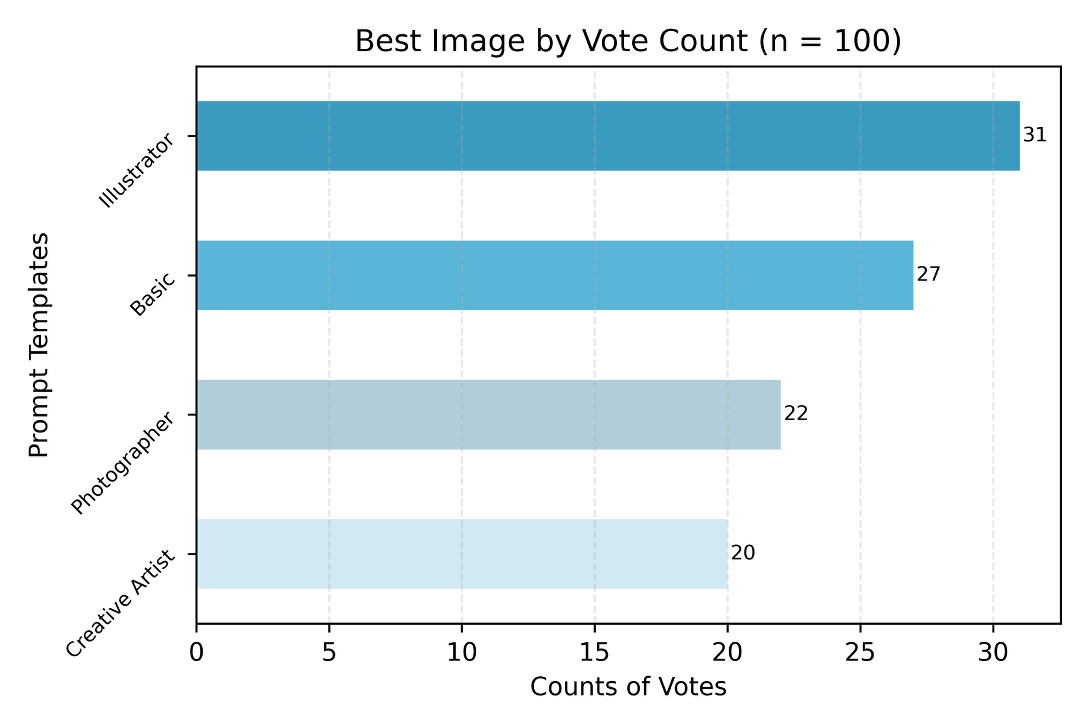
- The illustrator persona prompt achieved the highest total helpfulness score (284) and was selected as the 'best' image in 31% of cases, significantly outperforming other prompts (basic: 252, creative artist: 218, photographer: 210).
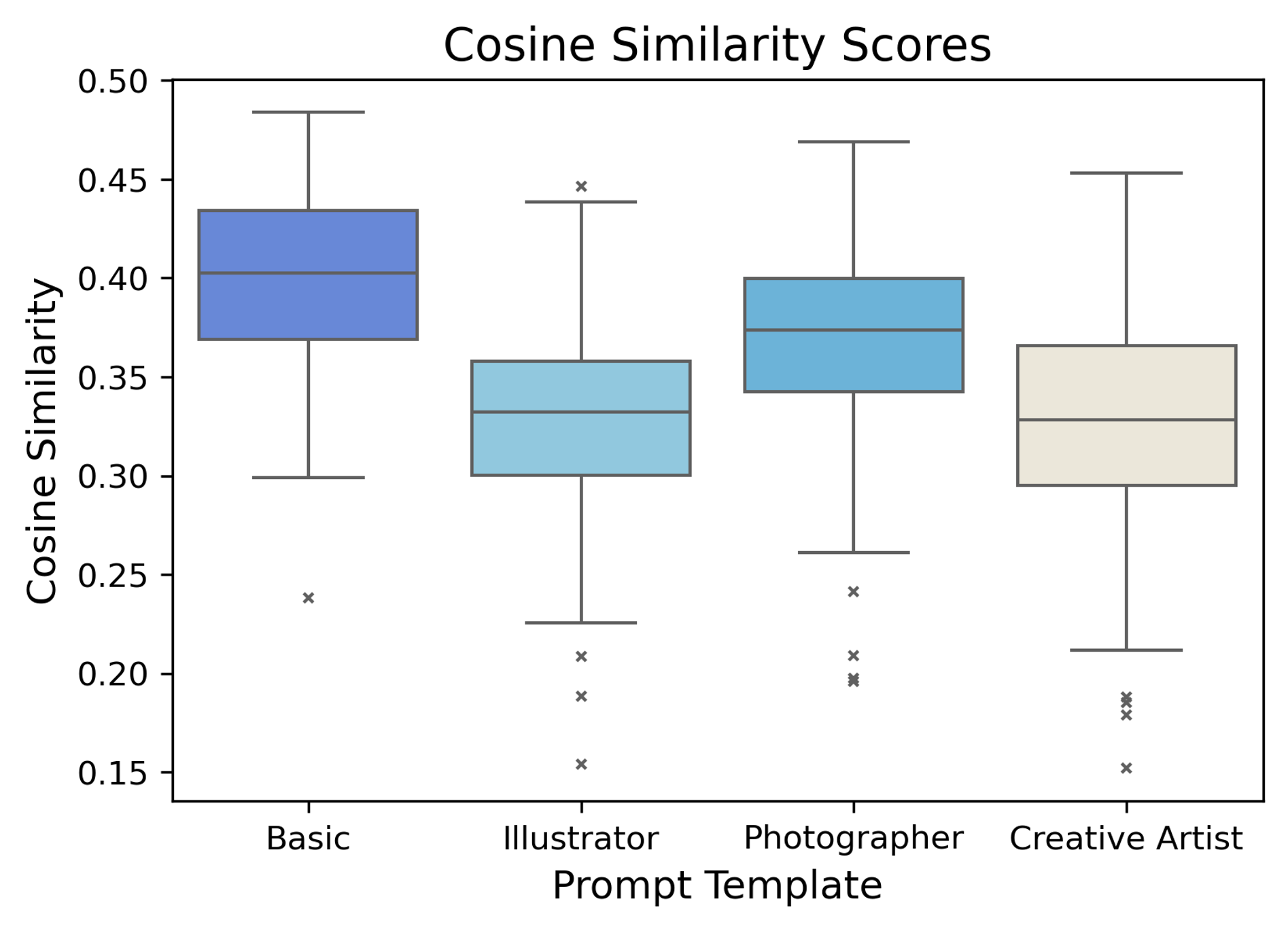
- Human evaluation shows minimal correlation with automatic semantic alignment metrics (Spearman's ρ=0.0271, Kendall's τ=0.0201), highlighting the need for emotion-aware evaluation frameworks beyond traditional similarity measures.
- AI-generated images demonstrated positive utility for mental distress expression, with 71% of images rated as at least 'slightly helpful' (score ≥2) and only 29% rated as 'not helpful' (score=0).
摘要: Effective communication is central to achieving positive healthcare outcomes in mental health contexts, yet international students often face linguistic and cultural barriers that hinder their communication of mental distress. In this study, we evaluate the effectiveness of AI-generated images in supporting self-expression of mental distress. To achieve this, twenty Chinese international students studying at UK universities were invited to describe their personal experiences of mental distress. These descriptions were elaborated using GPT-4o with four persona-based prompt templates rooted in contemporary counselling practice to generate corresponding images. Participants then evaluated the helpfulness of generated images in facilitating the expression of their feelings based on their original descriptions. The resulting dataset comprises 100 textual descriptions of mental distress, 400 generated images, and corresponding human evaluation scores. Findings indicate that prompt design substantially affects perceived helpfulness, with the illustrator persona achieving the highest ratings. This work introduces the first publicly available text-to-image evaluation dataset with human judgment scores in the mental health domain, offering valuable resources for image evaluation, reinforcement learning with human feedback, and multi-modal research on mental health communication.