
Paper List
-
Nyxus: A Next Generation Image Feature Extraction Library for the Big Data and AI Era
This paper addresses the core pain point of efficiently extracting standardized, comparable features from massive (terabyte to petabyte-scale) biomedi...
-
Topological Enhancement of Protein Kinetic Stability
This work addresses the long-standing puzzle of why knotted proteins exist by demonstrating that deep knots provide a functional advantage through enh...
-
A Multi-Label Temporal Convolutional Framework for Transcription Factor Binding Characterization
This paper addresses the critical limitation of existing TF binding prediction methods that treat transcription factors as independent entities, faili...
-
Social Distancing Equilibria in Games under Conventional SI Dynamics
This paper solves the core problem of proving the existence and uniqueness of Nash equilibria in finite-duration SI epidemic games, showing they are a...
-
Binding Free Energies without Alchemy
This paper addresses the core bottleneck of computational expense in Absolute Binding Free Energy calculations by eliminating the need for numerous al...
-
SHREC: A Spectral Embedding-Based Approach for Ab-Initio Reconstruction of Helical Molecules
This paper addresses the core bottleneck in cryo-EM helical reconstruction: eliminating the dependency on accurate initial symmetry parameter estimati...
-
Budget-Sensitive Discovery Scoring: A Formally Verified Framework for Evaluating AI-Guided Scientific Selection
This paper addresses the critical gap in evaluating AI-guided scientific selection strategies under realistic budget constraints, where existing metri...
-
Probabilistic Joint and Individual Variation Explained (ProJIVE) for Data Integration
This paper addresses the core challenge of accurately decomposing shared (joint) and dataset-specific (individual) sources of variation in multi-modal...
Pharmacophore-based design by learning on voxel grids
AIDD, Genentech
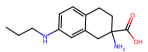
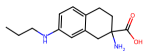
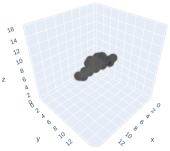
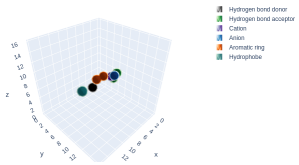
30秒速读
IN SHORT: This paper addresses the computational bottleneck and limited novelty in conventional pharmacophore-based virtual screening by introducing a voxel captioning method that generates novel molecules directly from 3D pharmacophore-shape profiles.
核心创新
- Methodology Proposes VoxCap, the first voxel captioning method for generating SMILES strings from voxelized 3D pharmacophore-shape profiles, bridging 3D structural information with 1D string generation.
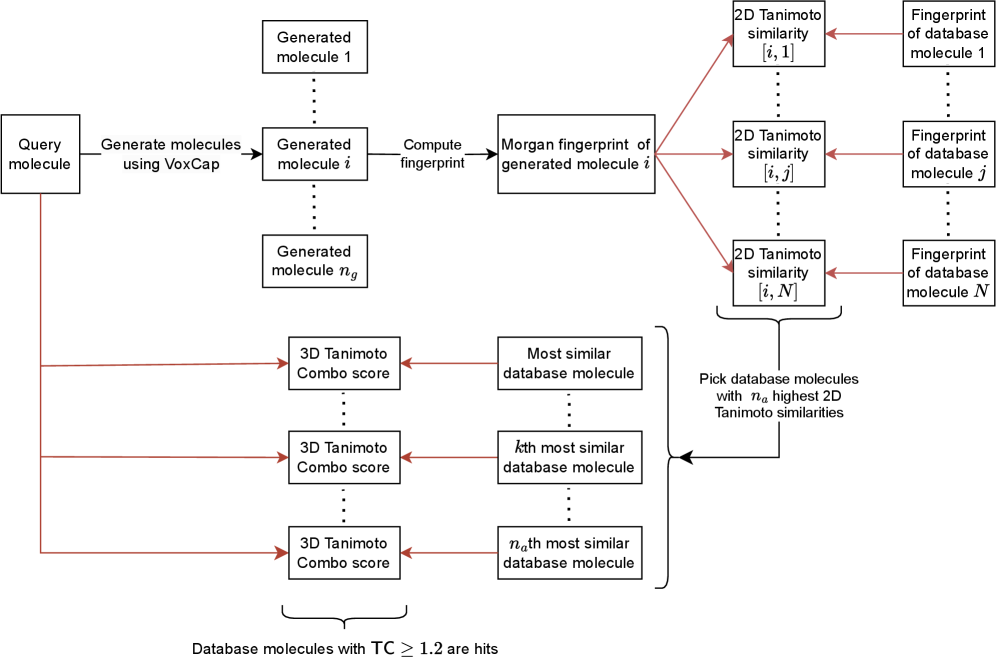
- Methodology Introduces a 'fast search' workflow that reduces computational complexity from O(database size) to O(n_g × n_a), enabling screening of billion-compound libraries previously considered intractable.
- Biology Demonstrates superior performance in generating diverse, novel scaffolds with high pharmacophore-shape similarity (Tanimoto Combo score ≥1.2), addressing both in-distribution and out-of-distribution query molecules.
主要结论
- VoxCap generates significantly more hits than baseline methods, with median hits per query increasing from 0 (baseline) to 116.5 on GEOM-drugs and from 0 to 115 on ChEMBL (p<0.001).
- The model produces diverse scaffolds, with median unique scaffold hits of 55.5 (GEOM-drugs) and 72 (ChEMBL), compared to 0 for baselines and 7-8.5 for PGMG.
- The fast search workflow reduces computational requirements by orders of magnitude while maintaining hit rates, enabling practical screening of billion-compound libraries like Enamine Real (60B compounds).
摘要: Ligand-based drug discovery (LBDD) relies on making use of known binders to a protein target to find structurally diverse molecules similarly likely to bind. This process typically involves a brute force search of the known binder (query) against a molecular library using some metric of molecular similarity. One popular approach overlays the pharmacophore-shape profile of the known binder to 3D conformations enumerated for each of the library molecules, computes overlaps, and picks a set of diverse library molecules with high overlaps. While this virtual screening workflow has had considerable success in hit diversification, scaffold hopping, and patent busting, it scales poorly with library sizes and restricts candidate generation to existing library compounds. Leveraging recent advances in voxel-based generative modelling, we propose a pharmacophore-based generative model and workflows that address the scaling and fecundity issues of conventional pharmacophore-based virtual screening. We introduce VoxCap, a voxel captioning method for generating SMILES strings from voxelised molecular representations.We propose two workflows as practical use cases as well as benchmarks for pharmacophore-based generation: de-novo design, in which we aim to generate new molecules with high pharmacophore-shape similarities to query molecules, and fast search, which aims to combine generative design with a cheap 2D substructure similarity search for efficient hit identification. Our results show that VoxCap significantly outperforms previous methods in generating diverse de-novo hits. When combined with our fast search workflow, VoxCap reduces computational time by orders of magnitude while returning hits for all query molecules, enabling the search of large libraries that are intractable to search by brute force.