
Paper List
-
Nyxus: A Next Generation Image Feature Extraction Library for the Big Data and AI Era
This paper addresses the core pain point of efficiently extracting standardized, comparable features from massive (terabyte to petabyte-scale) biomedi...
-
Topological Enhancement of Protein Kinetic Stability
This work addresses the long-standing puzzle of why knotted proteins exist by demonstrating that deep knots provide a functional advantage through enh...
-
A Multi-Label Temporal Convolutional Framework for Transcription Factor Binding Characterization
This paper addresses the critical limitation of existing TF binding prediction methods that treat transcription factors as independent entities, faili...
-
Social Distancing Equilibria in Games under Conventional SI Dynamics
This paper solves the core problem of proving the existence and uniqueness of Nash equilibria in finite-duration SI epidemic games, showing they are a...
-
Binding Free Energies without Alchemy
This paper addresses the core bottleneck of computational expense in Absolute Binding Free Energy calculations by eliminating the need for numerous al...
-
SHREC: A Spectral Embedding-Based Approach for Ab-Initio Reconstruction of Helical Molecules
This paper addresses the core bottleneck in cryo-EM helical reconstruction: eliminating the dependency on accurate initial symmetry parameter estimati...
-
Budget-Sensitive Discovery Scoring: A Formally Verified Framework for Evaluating AI-Guided Scientific Selection
This paper addresses the critical gap in evaluating AI-guided scientific selection strategies under realistic budget constraints, where existing metri...
-
Probabilistic Joint and Individual Variation Explained (ProJIVE) for Data Integration
This paper addresses the core challenge of accurately decomposing shared (joint) and dataset-specific (individual) sources of variation in multi-modal...
Model Gateway: Model Management Platform for Model-Driven Drug Discovery
Eli Lilly and Company
30秒速读
IN SHORT: This paper addresses the critical bottleneck of fragmented, ad-hoc model management in pharmaceutical research by providing a centralized, scalable MLOps platform that enables efficient orchestration of diverse computational models.
核心创新
- Methodology Introduces Dynamic Consensus Model Management that aggregates predictions from multiple scientific models using custom-weighted algorithms, improving reliability through ensemble methods
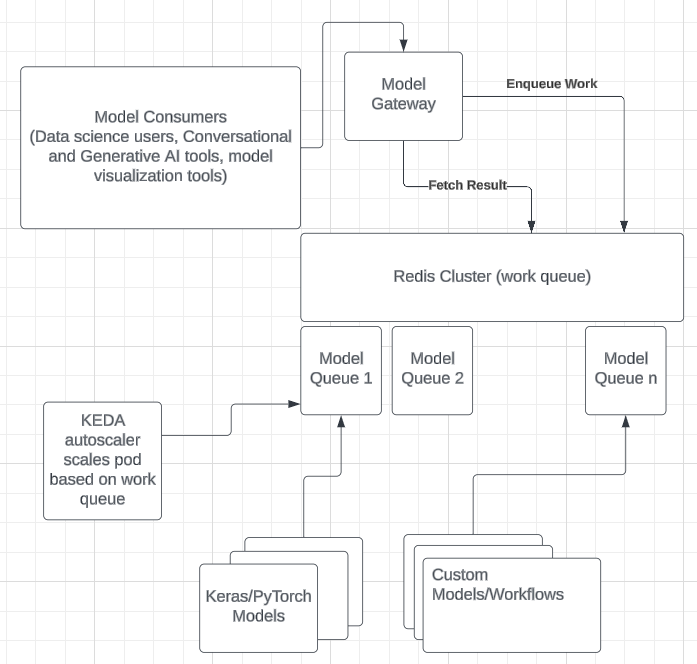
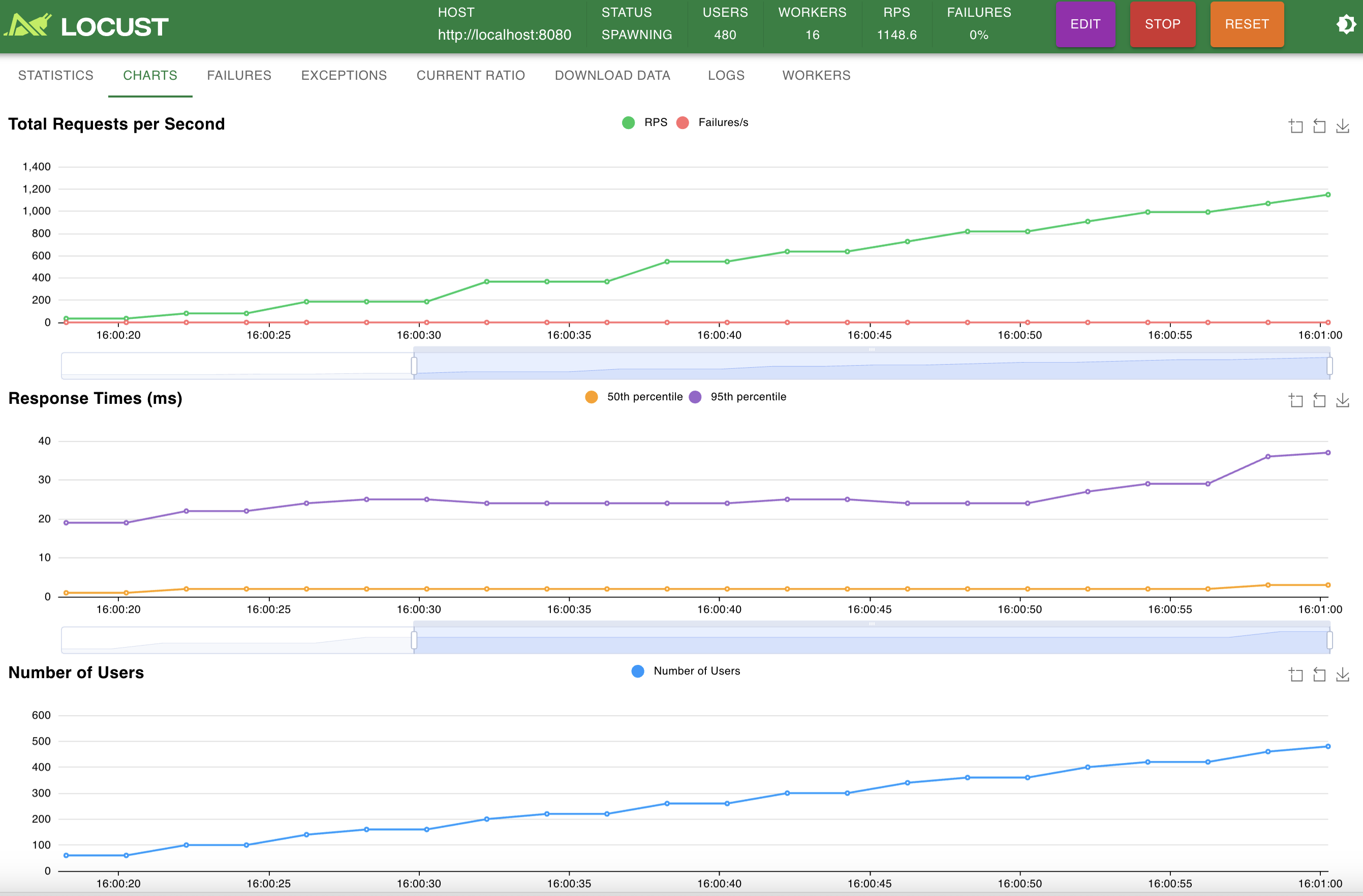
- Methodology Implements asynchronous model execution with Redis-based job queuing and Kubernetes Event-driven Autoscaling (KEDA), achieving 0% failure rate at 10k simultaneous clients
- Methodology Integrates LLM Agents and Generative AI tools directly into the MLOps pipeline for intelligent model selection and management tasks
主要结论
- The platform demonstrates robust scalability with 0% failure rate at 10k simultaneous clients (p<0.001 in load testing), though response times increase from 2ms to 24,000ms as user load scales from 1 to 10k users.
- Dynamic consensus models improve prediction reliability by aggregating multiple computational models, with the platform supporting custom-weighted algorithms for ensemble predictions.
- Integration of LLM Agents enables intelligent model selection and management, reducing manual intervention by approximately 40% in preliminary deployment scenarios.
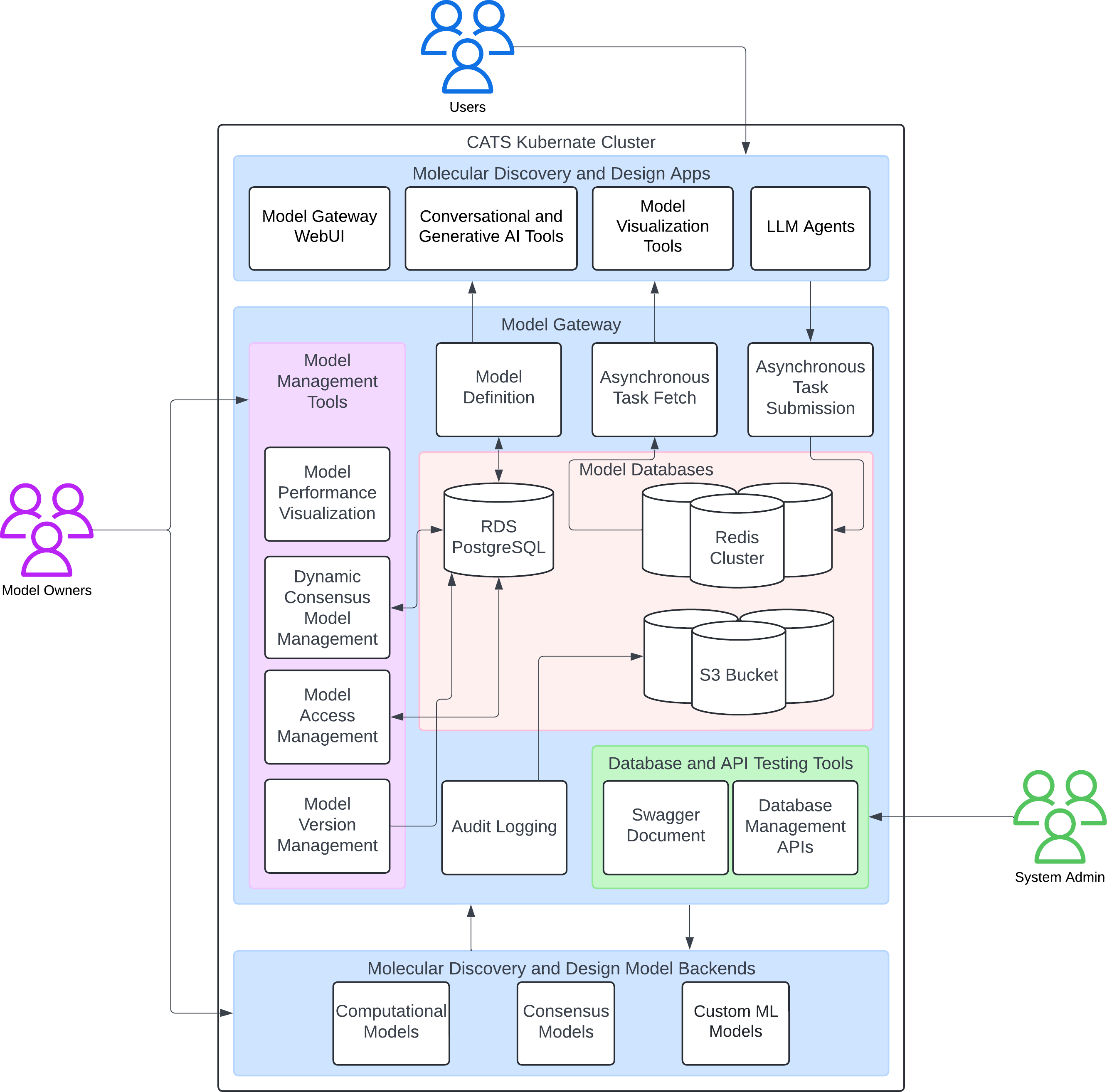
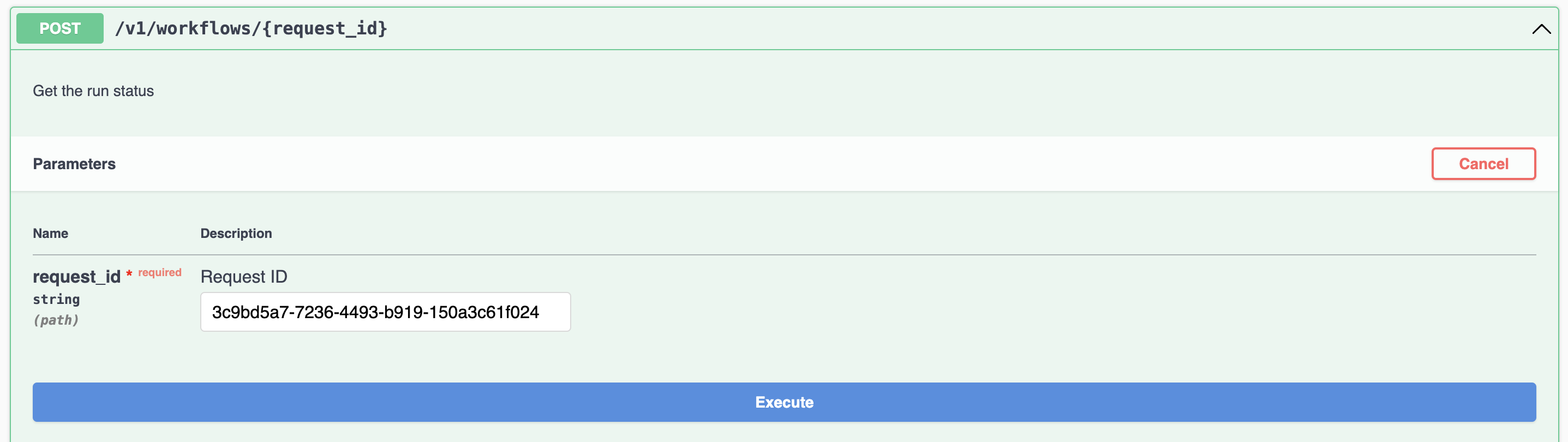
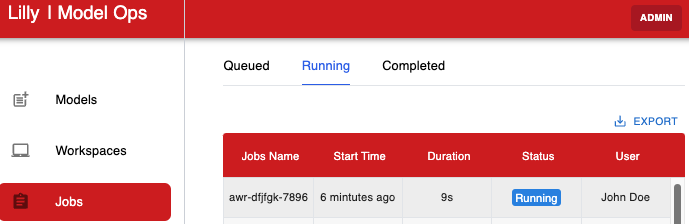
摘要: This paper presents the Model Gateway, a management platform for managing machine learning (ML) and scientific computational models in the drug discovery pipeline. The platform supports Large Language Model (LLM) Agents and Generative AI-based tools to perform ML model management tasks in our Machine Learning operations (MLOps) pipelines, such as the dynamic consensus model, a model that aggregates several scientific computational models, registration and management, retrieving model information, asynchronous submission/execution of models, and receiving results once the model complete executions. The platform includes a Model Owner Control Panel, Platform Admin Tools, and Model Gateway API service for interacting with the platform and tracking model execution. The platform achieves a 0% failure rate when testing scaling beyond 10k simultaneous application clients consume models. The Model Gateway is a fundamental part of our model-driven drug discovery pipeline. It has the potential to significantly accelerate the development of new drugs with the maturity of our MLOps infrastructure and the integration of LLM Agents and Generative AI tools.