
Paper List
-
An AI Implementation Science Study to Improve Trustworthy Data in a Large Healthcare System
This paper addresses the critical gap between theoretical AI research and real-world clinical implementation by providing a practical framework for as...
-
The BEAT-CF Causal Model: A model for guiding the design of trials and observational analyses of cystic fibrosis exacerbations
This paper addresses the critical gap in cystic fibrosis exacerbation management by providing a formal causal framework that integrates expert knowled...
-
Hierarchical Molecular Language Models (HMLMs)
This paper addresses the core challenge of accurately modeling context-dependent signaling, pathway cross-talk, and temporal dynamics across multiple ...
-
Stability analysis of action potential generation using Markov models of voltage‑gated sodium channel isoforms
This work addresses the challenge of systematically characterizing how the high-dimensional parameter space of Markov models for different sodium chan...
-
Approximate Bayesian Inference on Mechanisms of Network Growth and Evolution
This paper addresses the core challenge of inferring the relative contributions of multiple, simultaneous generative mechanisms in network formation w...
-
EnzyCLIP: A Cross-Attention Dual Encoder Framework with Contrastive Learning for Predicting Enzyme Kinetic Constants
This paper addresses the core challenge of jointly predicting enzyme kinetic parameters (Kcat and Km) by modeling dynamic enzyme-substrate interaction...
-
Tissue stress measurements with Bayesian Inversion Stress Microscopy
This paper addresses the core challenge of measuring absolute, tissue-scale mechanical stress without making assumptions about tissue rheology, which ...
-
DeepFRI Demystified: Interpretability vs. Accuracy in AI Protein Function Prediction
This study addresses the critical gap between high predictive accuracy and biological interpretability in DeepFRI, revealing that the model often prio...
Stability analysis of action potential generation using Markov models of voltage‑gated sodium channel isoforms
School of Mathematics and Statistics, Rochester Institute of Technology | School of Physics, Rochester Institute of Technology | School of Physics and Astronomy & School of Mathematics and Statistics, Rochester Institute of Technology
30秒速读
IN SHORT: This work addresses the challenge of systematically characterizing how the high-dimensional parameter space of Markov models for different sodium channel isoforms influences the robustness and excitability of neuronal firing.
核心创新
- Methodology Integrates a six-state Markov model for nine human NaV isoforms with a simplified KV3.1 model, enabling a unified framework for isoform-specific stability analysis.
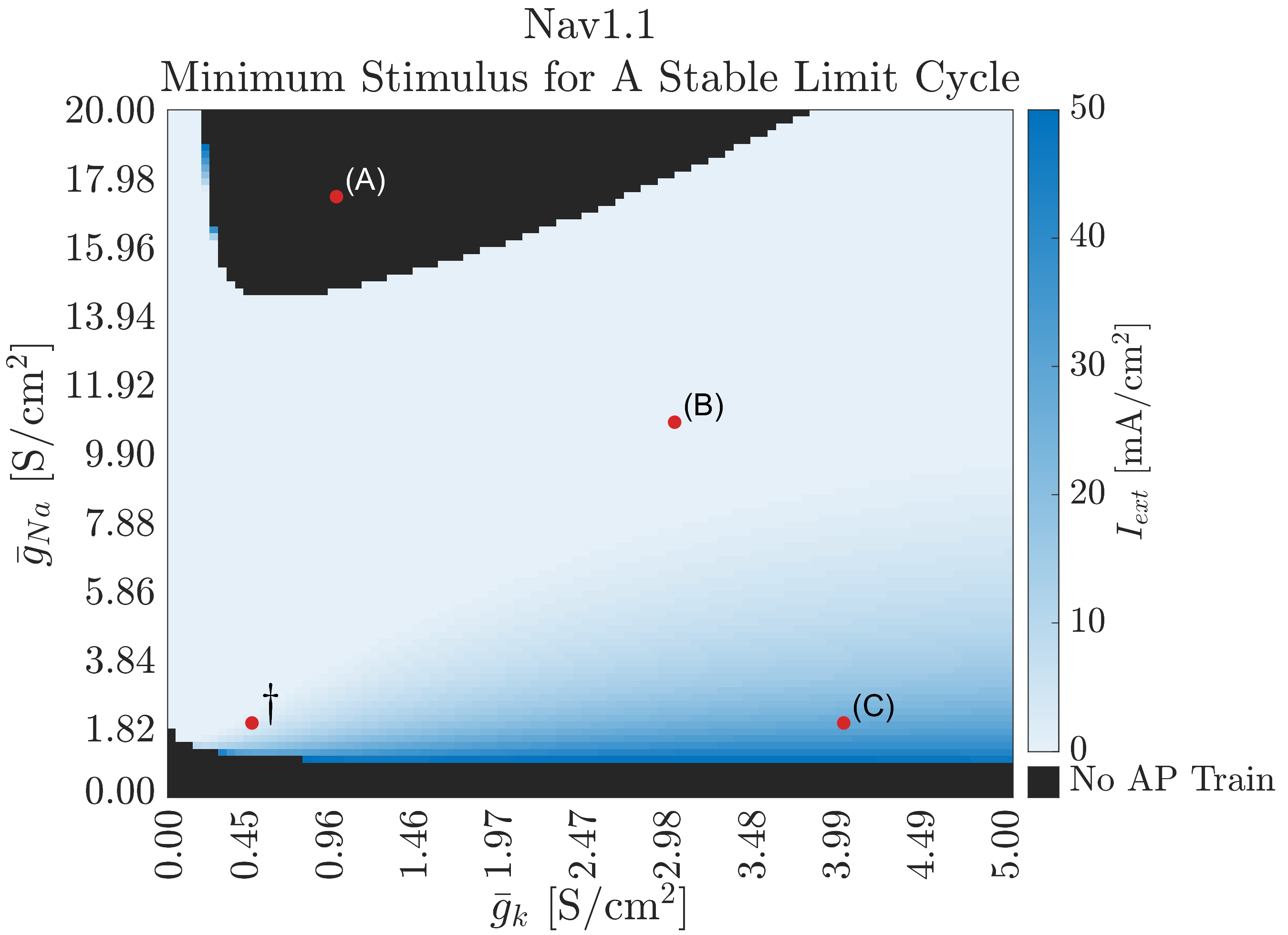
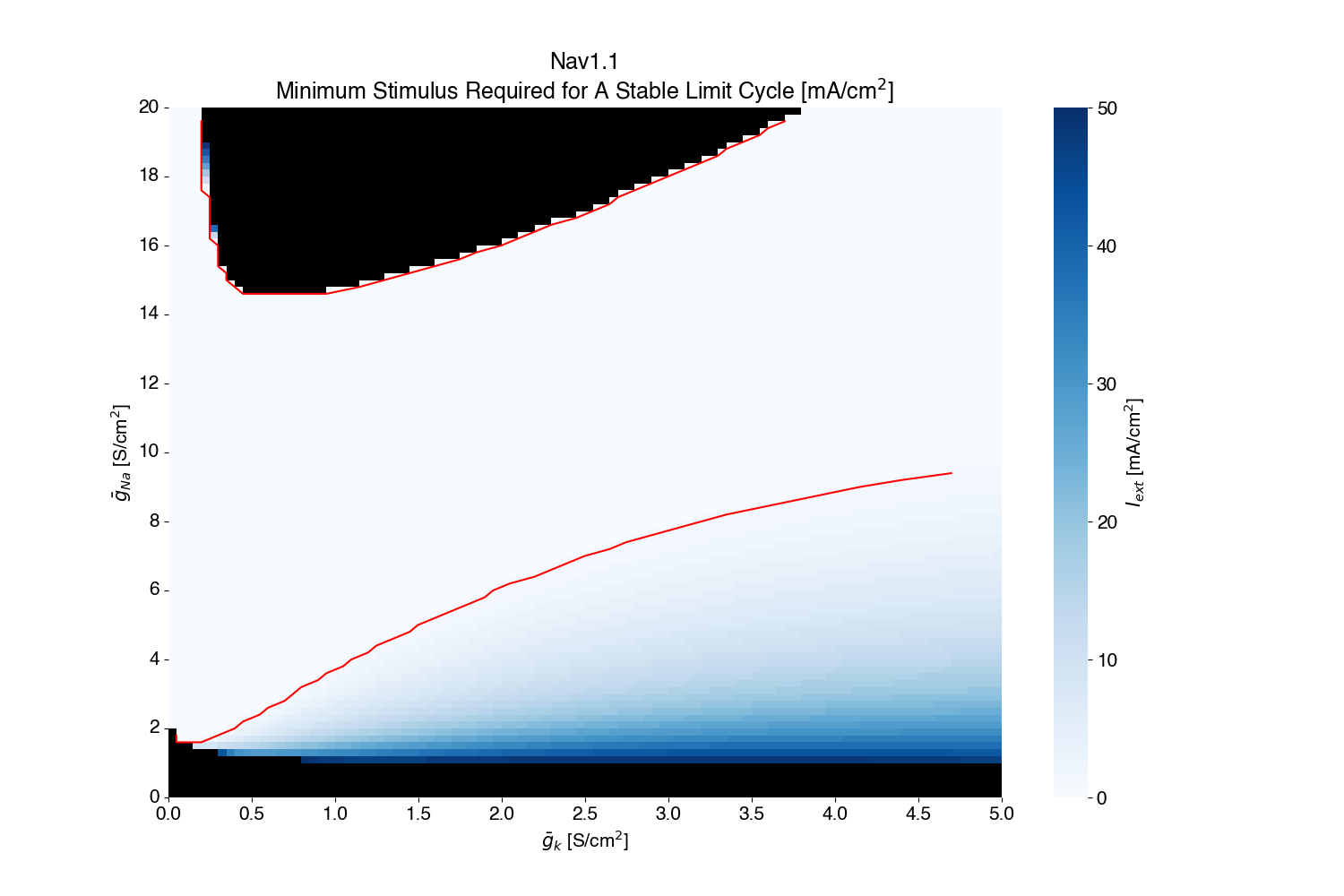
- Methodology Applies bifurcation theory and local stability analysis to map 'excitable landscapes' across the (g_Na, g_K) parameter space, visualizing regions supporting stable oscillatory behavior.
- Biology Quantitatively ranks NaV isoforms by their supported excitable regimes, identifying NaV1.3, 1.4, and 1.6 as broadly supportive and NaV1.7 and 1.9 as minimally oscillatory.
主要结论
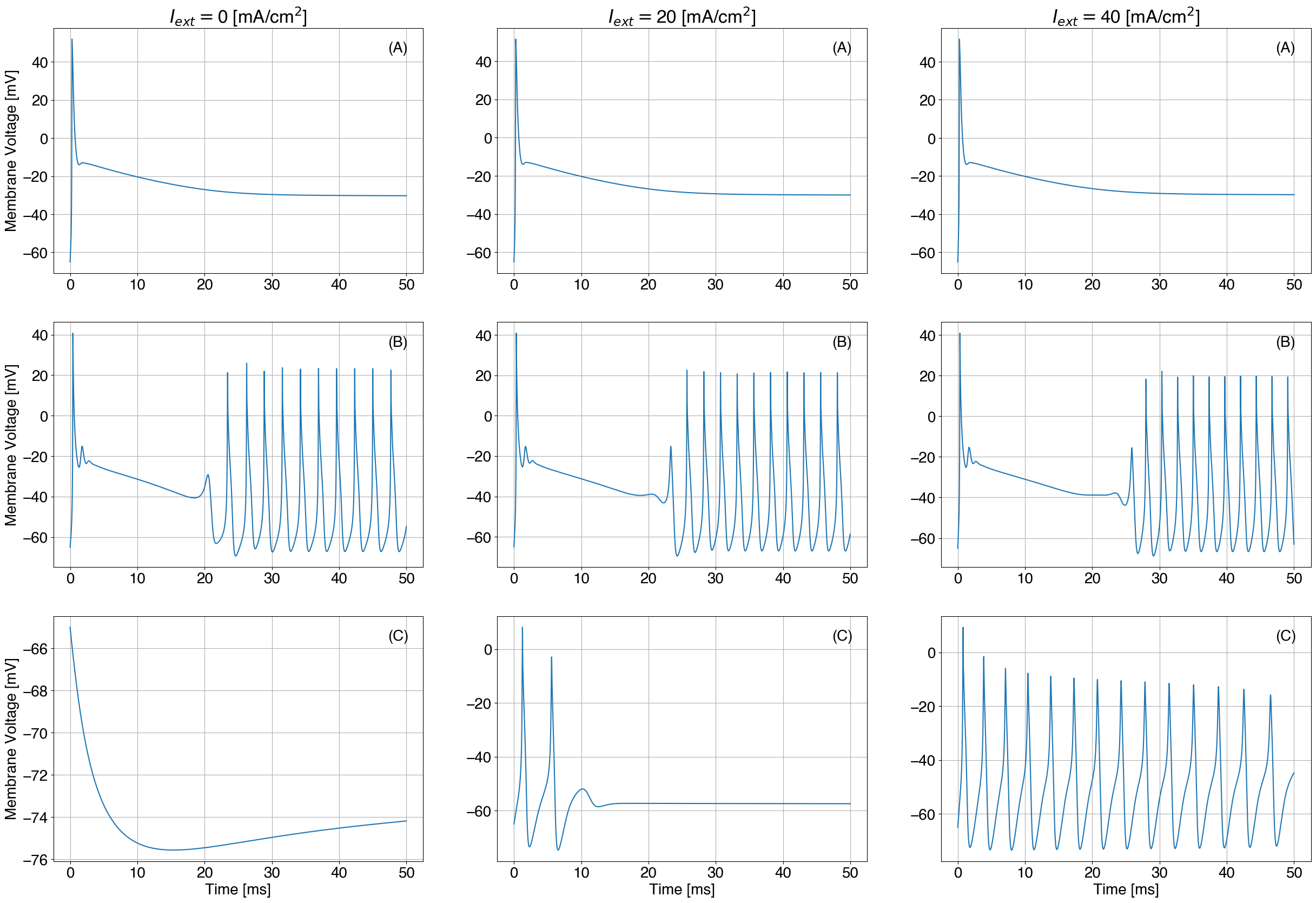
- Isoforms NaV1.3, NaV1.4, and NaV1.6 support the broadest parameter regions for stable limit cycles (oscillatory firing), indicating their robustness in sustaining action potential trains.
- Isoforms NaV1.7 and NaV1.9 exhibit minimal oscillatory behavior across the tested conductance parameter space, correlating with their specialized roles in peripheral nociception.
- The hybrid Markov-HH modeling and stability analysis framework successfully narrows the vast parameter search space for designing synthetic excitable systems, moving from trial-and-error to principled design.
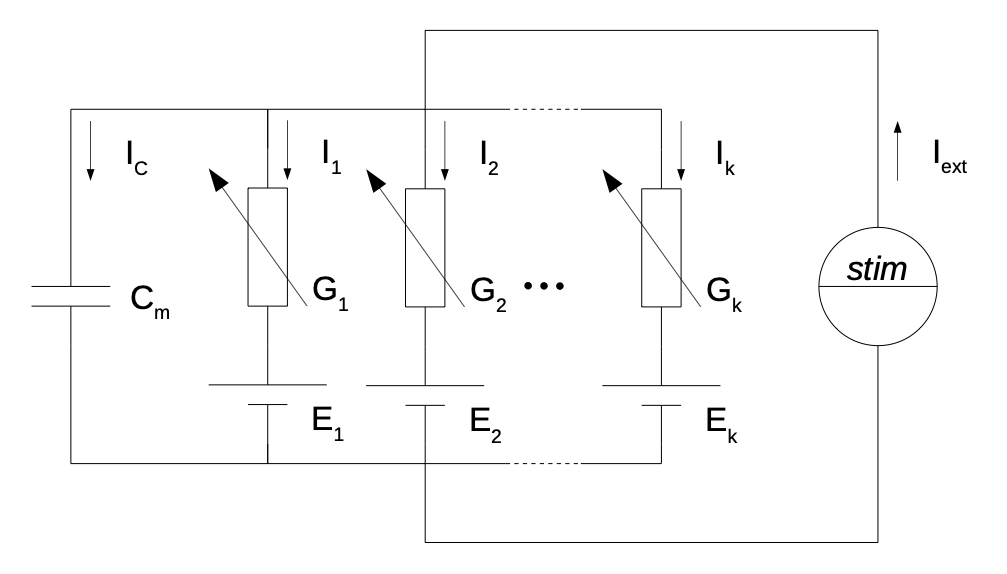
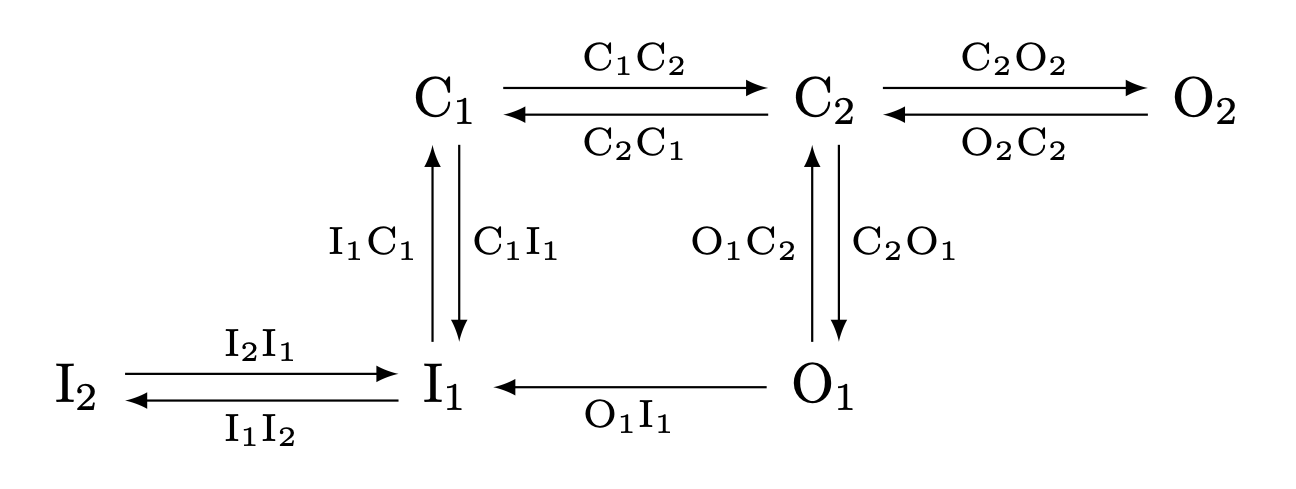
摘要: We investigate a conductance‑based neuron model to explore how voltage‑gated ion channel isoforms influence action‑potential generation. The model combines a six‑state Markov representation of NaV channels with a first‑order KV3.1 model, allowing us to vary maximal sodium and potassium conductances and compare nine NaV isoforms. Using bifurcation theory and local stability analysis, we map regions of stable limit cycles and visualize excitability landscapes via heatmap‑based diagrams. These analyses show that isoforms NaV1.3, NaV1.4 and NaV1.6 support broad excitable regimes, while isoforms NaV1.7 and NaV1.9 exhibit minimal oscillatory behavior. Our findings provide insights into the role of channel heterogeneity in neuronal dynamics and may help to guide the design of synthetic excitable systems by narrowing the parameter space needed for robust action‑potential trains.