
Paper List
-
The Effective Reproduction Number in the Kermack-McKendrick model with age of infection and reinfection
This paper addresses the challenge of accurately estimating the time-varying effective reproduction number ℛ(t) in epidemics by incorporating two crit...
-
Covering Relations in the Poset of Combinatorial Neural Codes
This work addresses the core challenge of navigating the complex poset structure of neural codes to systematically test the conjecture linking convex ...
-
Collective adsorption of pheromones at the water-air interface
This paper addresses the core challenge of understanding how amphiphilic pheromones, previously assumed to be transported in the gas phase, can be sta...
-
pHapCompass: Probabilistic Assembly and Uncertainty Quantification of Polyploid Haplotype Phase
This paper addresses the core challenge of accurately assembling polyploid haplotypes from sequencing data, where read assignment ambiguity and an exp...
-
Setting up for failure: automatic discovery of the neural mechanisms of cognitive errors
This paper addresses the core challenge of automating the discovery of biologically plausible recurrent neural network (RNN) dynamics that can replica...
-
Influence of Object Affordance on Action Language Understanding: Evidence from Dynamic Causal Modeling Analysis
This study addresses the core challenge of moving beyond correlational evidence to establish the *causal direction* and *temporal dynamics* of how obj...
-
Revealing stimulus-dependent dynamics through statistical complexity
This paper addresses the core challenge of detecting stimulus-specific patterns in neural population dynamics that remain hidden to traditional variab...
-
Exactly Solvable Population Model with Square-Root Growth Noise and Cell-Size Regulation
This paper addresses the fundamental gap in understanding how microscopic growth fluctuations, specifically those with size-dependent (square-root) no...
MCP-AI: Protocol-Driven Intelligence Framework for Autonomous Reasoning in Healthcare
Organizations not explicitly listed in provided content
30秒速读
IN SHORT: This paper addresses the critical gap in healthcare AI systems that lack contextual reasoning, long-term state management, and verifiable workflows by introducing a protocol-driven framework that enables autonomous, explainable clinical decision-making.
核心创新
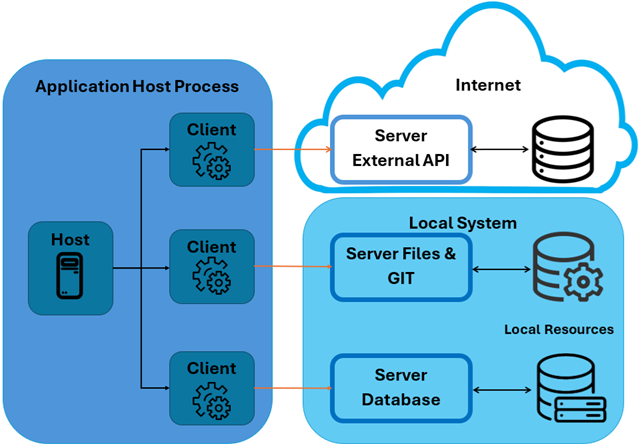
- Methodology Introduces the Model Context Protocol (MCP) as a structured, version-controlled file format that captures patient state, clinical objectives, and reasoning history, creating reusable and auditable memory objects.
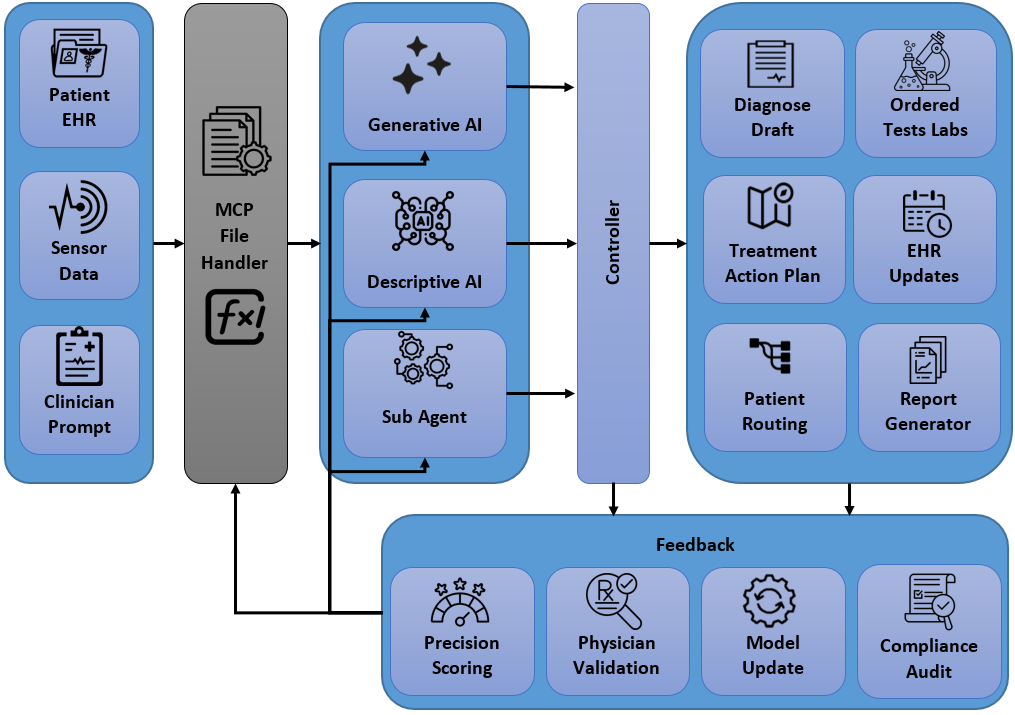
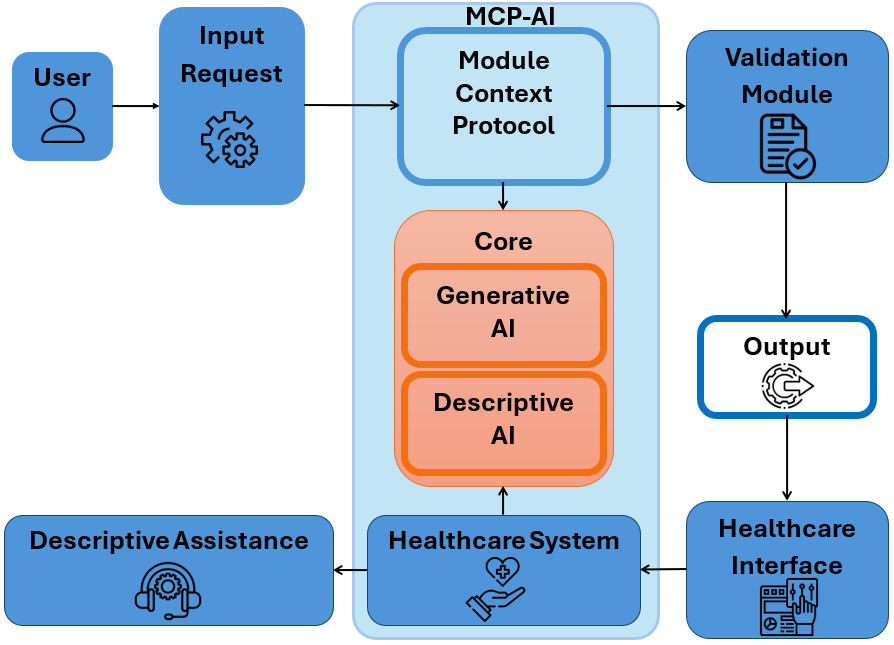
- Methodology Develops a hybrid architecture combining generative AI (for narrative diagnosis and planning) with descriptive AI (for rule validation and scoring) within a persistent reasoning context.
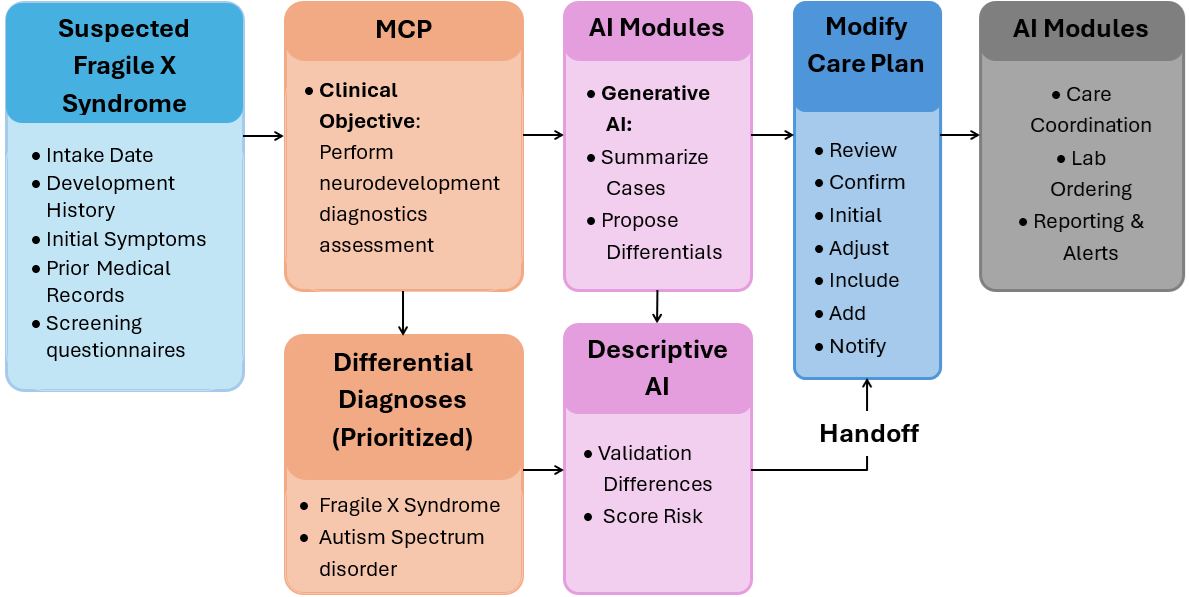
- Biology Demonstrates clinical utility through two complex use cases: Fragile X Syndrome with comorbid depression (rare neurodevelopmental disorder) and Type 2 Diabetes with hypertension (chronic care coordination).
主要结论
- MCP-AI enables adaptive, longitudinal reasoning across care settings, demonstrated through successful simulation of complex diagnostic pathways for Fragile X Syndrome with comorbid depression.
- The framework supports secure transitions of AI responsibilities between healthcare providers while maintaining clinical context, validated in chronic disease coordination scenarios for diabetes and hypertension.
- MCP-AI provides traceable, auditable decision-making with built-in physician verification, aligning with regulatory standards including HIPAA and FDA SaMD guidelines for clinical deployment.
摘要: Healthcare AI systems have historically faced challenges in merging contextual reasoning, long-term state management, and human-verifiable workflows into a cohesive framework. This paper introduces a completely innovative architecture and concept: combining the Model Context Protocol (MCP) with a specific clinical application, known as MCP-AI. This integration allows intelligent agents to reason over extended periods, collaborate securely, and adhere to authentic clinical logic, representing a significant shift away from traditional Clinical Decision Support Systems (CDSS) and prompt-based Large Language Models (LLMs). As healthcare systems become more complex, the need for autonomous, context-aware clinical reasoning frameworks has become urgent. We present MCP-AI, a novel architecture for explainable medical decision-making built upon the Model Context Protocol (MCP) a modular, executable specification for orchestrating generative and descriptive AI agents in real-time workflows. Each MCP file captures clinical objectives, patient context, reasoning state, and task logic, forming a reusable and auditable memory object. Unlike conventional CDSS or stateless prompt-based AI systems, MCP-AI supports adaptive, longitudinal, and collaborative reasoning across care settings. MCP-AI is validated through two use cases: (1) diagnostic modeling of Fragile X Syndrome with comorbid depression, and (2) remote coordination for Type 2 Diabetes and hypertension. In either scenario, the protocol facilitates physician-in-the-loop validation, streamlines clinical processes, and guarantees secure transitions of AI responsibilities between healthcare providers. The system connects with HL7/FHIR interfaces and adheres to regulatory standards, such as HIPAA and FDA SaMD guidelines. MCP-AI provides a scalable basis for interpretable, composable, and safety-oriented AI within upcoming clinical environments.