
Paper List
-
Macroscopic Dominance from Microscopic Extremes: Symmetry Breaking in Spatial Competition
This paper addresses the fundamental question of how microscopic stochastic advantages in spatial exploration translate into macroscopic resource domi...
-
Linear Readout of Neural Manifolds with Continuous Variables
This paper addresses the core challenge of quantifying how the geometric structure of high-dimensional neural population activity (neural manifolds) d...
-
Theory of Cell Body Lensing and Phototaxis Sign Reversal in “Eyeless” Mutants of Chlamydomonas
This paper solves the core puzzle of how eyeless mutants of Chlamydomonas exhibit reversed phototaxis by quantitatively modeling the competition betwe...
-
Cross-Species Transfer Learning for Electrophysiology-to-Transcriptomics Mapping in Cortical GABAergic Interneurons
This paper addresses the challenge of predicting transcriptomic identity from electrophysiological recordings in human cortical interneurons, where li...
-
Uncovering statistical structure in large-scale neural activity with Restricted Boltzmann Machines
This paper addresses the core challenge of modeling large-scale neural population activity (1500-2000 neurons) with interpretable higher-order interac...
-
Realizing Common Random Numbers: Event-Keyed Hashing for Causally Valid Stochastic Models
This paper addresses the critical problem that standard stateful PRNG implementations in agent-based models violate causal validity by making random d...
-
A Standardized Framework for Evaluating Gene Expression Generative Models
This paper addresses the critical lack of standardized evaluation protocols for single-cell gene expression generative models, where inconsistent metr...
-
Single Molecule Localization Microscopy Challenge: A Biologically Inspired Benchmark for Long-Sequence Modeling
This paper addresses the core challenge of evaluating state-space models on biologically realistic, sparse, and stochastic temporal processes, which a...
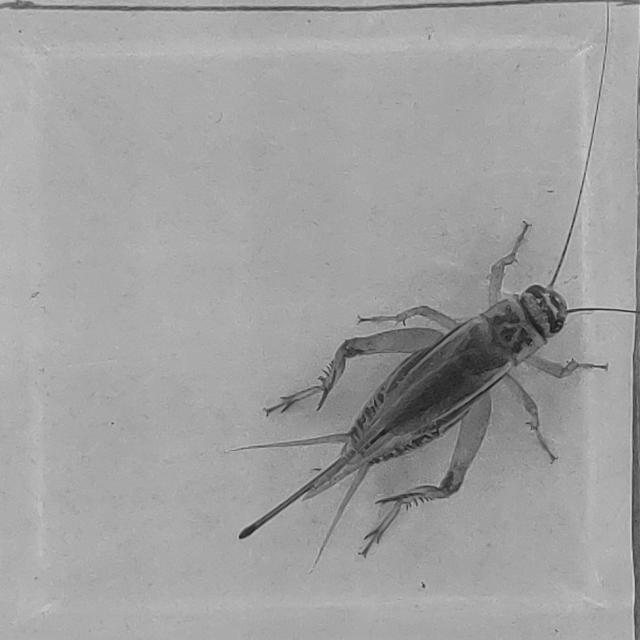
Real-time Cricket Sorting By Sex A low-cost embedded solution using YOLOv8 and Raspberry Pi
Illinois Institute of Technology, Chicago, Illinois | Universidad Politécnica de Madrid, Madrid, Spain
30秒速读
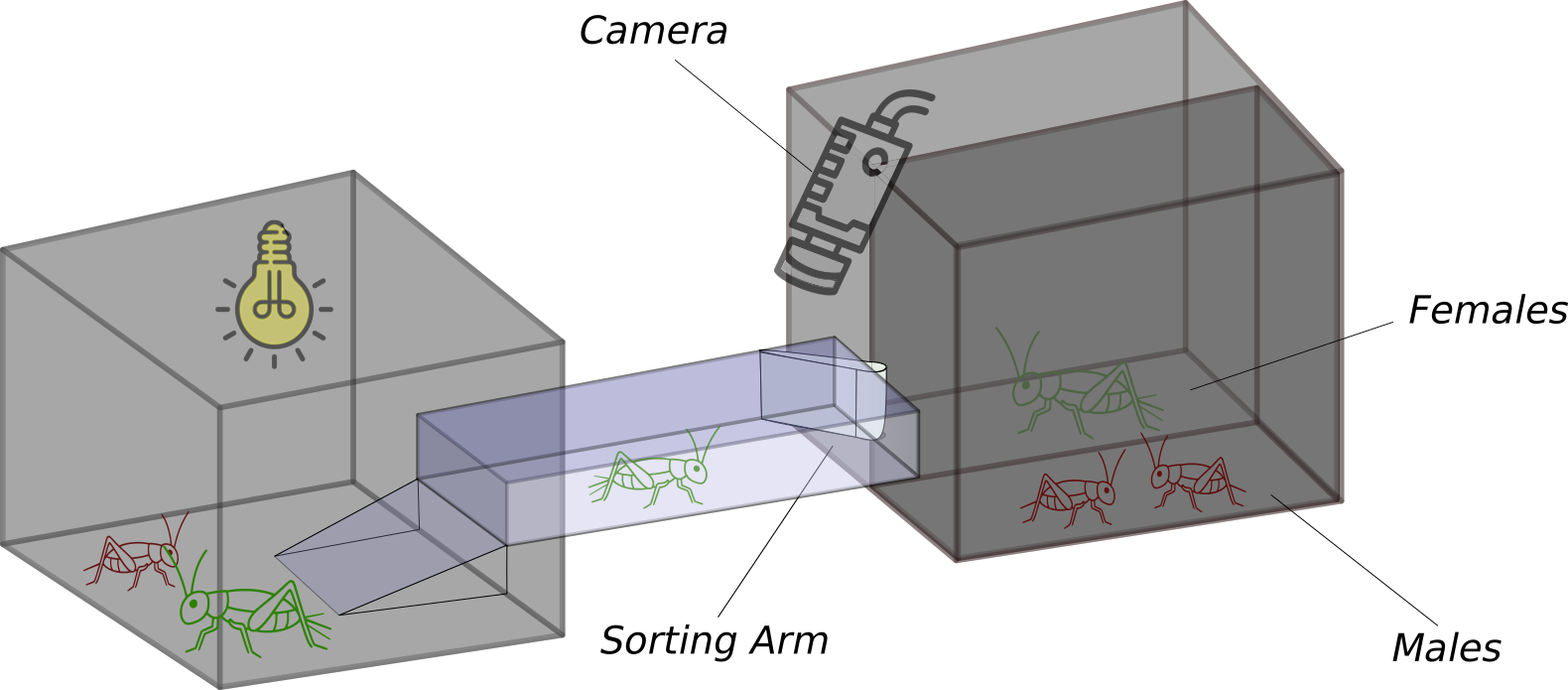
IN SHORT: This paper addresses the critical bottleneck in industrial insect farming: the lack of automated, real-time sex sorting systems for Acheta domesticus crickets, which is essential for selective breeding, optimized reproduction ratios, and nutritional differentiation.
核心创新
- Methodology First integrated system combining embedded computer vision (YOLOv8 nano) with physical actuation for real-time cricket sex sorting, achieving 86.8% overall sorting accuracy.
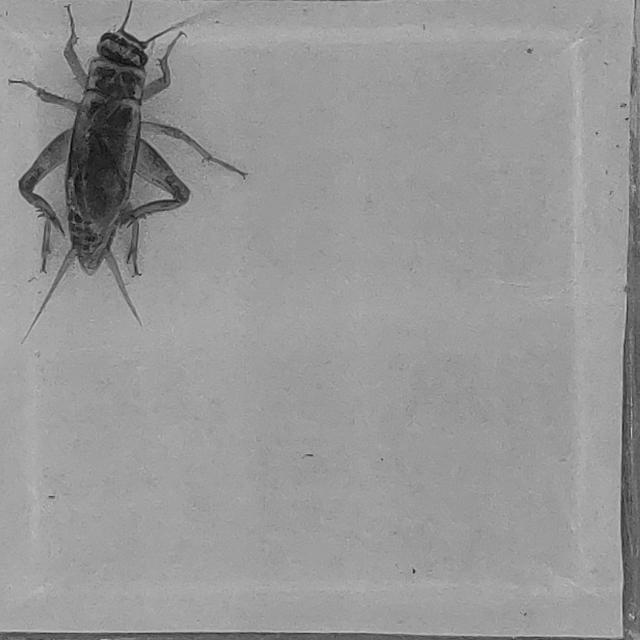
- Methodology Development of a custom balanced dataset (597 training images) with controlled illumination variability and data augmentation, achieving mAP@0.5 of 0.977 with minimal misclassification (2.3% for females, 2.7% for males).
- Biology Quantitative analysis revealing sex-dependent behavioral differences: males move faster (median 39.5 mm/s vs 18.8 mm/s for females) and are more sensitive to actuator noise, affecting sorting efficiency under different stress conditions.
主要结论
- The system achieved 86.8% overall sorting accuracy across four experiments, with performance varying from 83% under high-stress conditions to 94% under low-stress conditions.
- Movement speed significantly impacts sorting accuracy: misclassified crickets had median speeds of 75.0 mm/s compared to 20.3 mm/s for correctly classified individuals (p<0.05 based on distribution analysis).
- The YOLOv8 nano model demonstrated excellent detection performance with mAP@0.5 of 0.977 and class-wise precision/recall of 0.857-0.878, proving suitable for resource-constrained edge deployment.
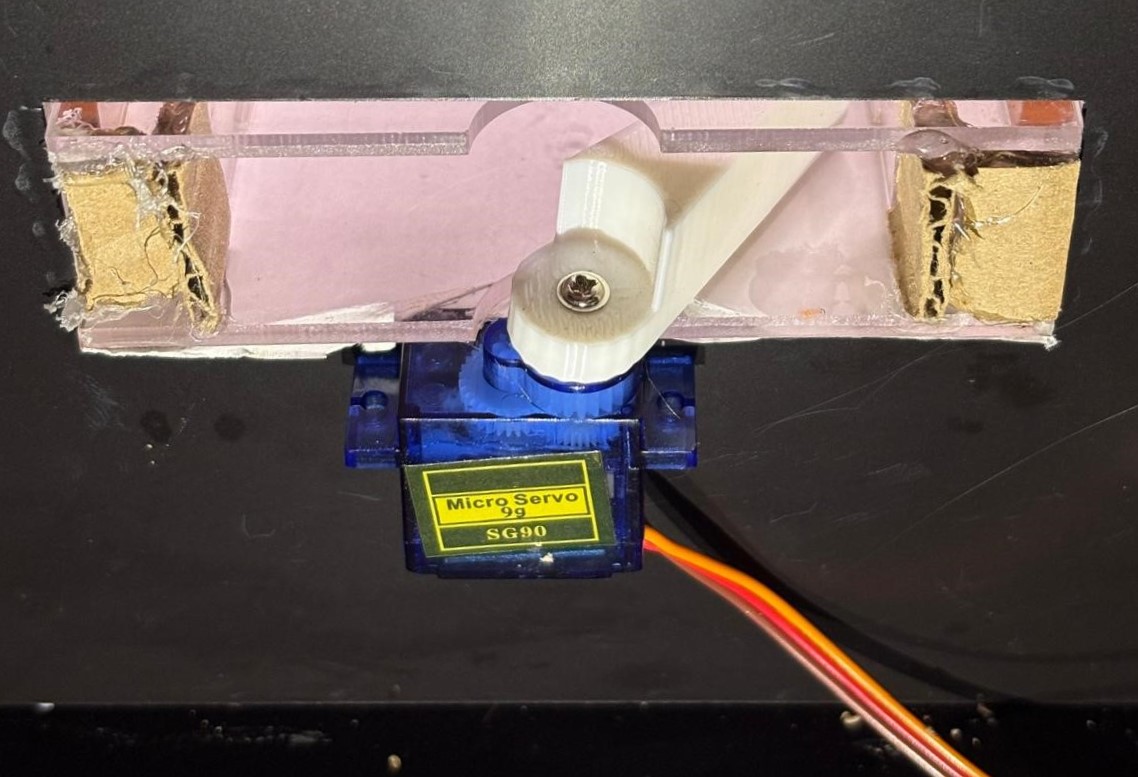
摘要: The global demand for sustainable protein sources is driving increasing interest in edible insects, with Acheta domesticus (house cricket) identified as one of the most suitable species for industrial production. Current farming practices typically rear crickets in mixed-sex populations without automated sex sorting, despite potential benefits such as selective breeding, optimized reproduction ratios, and nutritional differentiation. This work presents a low-cost, real-time system for automated sex-based sorting of Acheta domesticus, combining computer vision and physical actuation. The device integrates a Raspberry Pi 5 with the official Raspberry AI Camera and a custom YOLOv8 nano object detection model, together with a servo-actuated sorting arm. The model reached a mean Average Precision at IoU 0.5 (mAP@0.5) of 0.977 during testing, and real-world experiments with groups of crickets achieved an overall sorting accuracy of 86.8%. These results demonstrate the feasibility of deploying lightweight deep learning models on resource-constrained devices for insect farming applications, offering a practical solution to improve efficiency and sustainability in cricket production.