
Paper List
-
Formation of Artificial Neural Assemblies by Biologically Plausible Inhibition Mechanisms
This work addresses the core limitation of the Assembly Calculus model—its fixed-size, biologically implausible k-WTA selection process—by introducing...
-
How to make the most of your masked language model for protein engineering
This paper addresses the critical bottleneck of efficiently sampling high-quality, diverse protein sequences from Masked Language Models (MLMs) for pr...
-
Module control in youth symptom networks across COVID-19
This paper addresses the core challenge of distinguishing whether a prolonged societal stressor (COVID-19) fundamentally reorganizes the architecture ...
-
JEDI: Jointly Embedded Inference of Neural Dynamics
This paper addresses the core challenge of inferring context-dependent neural dynamics from noisy, high-dimensional recordings using a single unified ...
-
ATP Level and Phosphorylation Free Energy Regulate Trigger-Wave Speed and Critical Nucleus Size in Cellular Biochemical Systems
This work addresses the core challenge of quantitatively predicting how the cellular energy state (ATP level and phosphorylation free energy) governs ...
-
Packaging Jupyter notebooks as installable desktop apps using LabConstrictor
This paper addresses the core pain point of ensuring Jupyter notebook reproducibility and accessibility across different computing environments, parti...
-
SNPgen: Phenotype-Supervised Genotype Representation and Synthetic Data Generation via Latent Diffusion
This paper addresses the core challenge of generating privacy-preserving synthetic genotype data that maintains both statistical fidelity and downstre...
-
Continuous Diffusion Transformers for Designing Synthetic Regulatory Elements
This paper addresses the challenge of efficiently generating novel, cell-type-specific regulatory DNA sequences with high predicted activity while min...
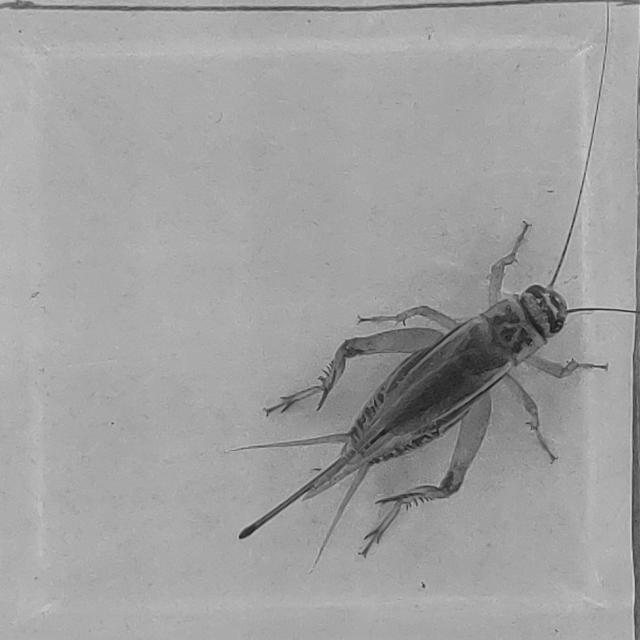
Real-time Cricket Sorting By Sex A low-cost embedded solution using YOLOv8 and Raspberry Pi
Illinois Institute of Technology, Chicago, Illinois | Universidad Politécnica de Madrid, Madrid, Spain
30秒速读
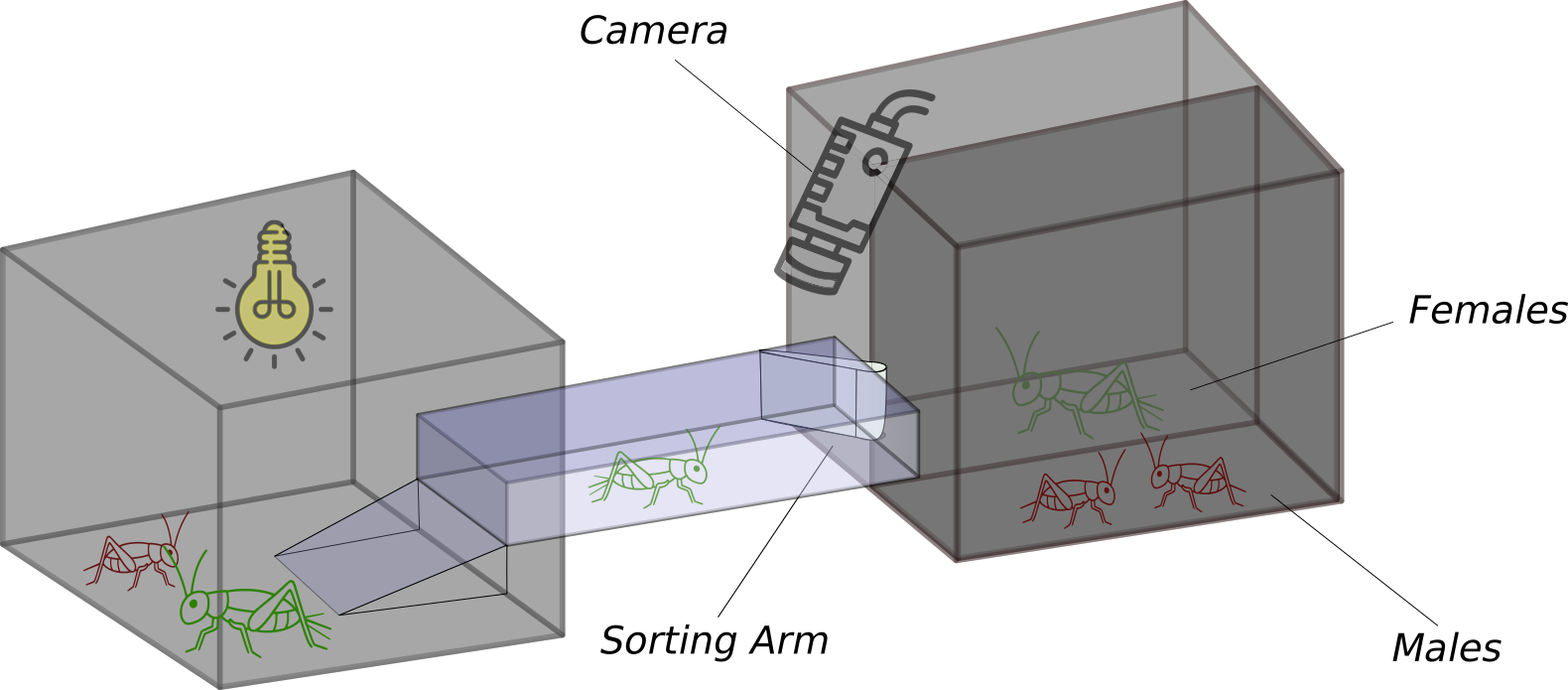
IN SHORT: This paper addresses the critical bottleneck in industrial insect farming: the lack of automated, real-time sex sorting systems for Acheta domesticus crickets, which is essential for selective breeding, optimized reproduction ratios, and nutritional differentiation.
核心创新
- Methodology First integrated system combining embedded computer vision (YOLOv8 nano) with physical actuation for real-time cricket sex sorting, achieving 86.8% overall sorting accuracy.
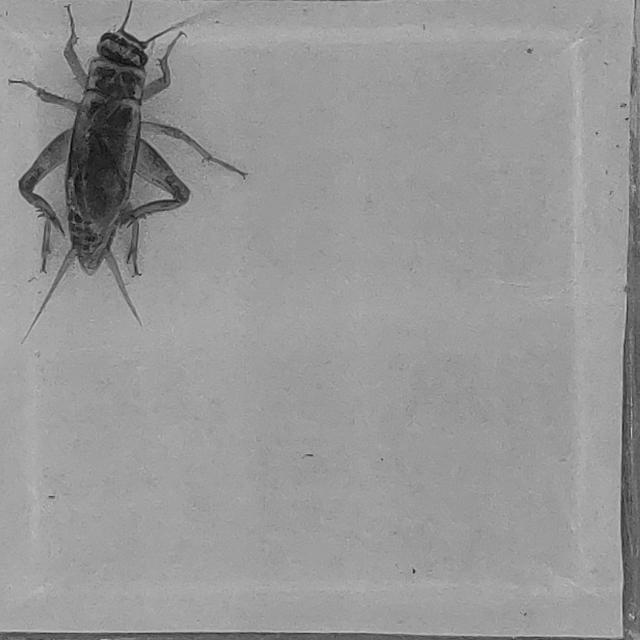
- Methodology Development of a custom balanced dataset (597 training images) with controlled illumination variability and data augmentation, achieving mAP@0.5 of 0.977 with minimal misclassification (2.3% for females, 2.7% for males).
- Biology Quantitative analysis revealing sex-dependent behavioral differences: males move faster (median 39.5 mm/s vs 18.8 mm/s for females) and are more sensitive to actuator noise, affecting sorting efficiency under different stress conditions.
主要结论
- The system achieved 86.8% overall sorting accuracy across four experiments, with performance varying from 83% under high-stress conditions to 94% under low-stress conditions.
- Movement speed significantly impacts sorting accuracy: misclassified crickets had median speeds of 75.0 mm/s compared to 20.3 mm/s for correctly classified individuals (p<0.05 based on distribution analysis).
- The YOLOv8 nano model demonstrated excellent detection performance with mAP@0.5 of 0.977 and class-wise precision/recall of 0.857-0.878, proving suitable for resource-constrained edge deployment.
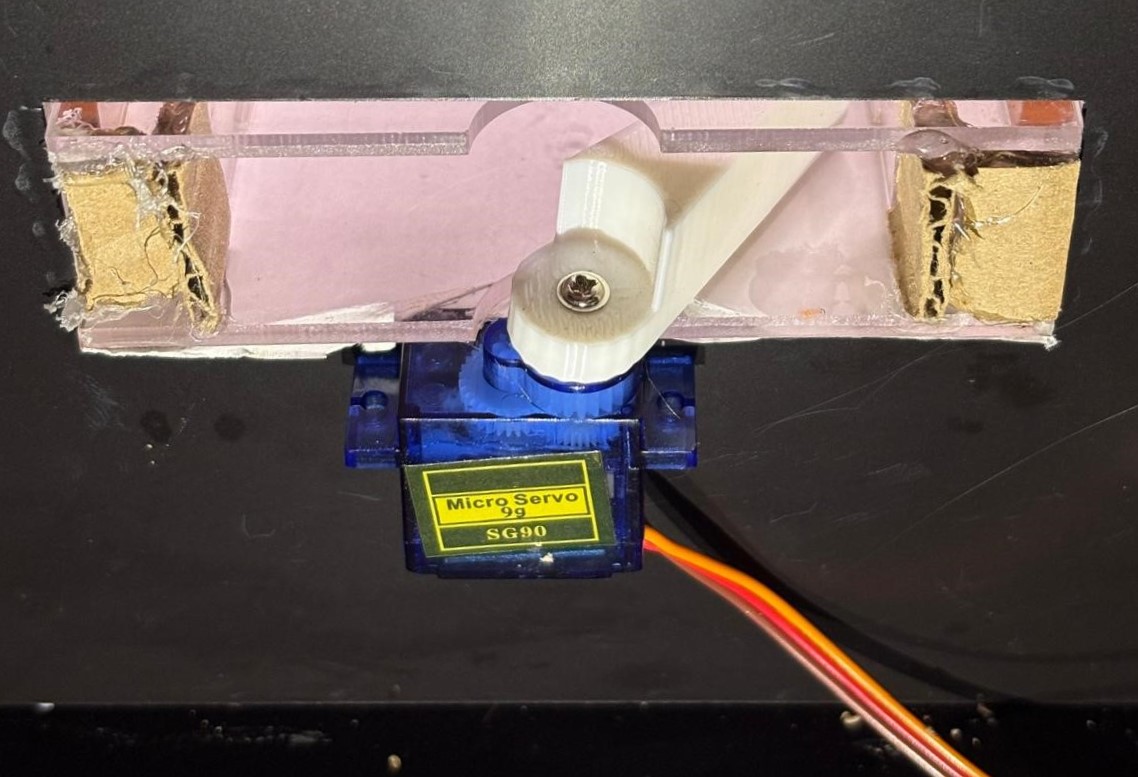
摘要: The global demand for sustainable protein sources is driving increasing interest in edible insects, with Acheta domesticus (house cricket) identified as one of the most suitable species for industrial production. Current farming practices typically rear crickets in mixed-sex populations without automated sex sorting, despite potential benefits such as selective breeding, optimized reproduction ratios, and nutritional differentiation. This work presents a low-cost, real-time system for automated sex-based sorting of Acheta domesticus, combining computer vision and physical actuation. The device integrates a Raspberry Pi 5 with the official Raspberry AI Camera and a custom YOLOv8 nano object detection model, together with a servo-actuated sorting arm. The model reached a mean Average Precision at IoU 0.5 (mAP@0.5) of 0.977 during testing, and real-world experiments with groups of crickets achieved an overall sorting accuracy of 86.8%. These results demonstrate the feasibility of deploying lightweight deep learning models on resource-constrained devices for insect farming applications, offering a practical solution to improve efficiency and sustainability in cricket production.