
Paper List
-
Formation of Artificial Neural Assemblies by Biologically Plausible Inhibition Mechanisms
This work addresses the core limitation of the Assembly Calculus model—its fixed-size, biologically implausible k-WTA selection process—by introducing...
-
How to make the most of your masked language model for protein engineering
This paper addresses the critical bottleneck of efficiently sampling high-quality, diverse protein sequences from Masked Language Models (MLMs) for pr...
-
Module control in youth symptom networks across COVID-19
This paper addresses the core challenge of distinguishing whether a prolonged societal stressor (COVID-19) fundamentally reorganizes the architecture ...
-
JEDI: Jointly Embedded Inference of Neural Dynamics
This paper addresses the core challenge of inferring context-dependent neural dynamics from noisy, high-dimensional recordings using a single unified ...
-
ATP Level and Phosphorylation Free Energy Regulate Trigger-Wave Speed and Critical Nucleus Size in Cellular Biochemical Systems
This work addresses the core challenge of quantitatively predicting how the cellular energy state (ATP level and phosphorylation free energy) governs ...
-
Packaging Jupyter notebooks as installable desktop apps using LabConstrictor
This paper addresses the core pain point of ensuring Jupyter notebook reproducibility and accessibility across different computing environments, parti...
-
SNPgen: Phenotype-Supervised Genotype Representation and Synthetic Data Generation via Latent Diffusion
This paper addresses the core challenge of generating privacy-preserving synthetic genotype data that maintains both statistical fidelity and downstre...
-
Continuous Diffusion Transformers for Designing Synthetic Regulatory Elements
This paper addresses the challenge of efficiently generating novel, cell-type-specific regulatory DNA sequences with high predicted activity while min...
Modulation of DNA rheology by a transcription factor that forms aging microgels
University of Edinburgh | University of Glasgow | MRC Human Genetics Unit | WPI-SKCM2, Hiroshima University
30秒速读
IN SHORT: This work addresses the fundamental question of how the transcription factor NANOG, essential for embryonic stem cell pluripotency, physically regulates gene expression beyond simple DNA binding, by revealing its ability to form self-limiting, aging microgels that modulate DNA rheology.
核心创新
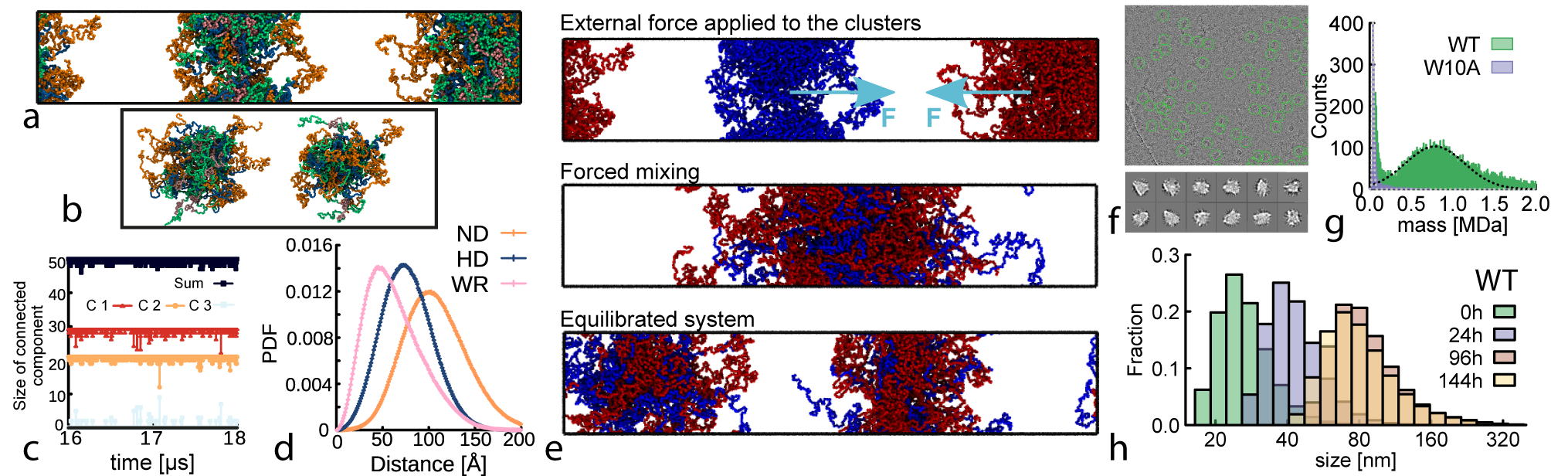
- Methodology First demonstration that a transcription factor (NANOG) forms self-limiting micelle-like clusters (~22-25 monomers) with exposed DNA-binding domains, acting as transient cross-linkers for DNA molecules.
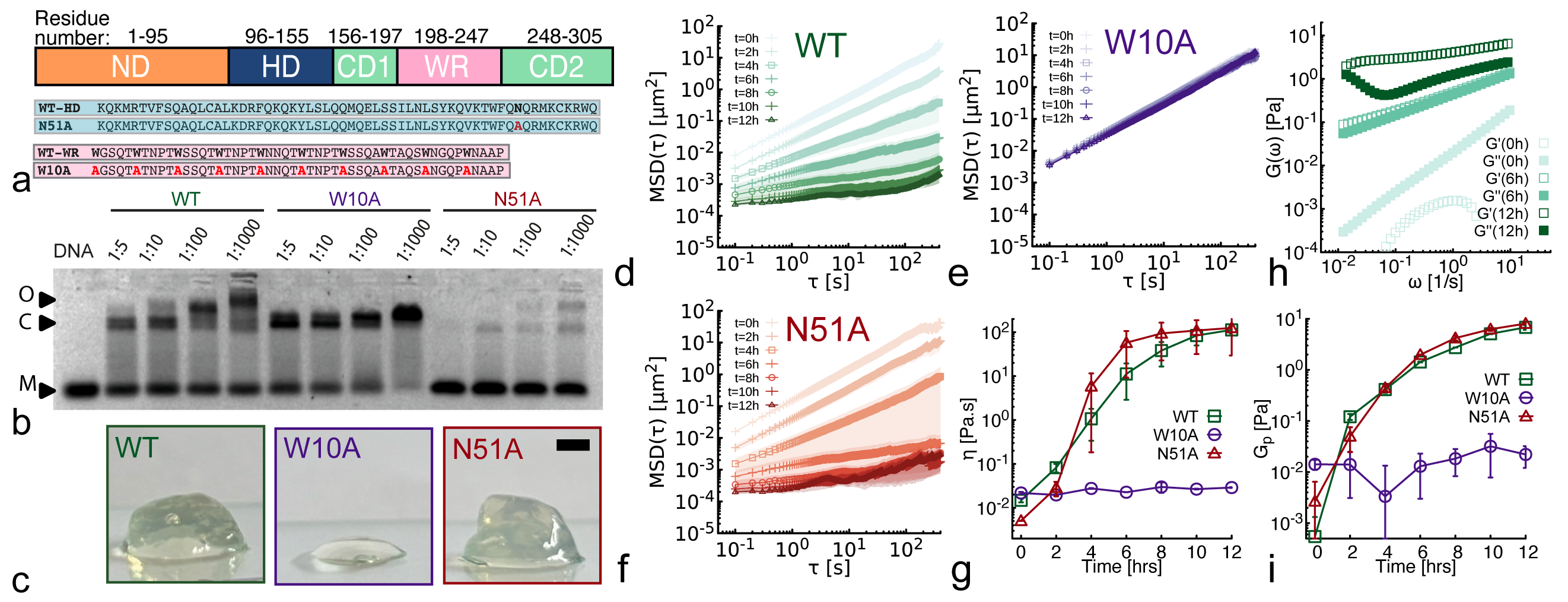
- Biology Discovery of an aging microgel formation by NANOG, where viscoelasticity increases over time (10,000-fold viscosity increase over 12h), driven by its intrinsically disordered tryptophan-rich (WR) domain.
- Theory Proposes a novel 'rheological gene regulation' paradigm: NANOG may regulate gene expression not by large-scale chromatin reorganization, but by stabilizing and restricting the *dynamics* of key regulatory sites via aging condensates, potentially ingraining mechanical memory.
主要结论
- Wild-type NANOG forms macroscopic aging gels (10,000-fold viscosity increase over 12h at 37°C) and self-limiting micelle-like clusters (~22-25 proteins), while the oligomerization-deficient mutant (W10A) does not.
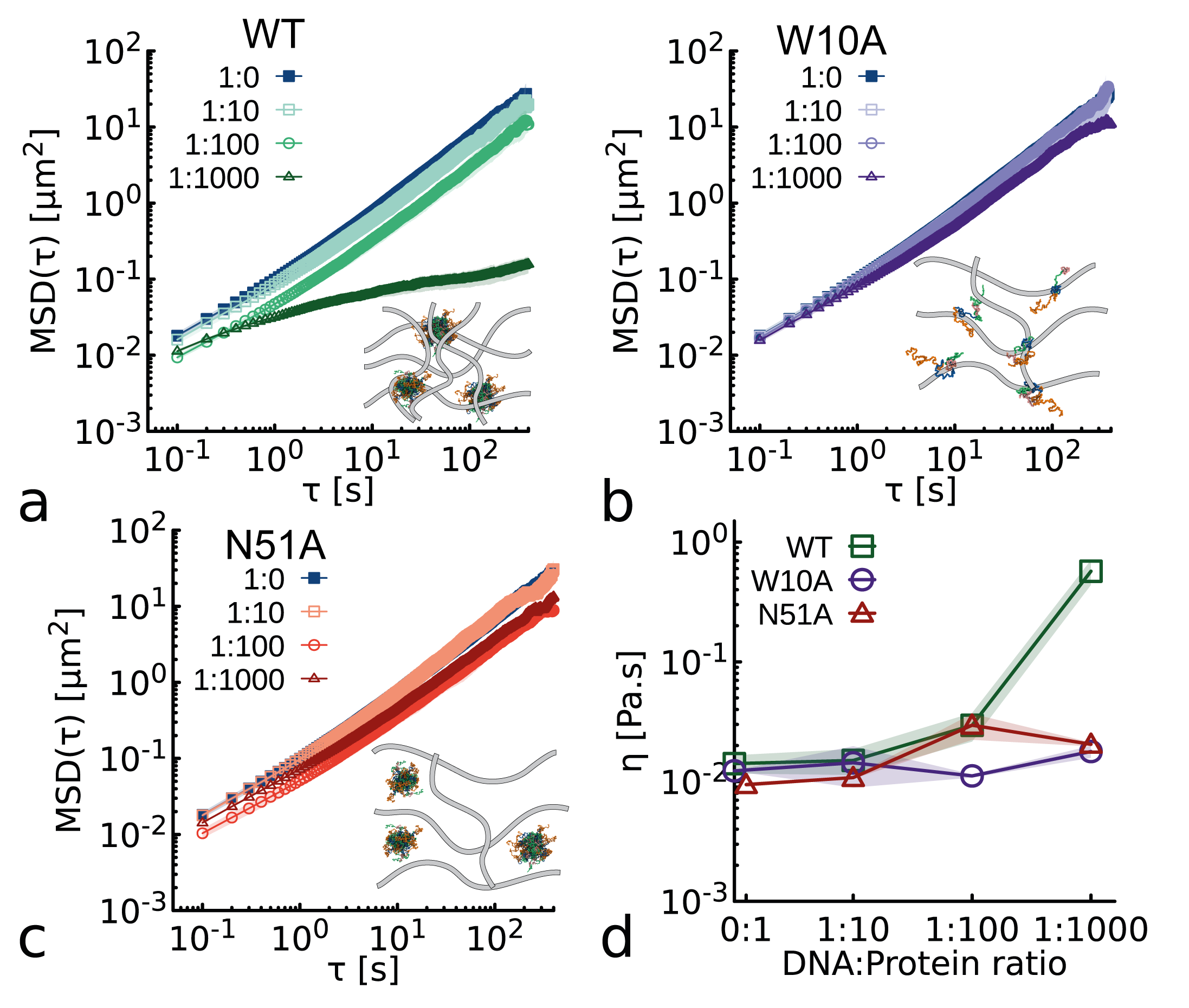
- Both clustering (via WR domain) and DNA binding (via homeodomain) are required for NANOG to act as an effective DNA cross-linker, significantly enhancing the viscoelasticity of entangled DNA solutions (observed in WT but not in W10A or DNA-binding-deficient N51A mutants).
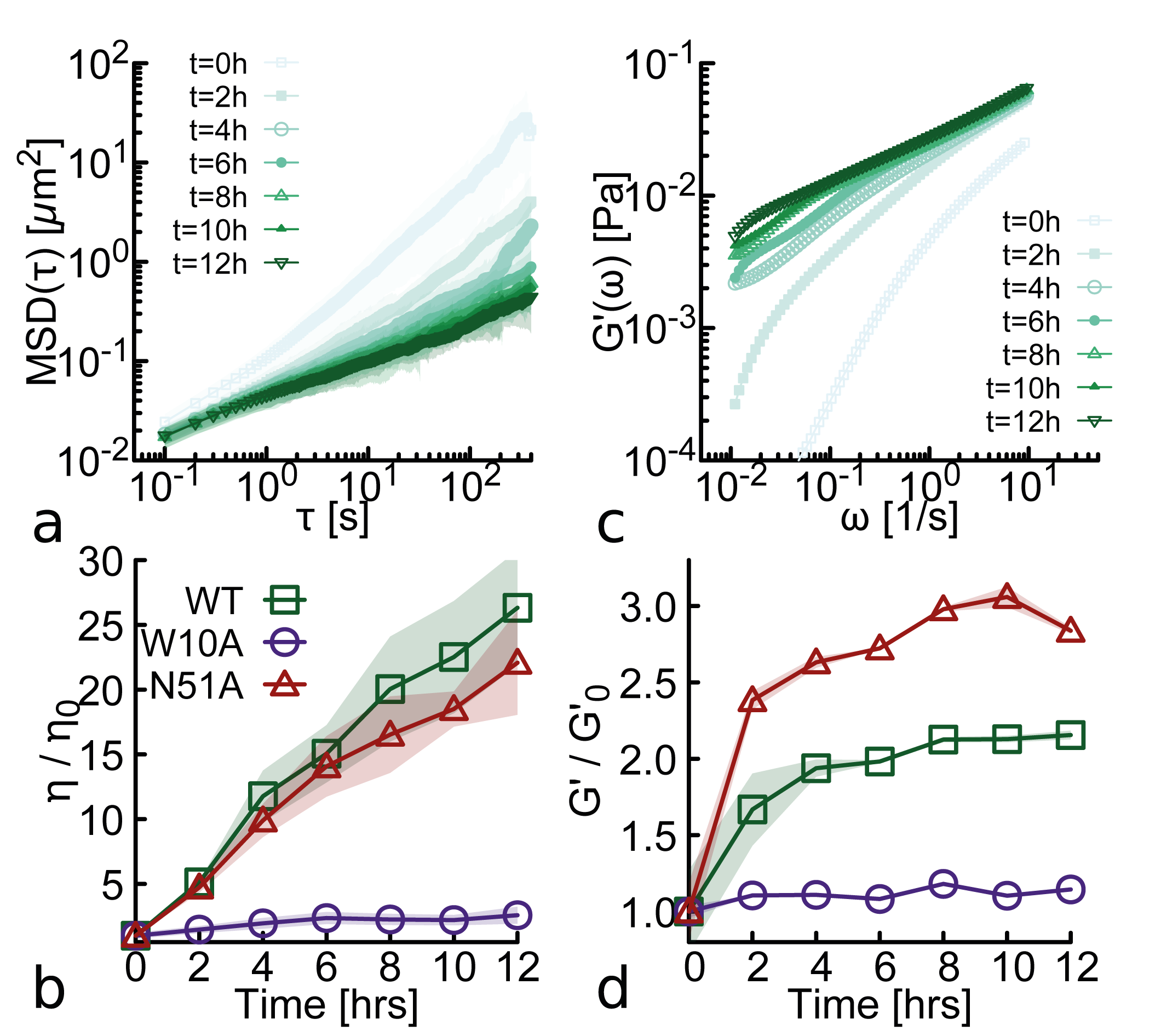
- Aging (increasing viscoelasticity over time) occurs in NANOG-DNA solutions for both WT and the DNA-binding-deficient N51A mutant, indicating that oligomerization alone is sufficient to drive this slow restructuring toward gel-like states.
摘要: Proteins and nucleic acids form non-Newtonian liquids with complex rheological properties that contribute to their function in vivo. Here we investigate the rheology of the transcription factor NANOG, a key protein in sustaining embryonic stem cell self-renewal. We discover that at high concentrations NANOG forms macroscopic aging gels through its intrinsically disordered tryptophan-rich domain. By combining molecular dynamics simulations, mass photometry and Cryo-EM, we also discover that NANOG forms self-limiting micelle-like clusters which expose their DNA-binding domains. In dense solutions of DNA, NANOG micelle-like structures stabilize inter-molecular entanglements and crosslinks, forming microgel-like structures. Our findings suggest that NANOG may contribute to regulate gene expression in a unconventional way: by restricting and stabilizing genome dynamics at key transcriptional sites through the formation of an aging microgel-like structure, potentially enabling mechanical memory in the gene network.