
Paper List
-
Developing the PsyCogMetrics™ AI Lab to Evaluate Large Language Models and Advance Cognitive Science
This paper addresses the critical gap between sophisticated LLM evaluation needs and the lack of accessible, scientifically rigorous platforms that in...
-
Equivalence of approximation by networks of single- and multi-spike neurons
This paper resolves the fundamental question of whether single-spike spiking neural networks (SNNs) are inherently less expressive than multi-spike SN...
-
The neuroscience of transformers
提出了Transformer架构与皮层柱微环路之间的新颖计算映射,连接了现代AI与神经科学。
-
Framing local structural identifiability and observability in terms of parameter-state symmetries
This paper addresses the core challenge of systematically determining which parameters and states in a mechanistic ODE model can be uniquely inferred ...
-
Leveraging Phytolith Research using Artificial Intelligence
This paper addresses the critical bottleneck in phytolith research by automating the labor-intensive manual microscopy process through a multimodal AI...
-
Neural network-based encoding in free-viewing fMRI with gaze-aware models
This paper addresses the core challenge of building computationally efficient and ecologically valid brain encoding models for naturalistic vision by ...
-
Scalable DNA Ternary Full Adder Enabled by a Competitive Blocking Circuit
This paper addresses the core bottleneck of carry information attenuation and limited computational scale in DNA binary adders by introducing a scalab...
-
ELISA: An Interpretable Hybrid Generative AI Agent for Expression-Grounded Discovery in Single-Cell Genomics
This paper addresses the critical bottleneck of translating high-dimensional single-cell transcriptomic data into interpretable biological hypotheses ...
Pharmacophore-based design by learning on voxel grids
AIDD, Genentech
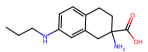
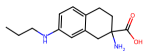
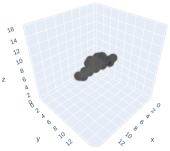
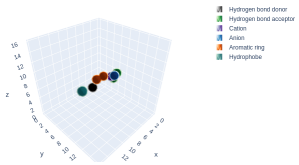
30秒速读
IN SHORT: This paper addresses the computational bottleneck and limited novelty in conventional pharmacophore-based virtual screening by introducing a voxel captioning method that generates novel molecules directly from 3D pharmacophore-shape profiles.
核心创新
- Methodology Proposes VoxCap, the first voxel captioning method for generating SMILES strings from voxelized 3D pharmacophore-shape profiles, bridging 3D structural information with 1D string generation.
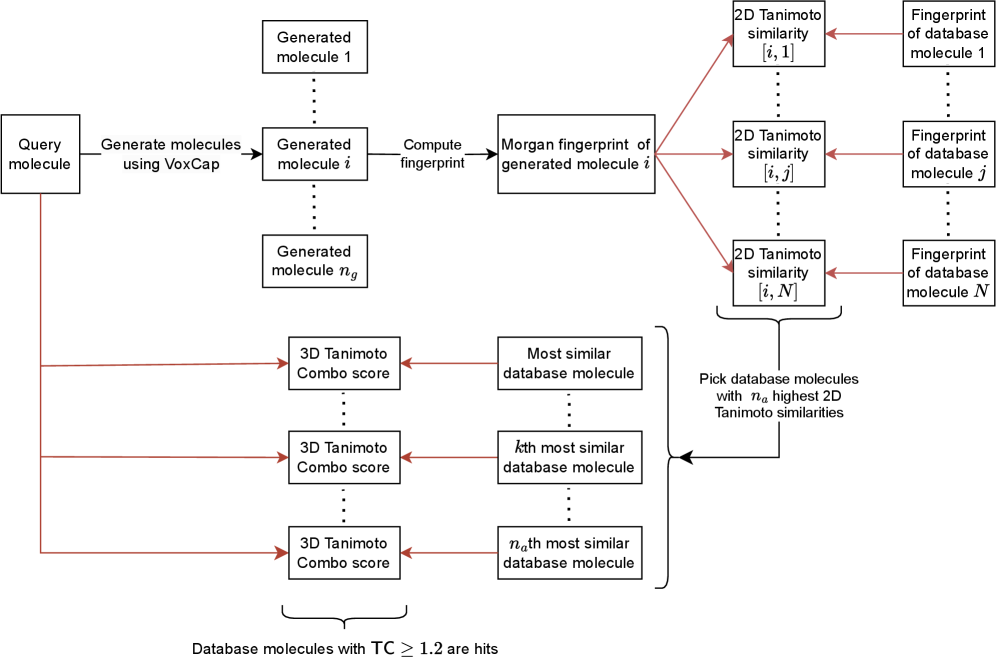
- Methodology Introduces a 'fast search' workflow that reduces computational complexity from O(database size) to O(n_g × n_a), enabling screening of billion-compound libraries previously considered intractable.
- Biology Demonstrates superior performance in generating diverse, novel scaffolds with high pharmacophore-shape similarity (Tanimoto Combo score ≥1.2), addressing both in-distribution and out-of-distribution query molecules.
主要结论
- VoxCap generates significantly more hits than baseline methods, with median hits per query increasing from 0 (baseline) to 116.5 on GEOM-drugs and from 0 to 115 on ChEMBL (p<0.001).
- The model produces diverse scaffolds, with median unique scaffold hits of 55.5 (GEOM-drugs) and 72 (ChEMBL), compared to 0 for baselines and 7-8.5 for PGMG.
- The fast search workflow reduces computational requirements by orders of magnitude while maintaining hit rates, enabling practical screening of billion-compound libraries like Enamine Real (60B compounds).
摘要: Ligand-based drug discovery (LBDD) relies on making use of known binders to a protein target to find structurally diverse molecules similarly likely to bind. This process typically involves a brute force search of the known binder (query) against a molecular library using some metric of molecular similarity. One popular approach overlays the pharmacophore-shape profile of the known binder to 3D conformations enumerated for each of the library molecules, computes overlaps, and picks a set of diverse library molecules with high overlaps. While this virtual screening workflow has had considerable success in hit diversification, scaffold hopping, and patent busting, it scales poorly with library sizes and restricts candidate generation to existing library compounds. Leveraging recent advances in voxel-based generative modelling, we propose a pharmacophore-based generative model and workflows that address the scaling and fecundity issues of conventional pharmacophore-based virtual screening. We introduce VoxCap, a voxel captioning method for generating SMILES strings from voxelised molecular representations.We propose two workflows as practical use cases as well as benchmarks for pharmacophore-based generation: de-novo design, in which we aim to generate new molecules with high pharmacophore-shape similarities to query molecules, and fast search, which aims to combine generative design with a cheap 2D substructure similarity search for efficient hit identification. Our results show that VoxCap significantly outperforms previous methods in generating diverse de-novo hits. When combined with our fast search workflow, VoxCap reduces computational time by orders of magnitude while returning hits for all query molecules, enabling the search of large libraries that are intractable to search by brute force.