
Paper List
-
Discovery of a Hematopoietic Manifold in scGPT Yields a Method for Extracting Performant Algorithms from Biological Foundation Model Internals
This work addresses the core challenge of extracting reusable, interpretable, and high-performance biological algorithms from the opaque internal repr...
-
MS2MetGAN: Latent-space adversarial training for metabolite–spectrum matching in MS/MS database search
This paper addresses the critical bottleneck in metabolite identification: the generation of high-quality negative training samples that are structura...
-
Toward Robust, Reproducible, and Widely Accessible Intracranial Language Brain-Computer Interfaces: A Comprehensive Review of Neural Mechanisms, Hardware, Algorithms, Evaluation, Clinical Pathways and Future Directions
This review addresses the core challenge of fragmented and heterogeneous evidence that hinders the clinical translation of intracranial language BCIs,...
-
Less Is More in Chemotherapy of Breast Cancer
通过纳入细胞周期时滞和竞争项,解决了现有肿瘤-免疫模型的过度简化问题,以定量比较化疗方案。
-
Fold-CP: A Context Parallelism Framework for Biomolecular Modeling
This paper addresses the critical bottleneck of GPU memory limitations that restrict AlphaFold 3-like models to processing only a few thousand residue...
-
Open Biomedical Knowledge Graphs at Scale: Construction, Federation, and AI Agent Access with Samyama Graph Database
This paper addresses the core pain point of fragmented biomedical data by constructing and federating large-scale, open knowledge graphs to enable sea...
-
Predictive Analytics for Foot Ulcers Using Time-Series Temperature and Pressure Data
This paper addresses the critical need for continuous, real-time monitoring of diabetic foot health by developing an unsupervised anomaly detection fr...
-
Hypothesis-Based Particle Detection for Accurate Nanoparticle Counting and Digital Diagnostics
This paper addresses the core challenge of achieving accurate, interpretable, and training-free nanoparticle counting in digital diagnostic assays, wh...
Stability analysis of action potential generation using Markov models of voltage‑gated sodium channel isoforms
School of Mathematics and Statistics, Rochester Institute of Technology | School of Physics, Rochester Institute of Technology | School of Physics and Astronomy & School of Mathematics and Statistics, Rochester Institute of Technology
30秒速读
IN SHORT: This work addresses the challenge of systematically characterizing how the high-dimensional parameter space of Markov models for different sodium channel isoforms influences the robustness and excitability of neuronal firing.
核心创新
- Methodology Integrates a six-state Markov model for nine human NaV isoforms with a simplified KV3.1 model, enabling a unified framework for isoform-specific stability analysis.
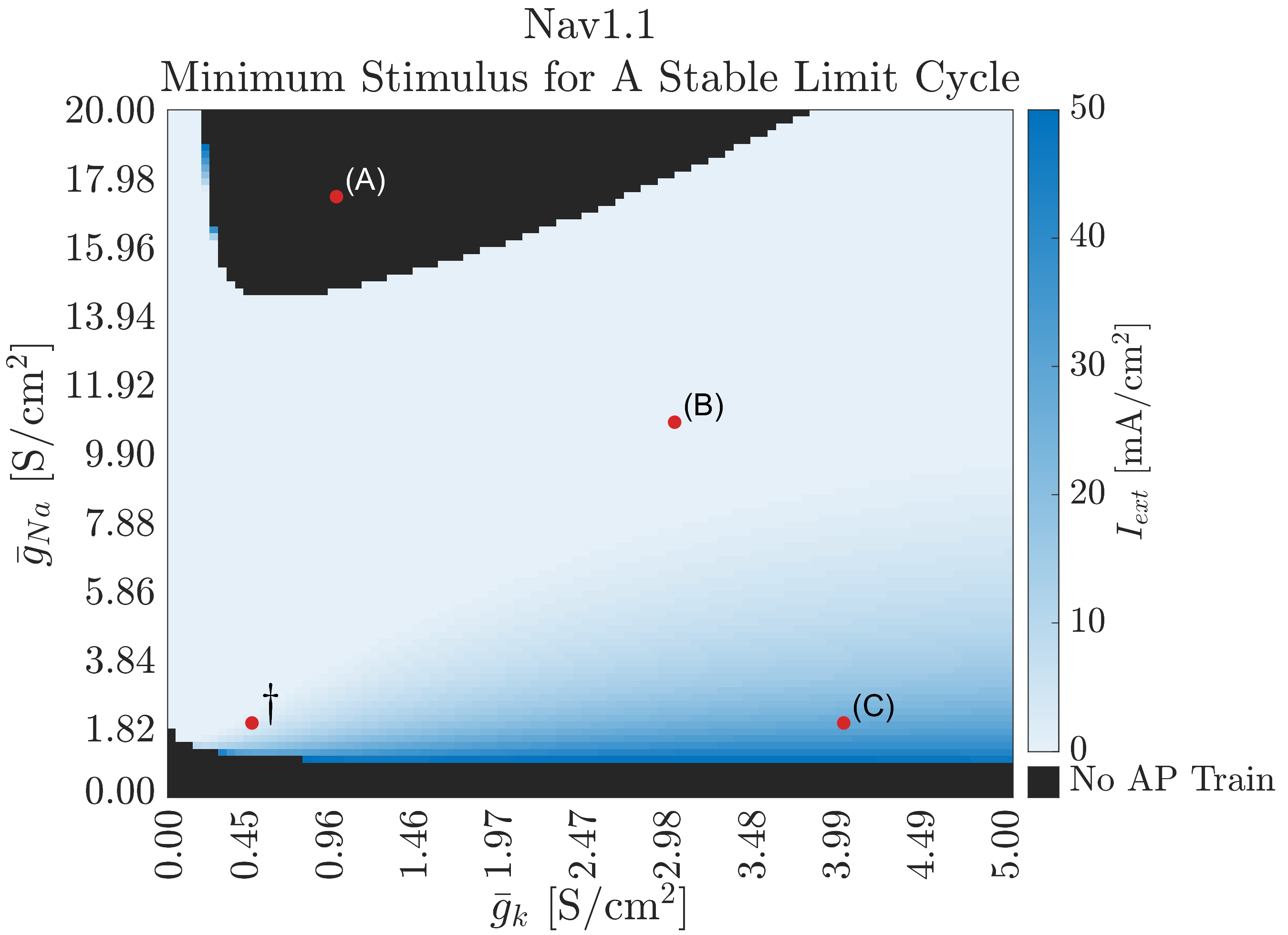
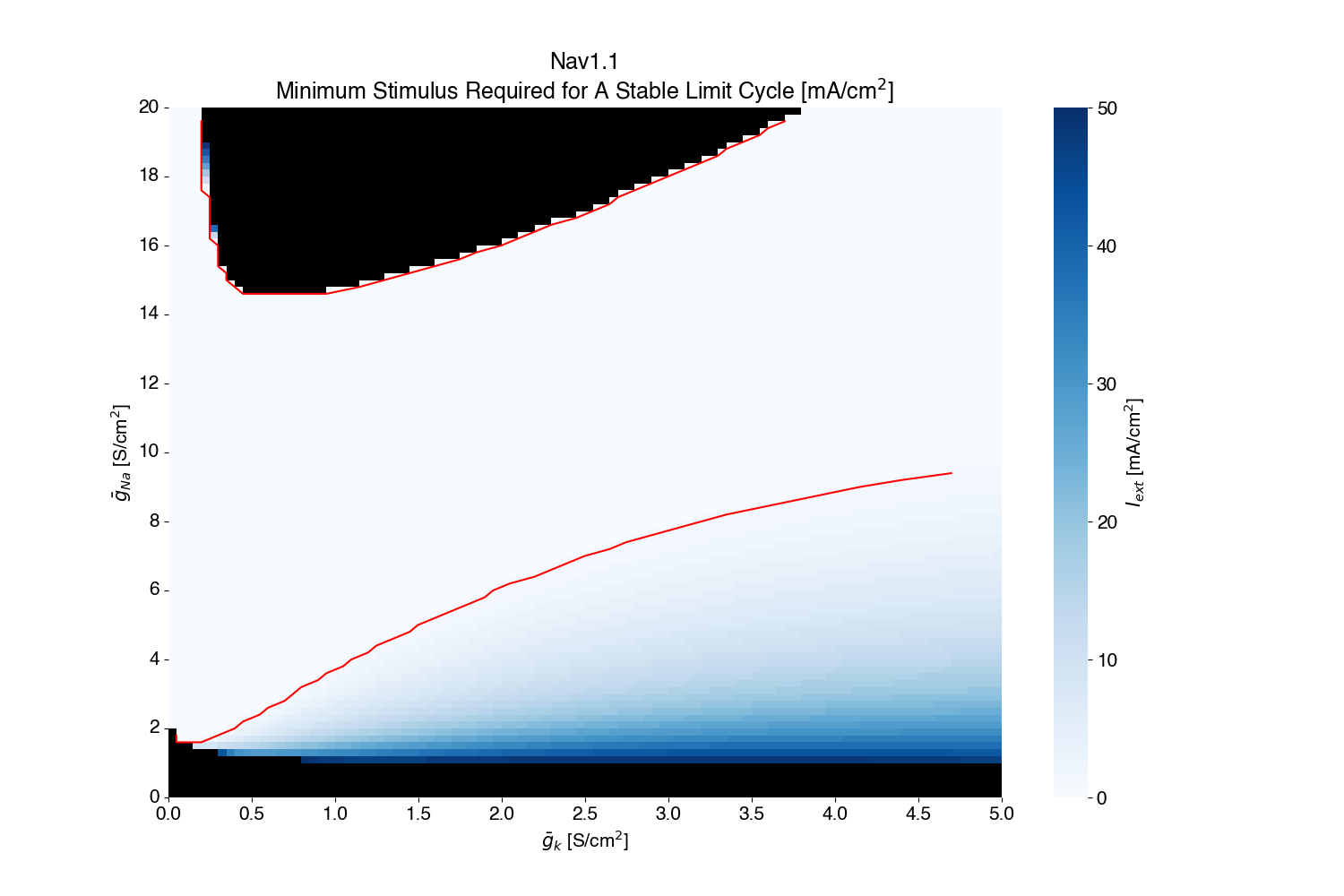
- Methodology Applies bifurcation theory and local stability analysis to map 'excitable landscapes' across the (g_Na, g_K) parameter space, visualizing regions supporting stable oscillatory behavior.
- Biology Quantitatively ranks NaV isoforms by their supported excitable regimes, identifying NaV1.3, 1.4, and 1.6 as broadly supportive and NaV1.7 and 1.9 as minimally oscillatory.
主要结论
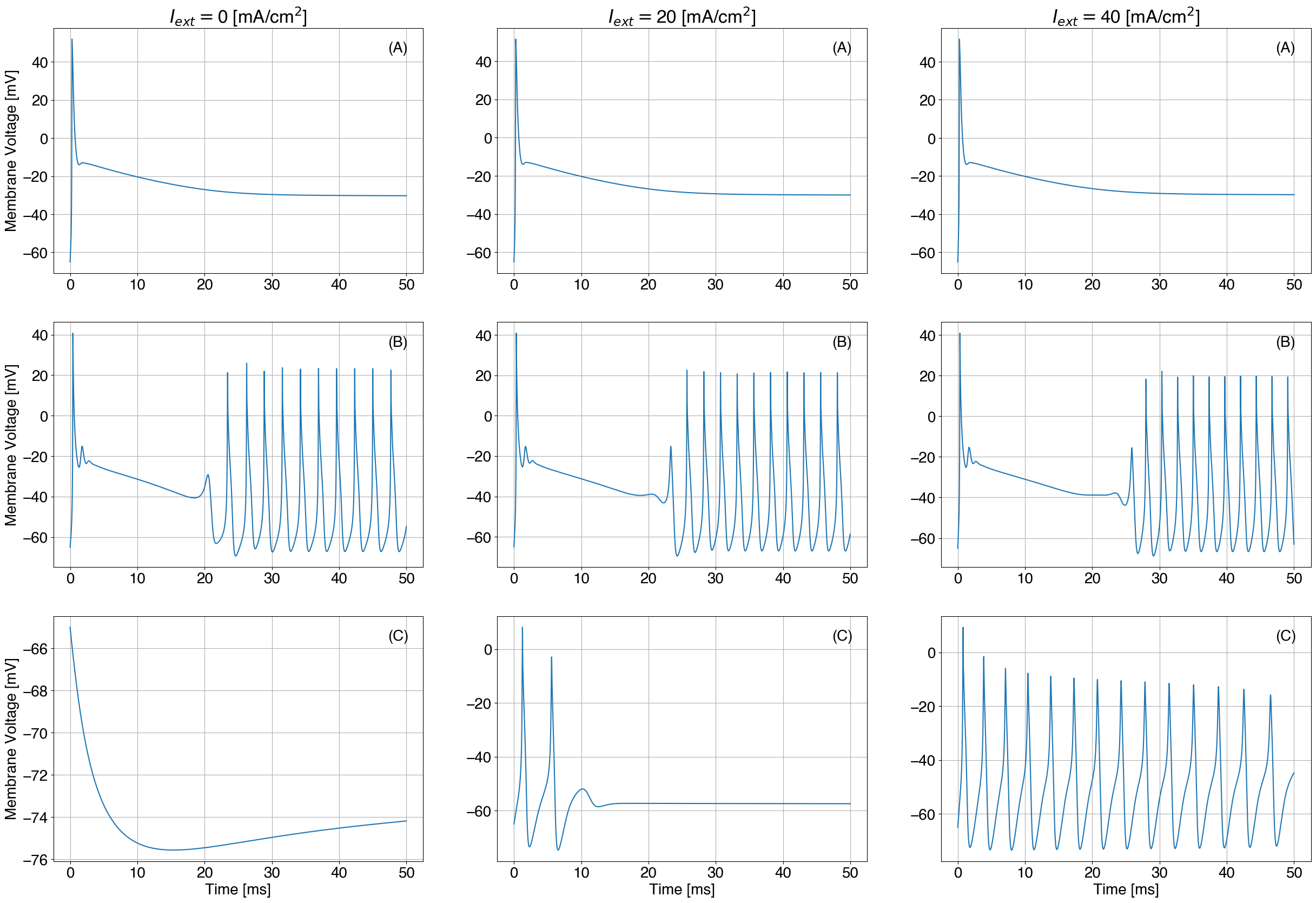
- Isoforms NaV1.3, NaV1.4, and NaV1.6 support the broadest parameter regions for stable limit cycles (oscillatory firing), indicating their robustness in sustaining action potential trains.
- Isoforms NaV1.7 and NaV1.9 exhibit minimal oscillatory behavior across the tested conductance parameter space, correlating with their specialized roles in peripheral nociception.
- The hybrid Markov-HH modeling and stability analysis framework successfully narrows the vast parameter search space for designing synthetic excitable systems, moving from trial-and-error to principled design.
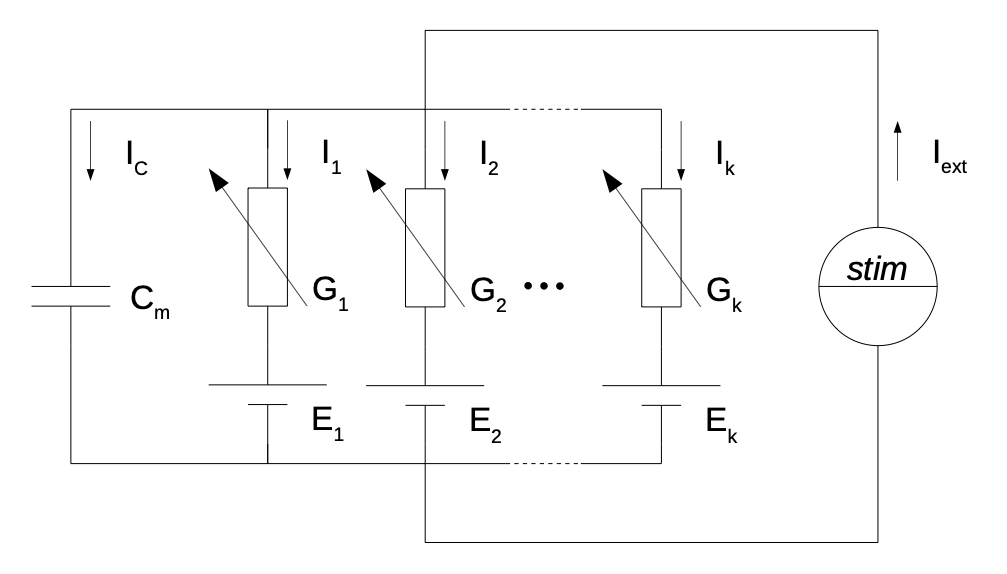
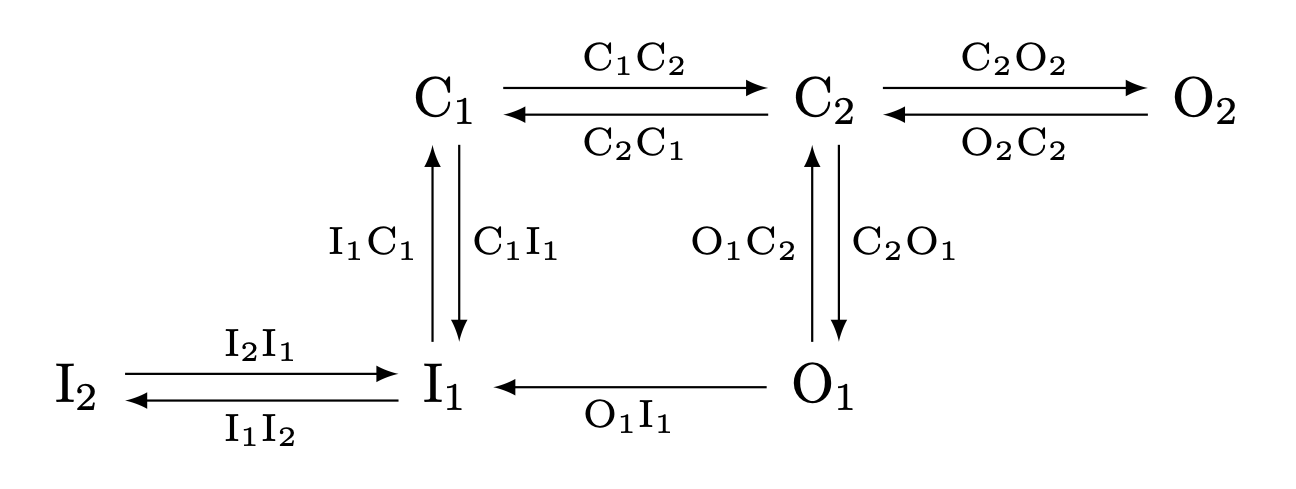
摘要: We investigate a conductance‑based neuron model to explore how voltage‑gated ion channel isoforms influence action‑potential generation. The model combines a six‑state Markov representation of NaV channels with a first‑order KV3.1 model, allowing us to vary maximal sodium and potassium conductances and compare nine NaV isoforms. Using bifurcation theory and local stability analysis, we map regions of stable limit cycles and visualize excitability landscapes via heatmap‑based diagrams. These analyses show that isoforms NaV1.3, NaV1.4 and NaV1.6 support broad excitable regimes, while isoforms NaV1.7 and NaV1.9 exhibit minimal oscillatory behavior. Our findings provide insights into the role of channel heterogeneity in neuronal dynamics and may help to guide the design of synthetic excitable systems by narrowing the parameter space needed for robust action‑potential trains.