
Paper List
-
Translating Measures onto Mechanisms: The Cognitive Relevance of Higher-Order Information
This review addresses the core challenge of translating abstract higher-order information theory metrics (e.g., synergy, redundancy) into defensible, ...
-
Emergent Bayesian Behaviour and Optimal Cue Combination in LLMs
This paper addresses the critical gap in understanding whether LLMs spontaneously develop human-like Bayesian strategies for processing uncertain info...
-
Vessel Network Topology in Molecular Communication: Insights from Experiments and Theory
This work addresses the critical lack of experimentally validated channel models for molecular communication within complex vessel networks, which is ...
-
Modulation of DNA rheology by a transcription factor that forms aging microgels
This work addresses the fundamental question of how the transcription factor NANOG, essential for embryonic stem cell pluripotency, physically regulat...
-
Imperfect molecular detection renormalizes apparent kinetic rates in stochastic gene regulatory networks
This paper addresses the core challenge of distinguishing genuine stochastic dynamics of gene regulatory networks from artifacts introduced by imperfe...
-
PanFoMa: A Lightweight Foundation Model and Benchmark for Pan-Cancer
This paper addresses the dual challenge of achieving computational efficiency without sacrificing accuracy in whole-transcriptome single-cell represen...
-
Beyond Bayesian Inference: The Correlation Integral Likelihood Framework and Gradient Flow Methods for Deterministic Sampling
This paper addresses the core challenge of calibrating complex biological models (e.g., PDEs, agent-based models) with incomplete, noisy, or heterogen...
-
Contrastive Deep Learning for Variant Detection in Wastewater Genomic Sequencing
This paper addresses the core challenge of detecting viral variants in wastewater sequencing data without reference genomes or labeled annotations, ov...
Stability analysis of action potential generation using Markov models of voltage‑gated sodium channel isoforms
School of Mathematics and Statistics, Rochester Institute of Technology | School of Physics, Rochester Institute of Technology | School of Physics and Astronomy & School of Mathematics and Statistics, Rochester Institute of Technology
30秒速读
IN SHORT: This work addresses the challenge of systematically characterizing how the high-dimensional parameter space of Markov models for different sodium channel isoforms influences the robustness and excitability of neuronal firing.
核心创新
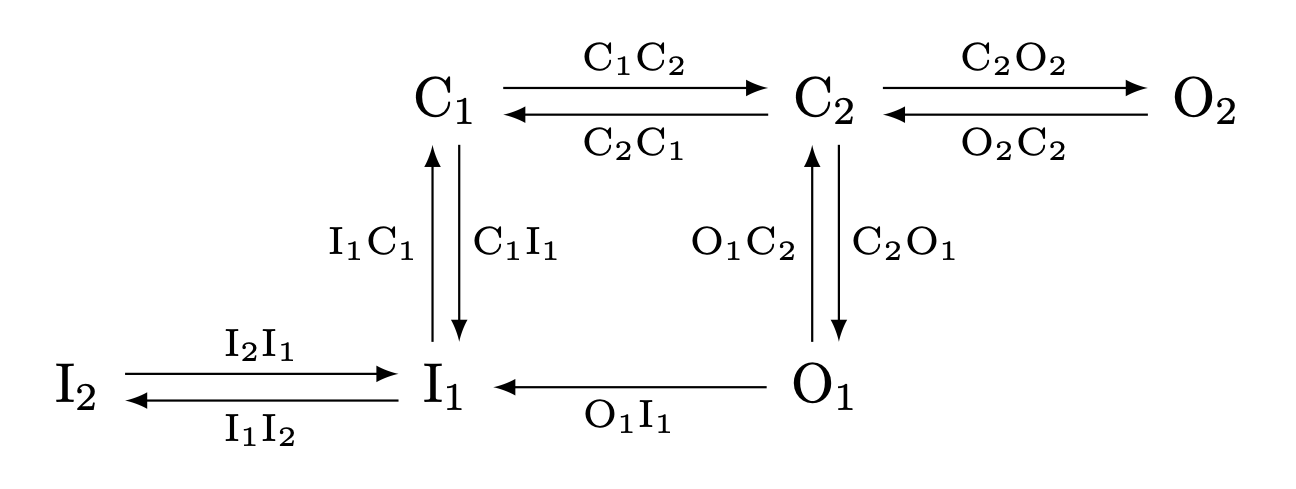
- Methodology Integrates a six-state Markov model for nine human NaV isoforms with a simplified KV3.1 model, enabling a unified framework for isoform-specific stability analysis.
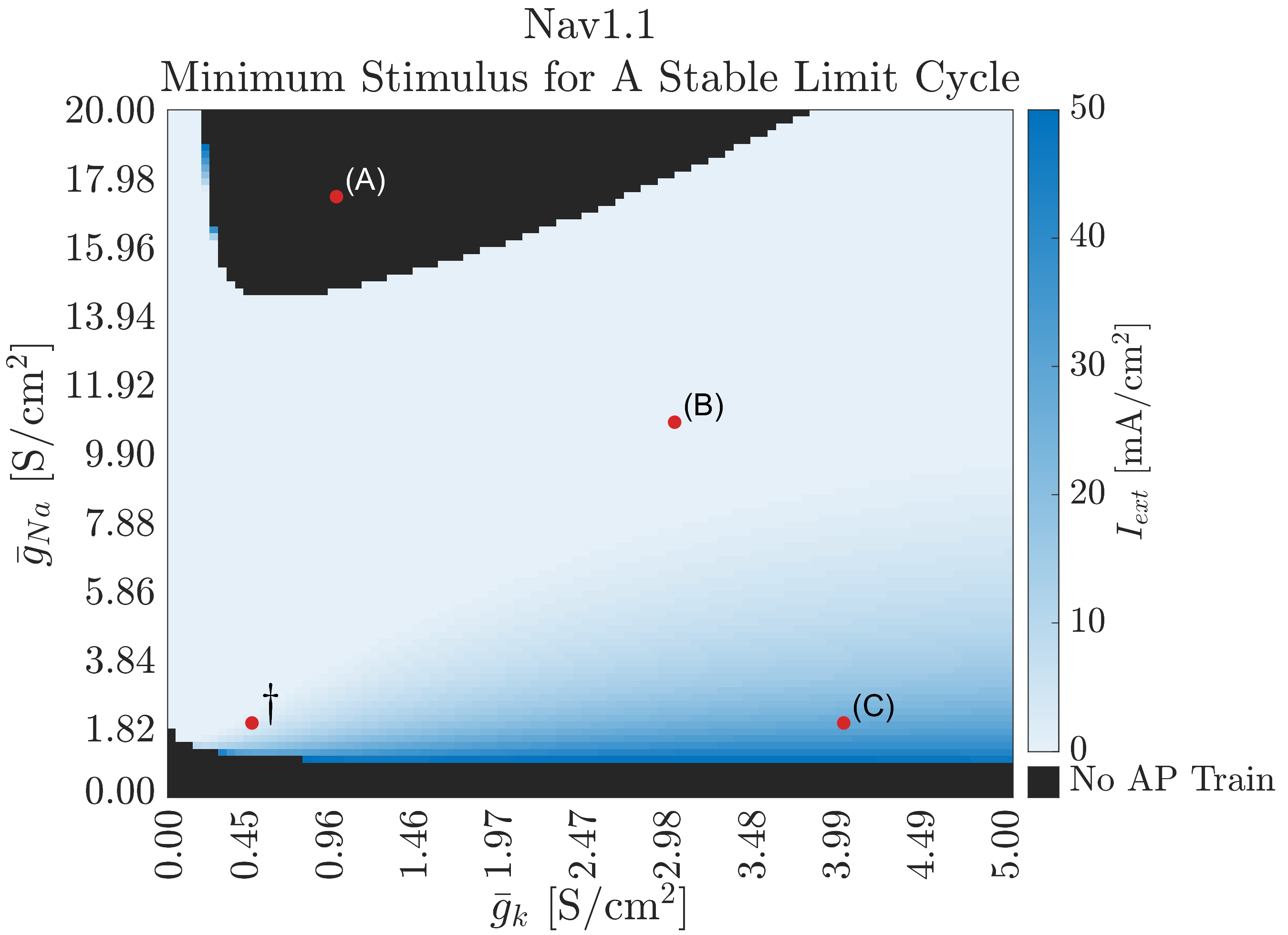
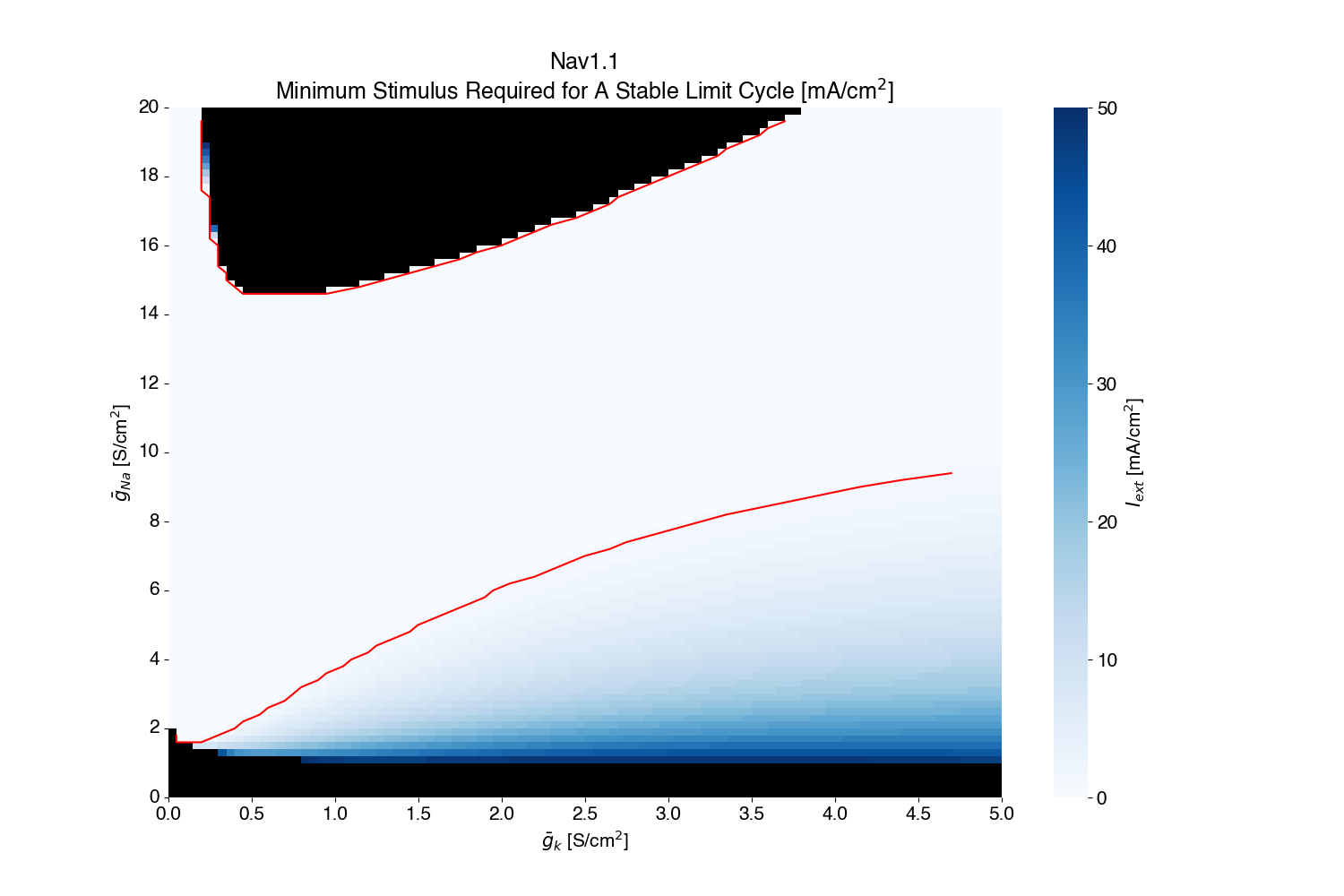
- Methodology Applies bifurcation theory and local stability analysis to map 'excitable landscapes' across the (g_Na, g_K) parameter space, visualizing regions supporting stable oscillatory behavior.
- Biology Quantitatively ranks NaV isoforms by their supported excitable regimes, identifying NaV1.3, 1.4, and 1.6 as broadly supportive and NaV1.7 and 1.9 as minimally oscillatory.
主要结论
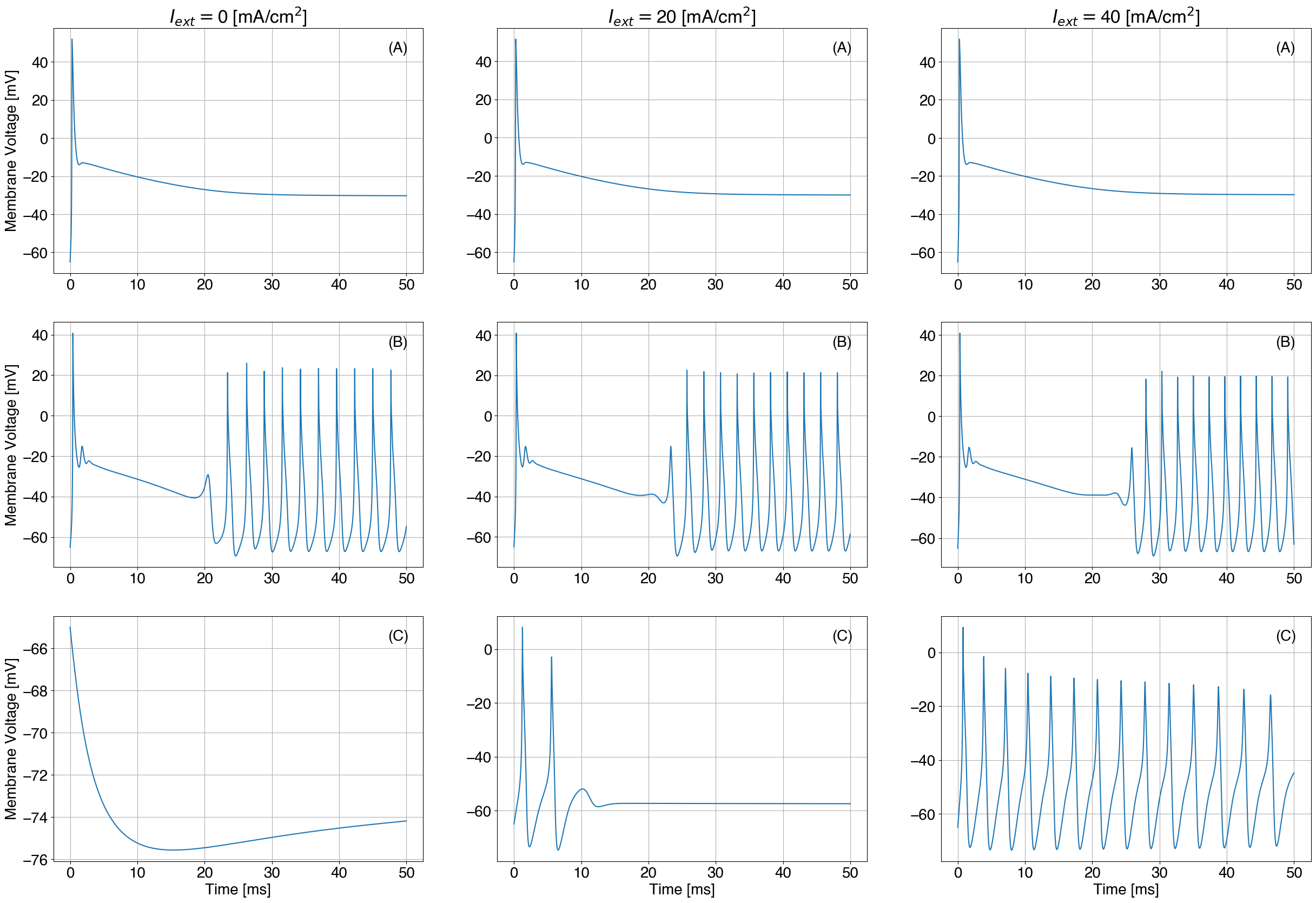
- Isoforms NaV1.3, NaV1.4, and NaV1.6 support the broadest parameter regions for stable limit cycles (oscillatory firing), indicating their robustness in sustaining action potential trains.
- Isoforms NaV1.7 and NaV1.9 exhibit minimal oscillatory behavior across the tested conductance parameter space, correlating with their specialized roles in peripheral nociception.
- The hybrid Markov-HH modeling and stability analysis framework successfully narrows the vast parameter search space for designing synthetic excitable systems, moving from trial-and-error to principled design.
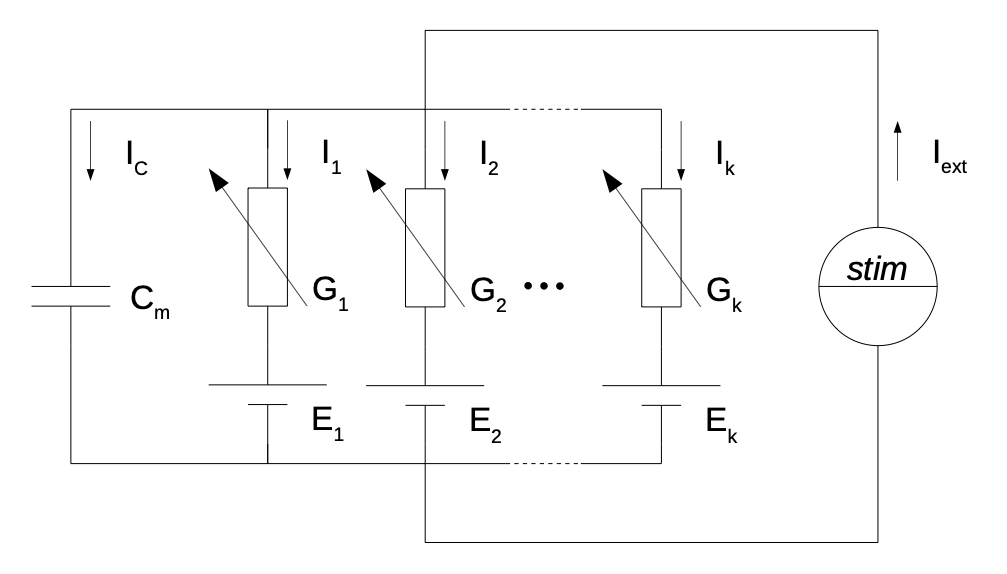
摘要: We investigate a conductance‑based neuron model to explore how voltage‑gated ion channel isoforms influence action‑potential generation. The model combines a six‑state Markov representation of NaV channels with a first‑order KV3.1 model, allowing us to vary maximal sodium and potassium conductances and compare nine NaV isoforms. Using bifurcation theory and local stability analysis, we map regions of stable limit cycles and visualize excitability landscapes via heatmap‑based diagrams. These analyses show that isoforms NaV1.3, NaV1.4 and NaV1.6 support broad excitable regimes, while isoforms NaV1.7 and NaV1.9 exhibit minimal oscillatory behavior. Our findings provide insights into the role of channel heterogeneity in neuronal dynamics and may help to guide the design of synthetic excitable systems by narrowing the parameter space needed for robust action‑potential trains.