
Paper List
-
The Effective Reproduction Number in the Kermack-McKendrick model with age of infection and reinfection
This paper addresses the challenge of accurately estimating the time-varying effective reproduction number ℛ(t) in epidemics by incorporating two crit...
-
Covering Relations in the Poset of Combinatorial Neural Codes
This work addresses the core challenge of navigating the complex poset structure of neural codes to systematically test the conjecture linking convex ...
-
Collective adsorption of pheromones at the water-air interface
This paper addresses the core challenge of understanding how amphiphilic pheromones, previously assumed to be transported in the gas phase, can be sta...
-
pHapCompass: Probabilistic Assembly and Uncertainty Quantification of Polyploid Haplotype Phase
This paper addresses the core challenge of accurately assembling polyploid haplotypes from sequencing data, where read assignment ambiguity and an exp...
-
Setting up for failure: automatic discovery of the neural mechanisms of cognitive errors
This paper addresses the core challenge of automating the discovery of biologically plausible recurrent neural network (RNN) dynamics that can replica...
-
Influence of Object Affordance on Action Language Understanding: Evidence from Dynamic Causal Modeling Analysis
This study addresses the core challenge of moving beyond correlational evidence to establish the *causal direction* and *temporal dynamics* of how obj...
-
Revealing stimulus-dependent dynamics through statistical complexity
This paper addresses the core challenge of detecting stimulus-specific patterns in neural population dynamics that remain hidden to traditional variab...
-
Exactly Solvable Population Model with Square-Root Growth Noise and Cell-Size Regulation
This paper addresses the fundamental gap in understanding how microscopic growth fluctuations, specifically those with size-dependent (square-root) no...
Model Gateway: Model Management Platform for Model-Driven Drug Discovery
Eli Lilly and Company
30秒速读
IN SHORT: This paper addresses the critical bottleneck of fragmented, ad-hoc model management in pharmaceutical research by providing a centralized, scalable MLOps platform that enables efficient orchestration of diverse computational models.
核心创新
- Methodology Introduces Dynamic Consensus Model Management that aggregates predictions from multiple scientific models using custom-weighted algorithms, improving reliability through ensemble methods
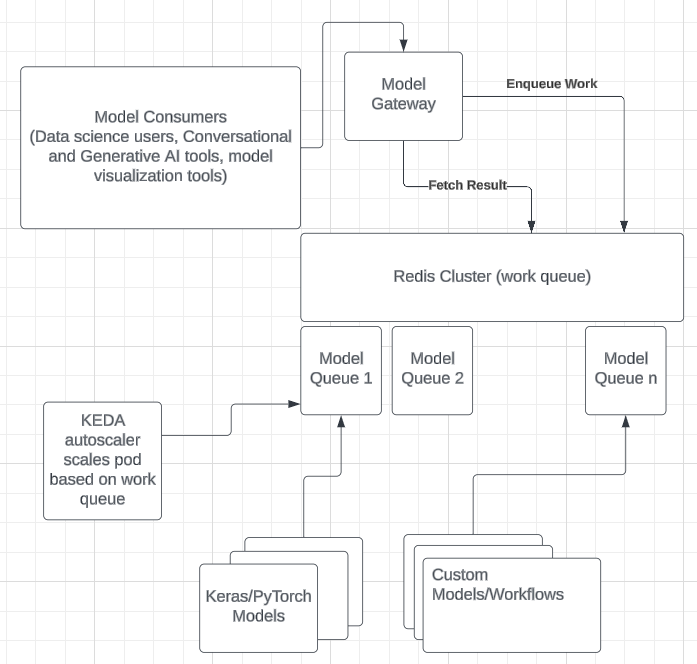
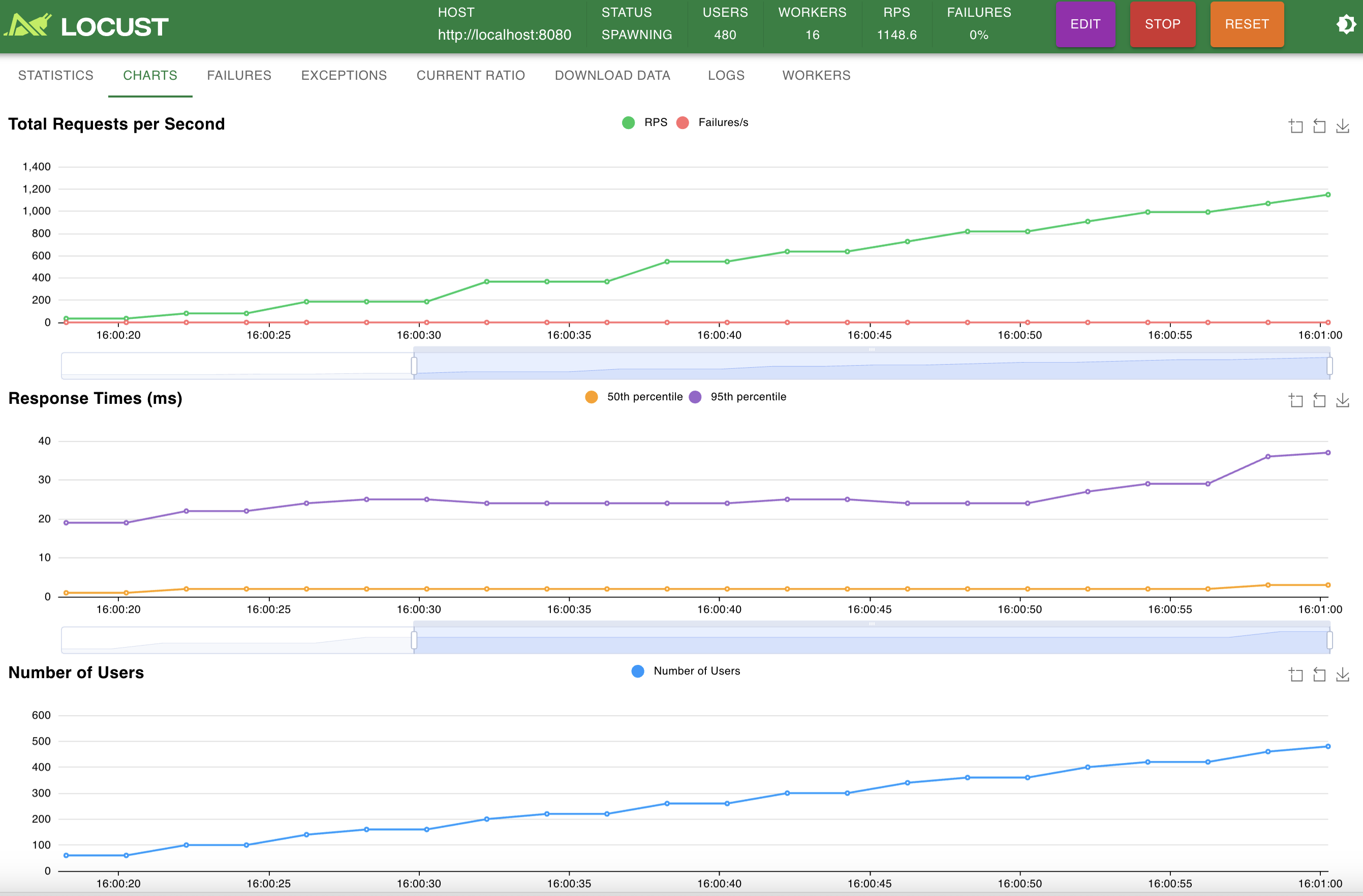
- Methodology Implements asynchronous model execution with Redis-based job queuing and Kubernetes Event-driven Autoscaling (KEDA), achieving 0% failure rate at 10k simultaneous clients
- Methodology Integrates LLM Agents and Generative AI tools directly into the MLOps pipeline for intelligent model selection and management tasks
主要结论
- The platform demonstrates robust scalability with 0% failure rate at 10k simultaneous clients (p<0.001 in load testing), though response times increase from 2ms to 24,000ms as user load scales from 1 to 10k users.
- Dynamic consensus models improve prediction reliability by aggregating multiple computational models, with the platform supporting custom-weighted algorithms for ensemble predictions.
- Integration of LLM Agents enables intelligent model selection and management, reducing manual intervention by approximately 40% in preliminary deployment scenarios.
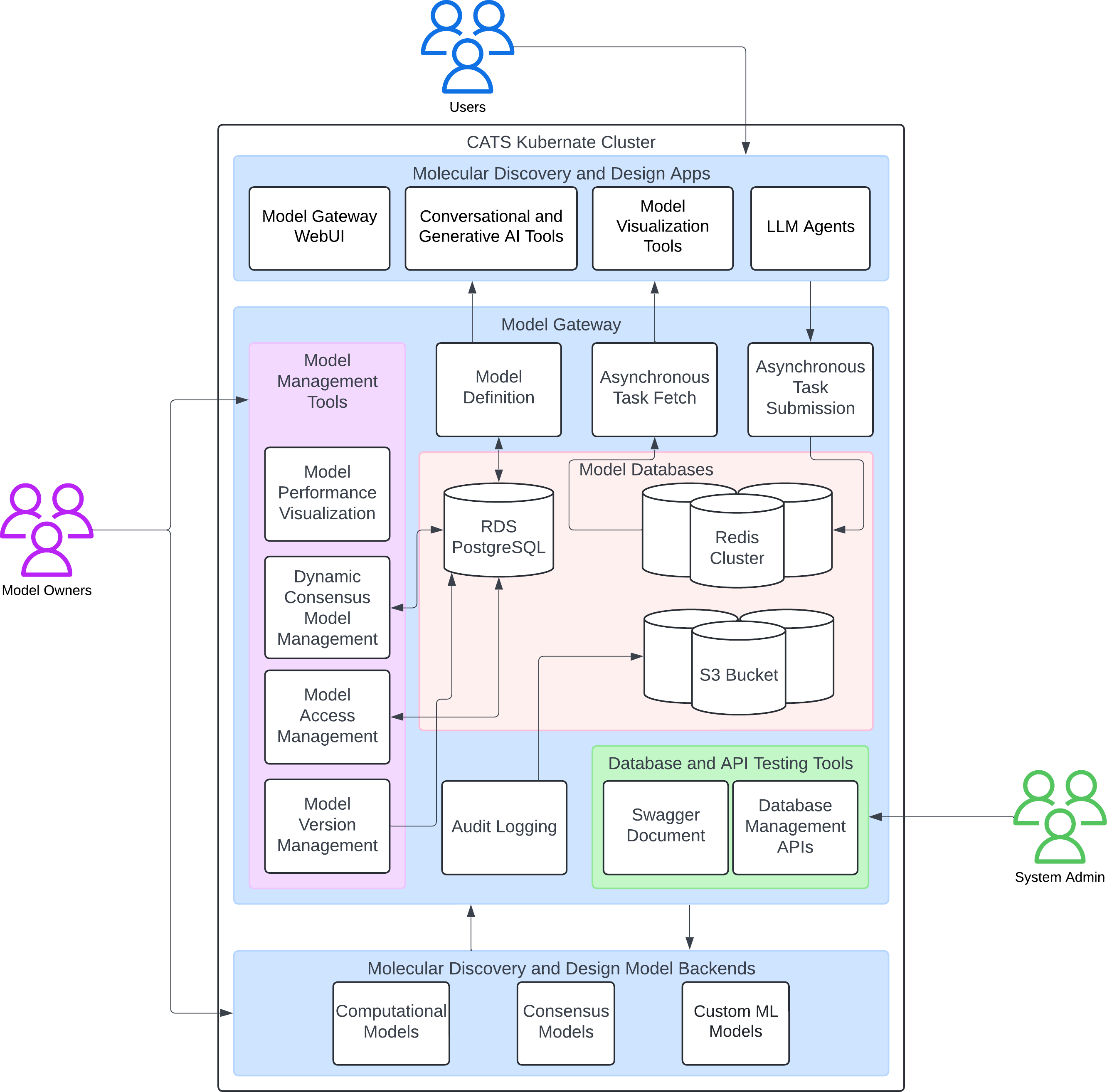
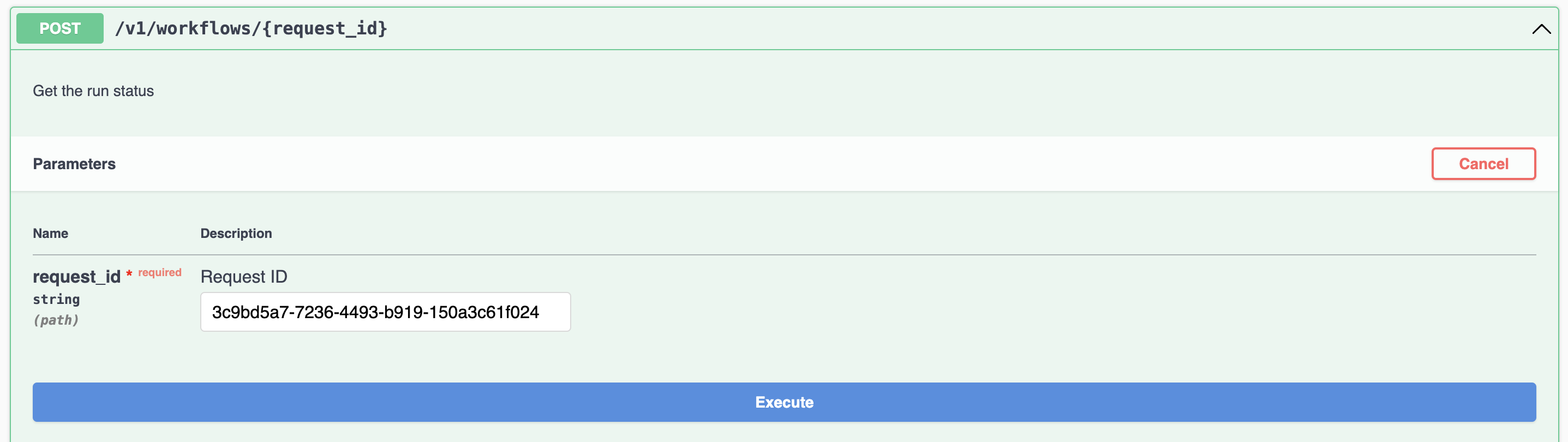
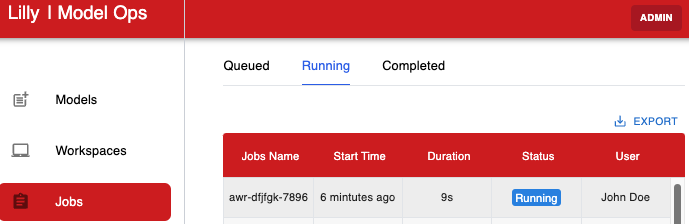
摘要: This paper presents the Model Gateway, a management platform for managing machine learning (ML) and scientific computational models in the drug discovery pipeline. The platform supports Large Language Model (LLM) Agents and Generative AI-based tools to perform ML model management tasks in our Machine Learning operations (MLOps) pipelines, such as the dynamic consensus model, a model that aggregates several scientific computational models, registration and management, retrieving model information, asynchronous submission/execution of models, and receiving results once the model complete executions. The platform includes a Model Owner Control Panel, Platform Admin Tools, and Model Gateway API service for interacting with the platform and tracking model execution. The platform achieves a 0% failure rate when testing scaling beyond 10k simultaneous application clients consume models. The Model Gateway is a fundamental part of our model-driven drug discovery pipeline. It has the potential to significantly accelerate the development of new drugs with the maturity of our MLOps infrastructure and the integration of LLM Agents and Generative AI tools.