
Paper List
-
A Unified Variational Principle for Branching Transport Networks: Wave Impedance, Viscous Flow, and Tissue Metabolism
This paper solves the core problem of predicting the empirically observed branching exponent (α≈2.7) in mammalian arterial trees, which neither Murray...
-
Household Bubbling Strategies for Epidemic Control and Social Connectivity
This paper addresses the core challenge of designing household merging (social bubble) strategies that effectively control epidemic risk while maximiz...
-
Empowering Chemical Structures with Biological Insights for Scalable Phenotypic Virtual Screening
This paper addresses the core challenge of bridging the gap between scalable chemical structure screening and biologically informative but resource-in...
-
A mechanical bifurcation constrains the evolution of cell sheet folding in the family Volvocaceae
This paper addresses the core problem of why there is an evolutionary gap in species with intermediate cell numbers (e.g., 256 cells) in Volvocaceae, ...
-
Bayesian Inference in Epidemic Modelling: A Beginner’s Guide Illustrated with the SIR Model
This guide addresses the core challenge of estimating uncertain epidemiological parameters (like transmission and recovery rates) from noisy, real-wor...
-
Geometric framework for biological evolution
This paper addresses the fundamental challenge of developing a coordinate-independent, geometric description of evolutionary dynamics that bridges gen...
-
A multiscale discrete-to-continuum framework for structured population models
This paper addresses the core challenge of systematically deriving uniformly valid continuum approximations from discrete structured population models...
-
Whole slide and microscopy image analysis with QuPath and OMERO
使QuPath能够直接分析存储在OMERO服务器中的图像而无需下载整个数据集,克服了大规模研究的本地存储限制。
MCP-AI: Protocol-Driven Intelligence Framework for Autonomous Reasoning in Healthcare
Organizations not explicitly listed in provided content
30秒速读
IN SHORT: This paper addresses the critical gap in healthcare AI systems that lack contextual reasoning, long-term state management, and verifiable workflows by introducing a protocol-driven framework that enables autonomous, explainable clinical decision-making.
核心创新
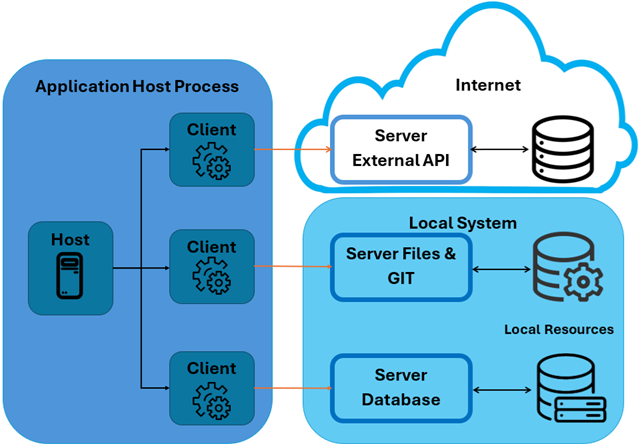
- Methodology Introduces the Model Context Protocol (MCP) as a structured, version-controlled file format that captures patient state, clinical objectives, and reasoning history, creating reusable and auditable memory objects.
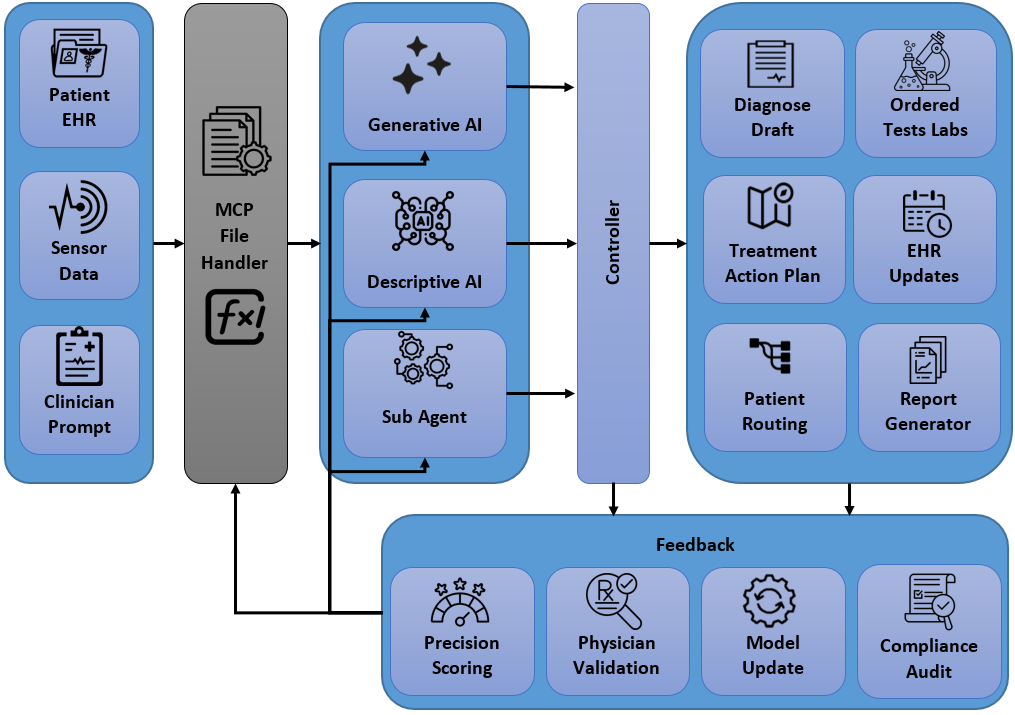
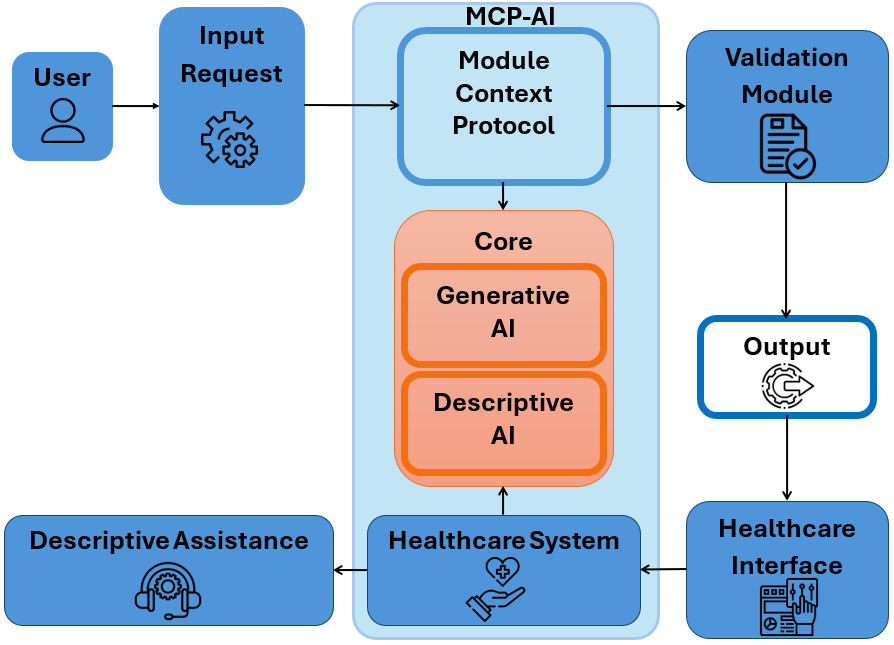
- Methodology Develops a hybrid architecture combining generative AI (for narrative diagnosis and planning) with descriptive AI (for rule validation and scoring) within a persistent reasoning context.
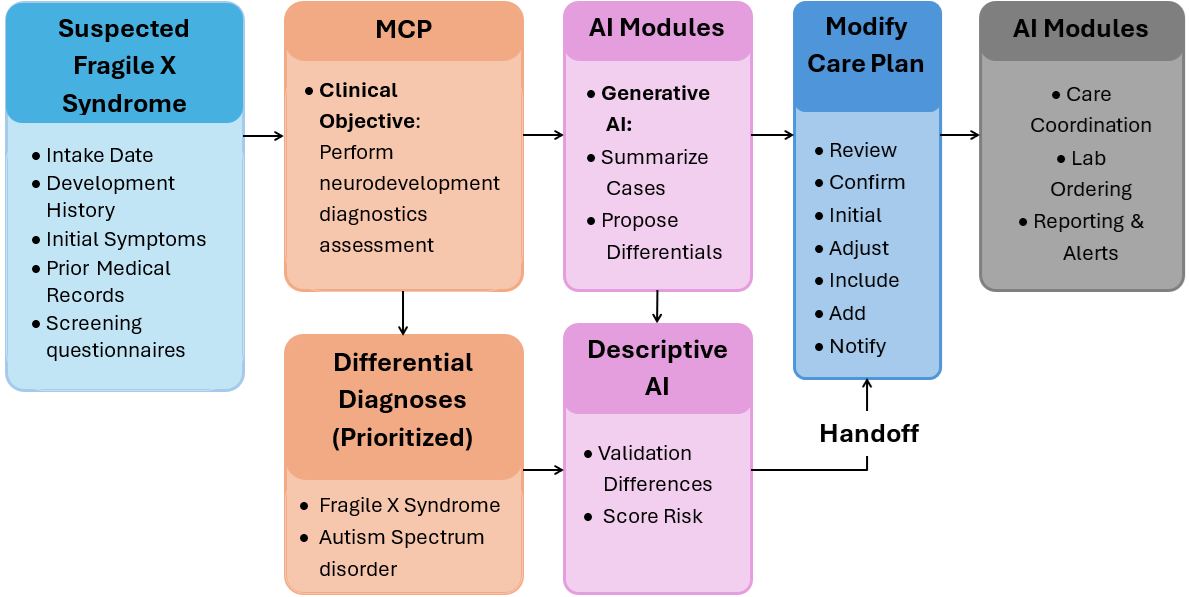
- Biology Demonstrates clinical utility through two complex use cases: Fragile X Syndrome with comorbid depression (rare neurodevelopmental disorder) and Type 2 Diabetes with hypertension (chronic care coordination).
主要结论
- MCP-AI enables adaptive, longitudinal reasoning across care settings, demonstrated through successful simulation of complex diagnostic pathways for Fragile X Syndrome with comorbid depression.
- The framework supports secure transitions of AI responsibilities between healthcare providers while maintaining clinical context, validated in chronic disease coordination scenarios for diabetes and hypertension.
- MCP-AI provides traceable, auditable decision-making with built-in physician verification, aligning with regulatory standards including HIPAA and FDA SaMD guidelines for clinical deployment.
摘要: Healthcare AI systems have historically faced challenges in merging contextual reasoning, long-term state management, and human-verifiable workflows into a cohesive framework. This paper introduces a completely innovative architecture and concept: combining the Model Context Protocol (MCP) with a specific clinical application, known as MCP-AI. This integration allows intelligent agents to reason over extended periods, collaborate securely, and adhere to authentic clinical logic, representing a significant shift away from traditional Clinical Decision Support Systems (CDSS) and prompt-based Large Language Models (LLMs). As healthcare systems become more complex, the need for autonomous, context-aware clinical reasoning frameworks has become urgent. We present MCP-AI, a novel architecture for explainable medical decision-making built upon the Model Context Protocol (MCP) a modular, executable specification for orchestrating generative and descriptive AI agents in real-time workflows. Each MCP file captures clinical objectives, patient context, reasoning state, and task logic, forming a reusable and auditable memory object. Unlike conventional CDSS or stateless prompt-based AI systems, MCP-AI supports adaptive, longitudinal, and collaborative reasoning across care settings. MCP-AI is validated through two use cases: (1) diagnostic modeling of Fragile X Syndrome with comorbid depression, and (2) remote coordination for Type 2 Diabetes and hypertension. In either scenario, the protocol facilitates physician-in-the-loop validation, streamlines clinical processes, and guarantees secure transitions of AI responsibilities between healthcare providers. The system connects with HL7/FHIR interfaces and adheres to regulatory standards, such as HIPAA and FDA SaMD guidelines. MCP-AI provides a scalable basis for interpretable, composable, and safety-oriented AI within upcoming clinical environments.