
Paper List
-
A Unified Variational Principle for Branching Transport Networks: Wave Impedance, Viscous Flow, and Tissue Metabolism
This paper solves the core problem of predicting the empirically observed branching exponent (α≈2.7) in mammalian arterial trees, which neither Murray...
-
Household Bubbling Strategies for Epidemic Control and Social Connectivity
This paper addresses the core challenge of designing household merging (social bubble) strategies that effectively control epidemic risk while maximiz...
-
Empowering Chemical Structures with Biological Insights for Scalable Phenotypic Virtual Screening
This paper addresses the core challenge of bridging the gap between scalable chemical structure screening and biologically informative but resource-in...
-
A mechanical bifurcation constrains the evolution of cell sheet folding in the family Volvocaceae
This paper addresses the core problem of why there is an evolutionary gap in species with intermediate cell numbers (e.g., 256 cells) in Volvocaceae, ...
-
Bayesian Inference in Epidemic Modelling: A Beginner’s Guide Illustrated with the SIR Model
This guide addresses the core challenge of estimating uncertain epidemiological parameters (like transmission and recovery rates) from noisy, real-wor...
-
Geometric framework for biological evolution
This paper addresses the fundamental challenge of developing a coordinate-independent, geometric description of evolutionary dynamics that bridges gen...
-
A multiscale discrete-to-continuum framework for structured population models
This paper addresses the core challenge of systematically deriving uniformly valid continuum approximations from discrete structured population models...
-
Whole slide and microscopy image analysis with QuPath and OMERO
使QuPath能够直接分析存储在OMERO服务器中的图像而无需下载整个数据集,克服了大规模研究的本地存储限制。
Human-Centred Evaluation of Text-to-Image Generation Models for Self-expression of Mental Distress: A Dataset Based on GPT-4o
School of Culture and Communication, Swansea University, United Kingdom | Department of Informatics, University of Oslo, Norway

30秒速读
IN SHORT: This paper addresses the critical gap in evaluating how AI-generated images can effectively support cross-cultural mental distress communication, particularly for international students facing linguistic and cultural barriers.
核心创新
- Methodology Introduces the first publicly available text-to-image evaluation dataset with human judgment scores specifically for mental health communication, comprising 100 textual descriptions, 400 AI-generated images, and 400 categorical evaluation scores.
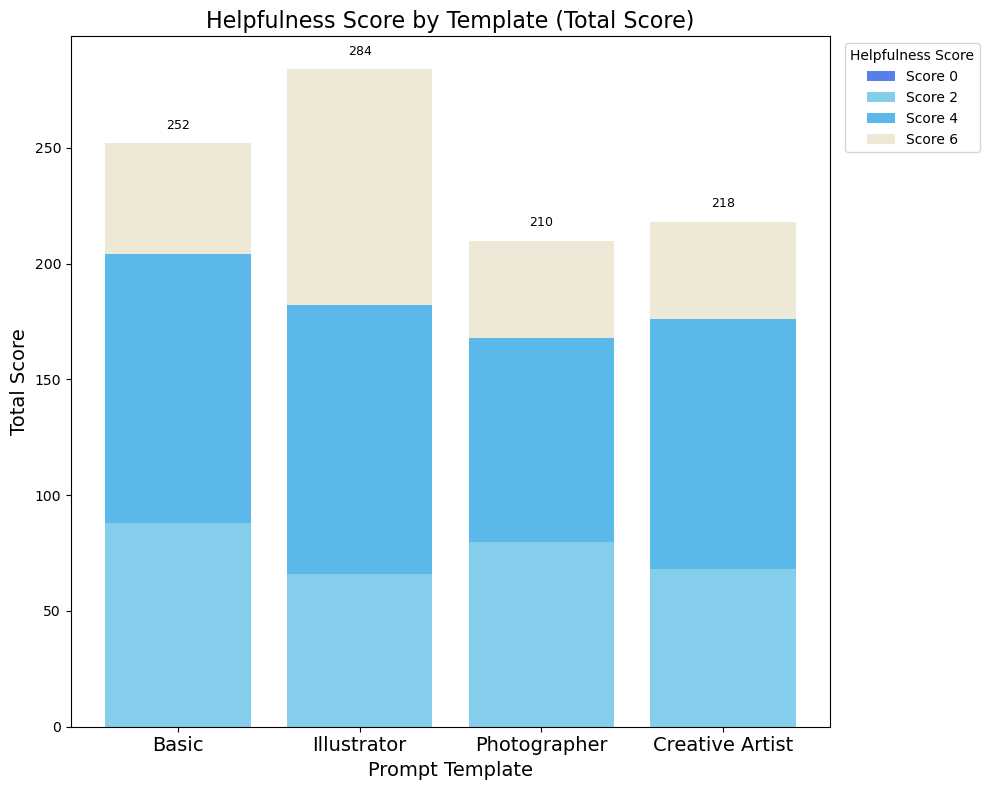
- Methodology Develops and evaluates four persona-based prompt templates (basic, illustrator, photographer, creative artist) rooted in contemporary counselling practices, with the illustrator persona achieving the highest total helpfulness score (284 out of possible 600).
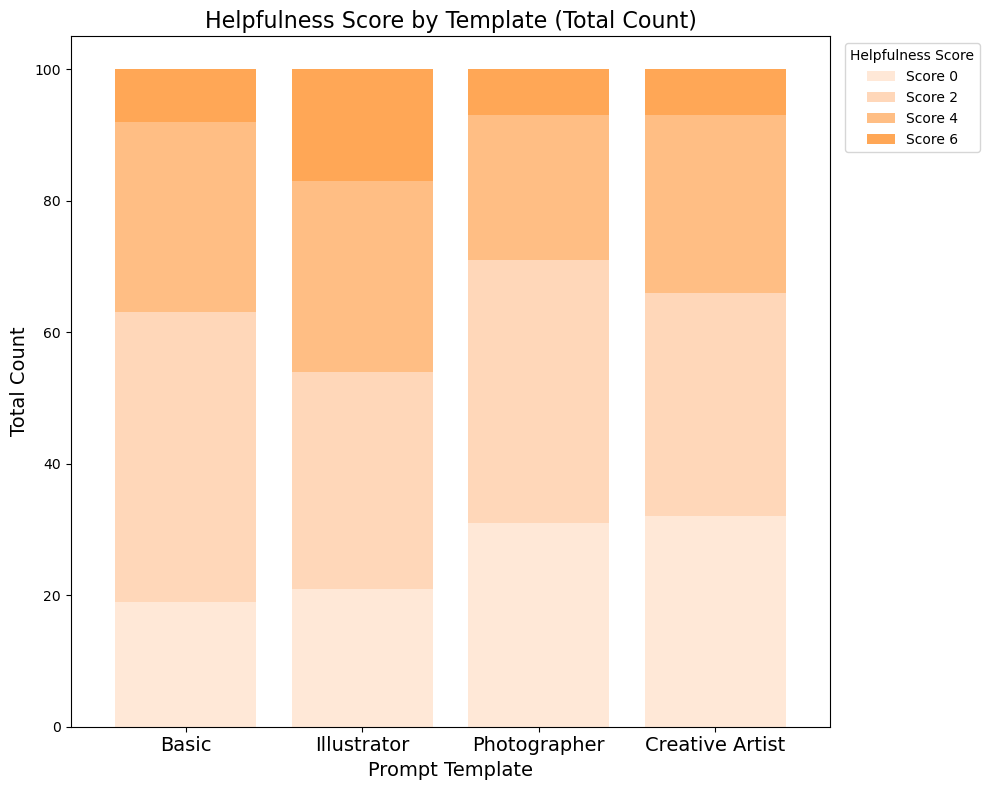
- Biology Demonstrates that AI-generated images can facilitate self-expression of mental distress, with 44% of images rated as 'slightly helpful' and 27% as 'helpful', achieving a mean helpfulness score of 2.4 on a 0-6 scale.
主要结论
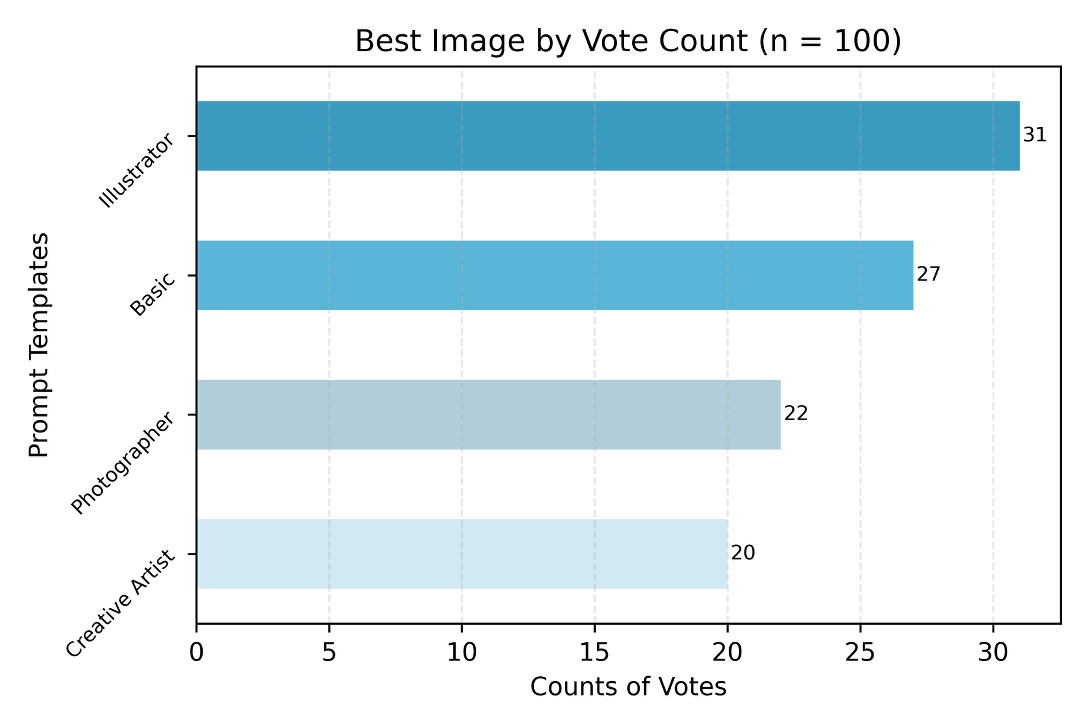
- The illustrator persona prompt achieved the highest total helpfulness score (284) and was selected as the 'best' image in 31% of cases, significantly outperforming other prompts (basic: 252, creative artist: 218, photographer: 210).
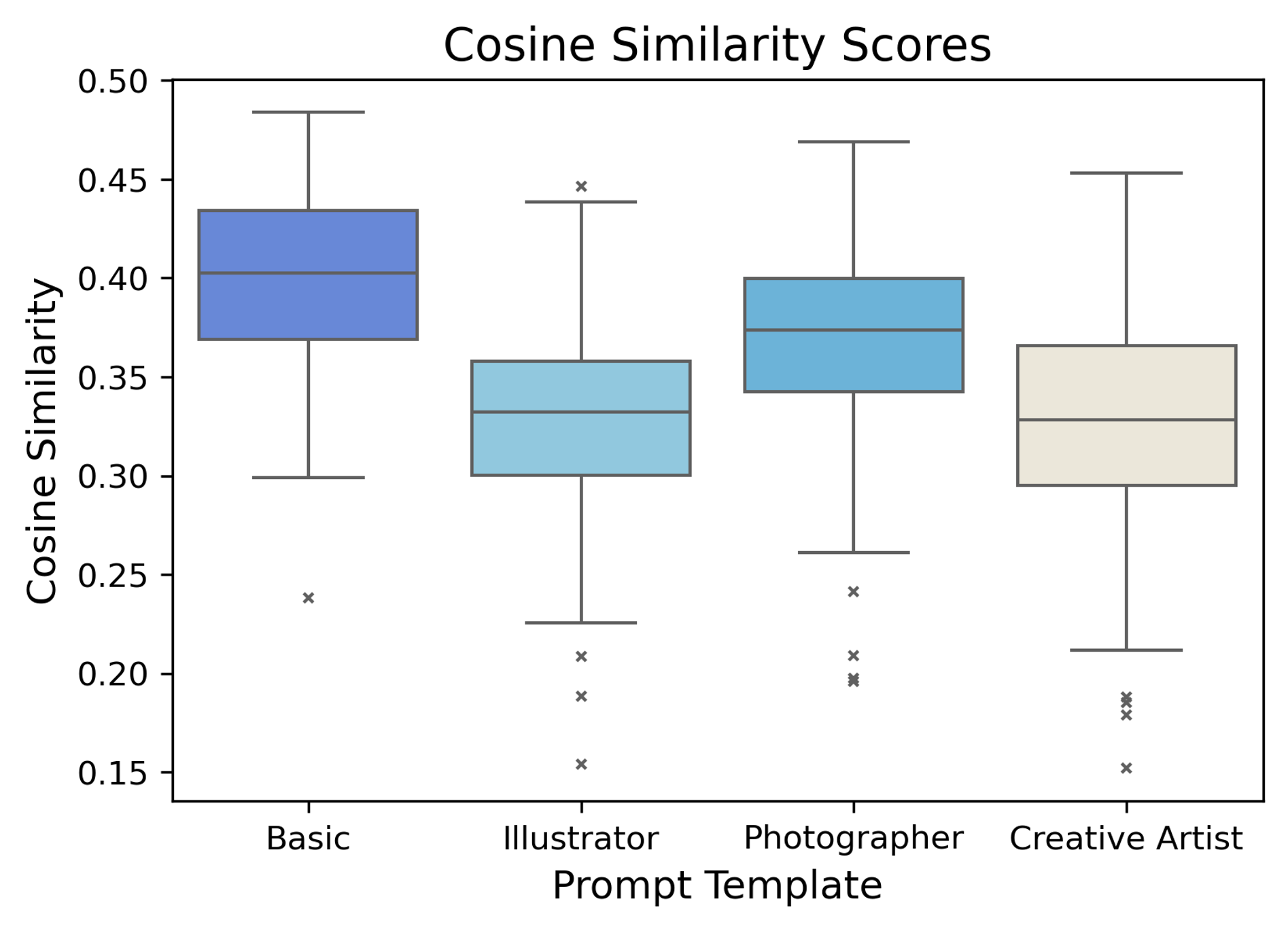
- Human evaluation shows minimal correlation with automatic semantic alignment metrics (Spearman's ρ=0.0271, Kendall's τ=0.0201), highlighting the need for emotion-aware evaluation frameworks beyond traditional similarity measures.
- AI-generated images demonstrated positive utility for mental distress expression, with 71% of images rated as at least 'slightly helpful' (score ≥2) and only 29% rated as 'not helpful' (score=0).
摘要: Effective communication is central to achieving positive healthcare outcomes in mental health contexts, yet international students often face linguistic and cultural barriers that hinder their communication of mental distress. In this study, we evaluate the effectiveness of AI-generated images in supporting self-expression of mental distress. To achieve this, twenty Chinese international students studying at UK universities were invited to describe their personal experiences of mental distress. These descriptions were elaborated using GPT-4o with four persona-based prompt templates rooted in contemporary counselling practice to generate corresponding images. Participants then evaluated the helpfulness of generated images in facilitating the expression of their feelings based on their original descriptions. The resulting dataset comprises 100 textual descriptions of mental distress, 400 generated images, and corresponding human evaluation scores. Findings indicate that prompt design substantially affects perceived helpfulness, with the illustrator persona achieving the highest ratings. This work introduces the first publicly available text-to-image evaluation dataset with human judgment scores in the mental health domain, offering valuable resources for image evaluation, reinforcement learning with human feedback, and multi-modal research on mental health communication.