
Paper List
-
A Unified Variational Principle for Branching Transport Networks: Wave Impedance, Viscous Flow, and Tissue Metabolism
This paper solves the core problem of predicting the empirically observed branching exponent (α≈2.7) in mammalian arterial trees, which neither Murray...
-
Household Bubbling Strategies for Epidemic Control and Social Connectivity
This paper addresses the core challenge of designing household merging (social bubble) strategies that effectively control epidemic risk while maximiz...
-
Empowering Chemical Structures with Biological Insights for Scalable Phenotypic Virtual Screening
This paper addresses the core challenge of bridging the gap between scalable chemical structure screening and biologically informative but resource-in...
-
A mechanical bifurcation constrains the evolution of cell sheet folding in the family Volvocaceae
This paper addresses the core problem of why there is an evolutionary gap in species with intermediate cell numbers (e.g., 256 cells) in Volvocaceae, ...
-
Bayesian Inference in Epidemic Modelling: A Beginner’s Guide Illustrated with the SIR Model
This guide addresses the core challenge of estimating uncertain epidemiological parameters (like transmission and recovery rates) from noisy, real-wor...
-
Geometric framework for biological evolution
This paper addresses the fundamental challenge of developing a coordinate-independent, geometric description of evolutionary dynamics that bridges gen...
-
A multiscale discrete-to-continuum framework for structured population models
This paper addresses the core challenge of systematically deriving uniformly valid continuum approximations from discrete structured population models...
-
Whole slide and microscopy image analysis with QuPath and OMERO
使QuPath能够直接分析存储在OMERO服务器中的图像而无需下载整个数据集,克服了大规模研究的本地存储限制。
Generating a Contact Matrix for Aged Care Settings in Australia: an agent-based model study
University of New South Wales
30秒速读
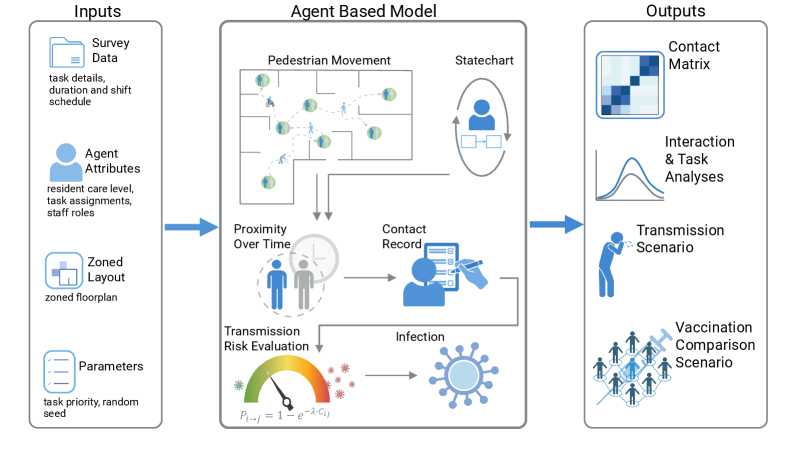
IN SHORT: This study addresses the critical gap in understanding heterogeneous contact patterns within aged care facilities, where existing population-level contact matrices fail to capture the nuanced interactions that drive infection transmission in these high-risk environments.
核心创新
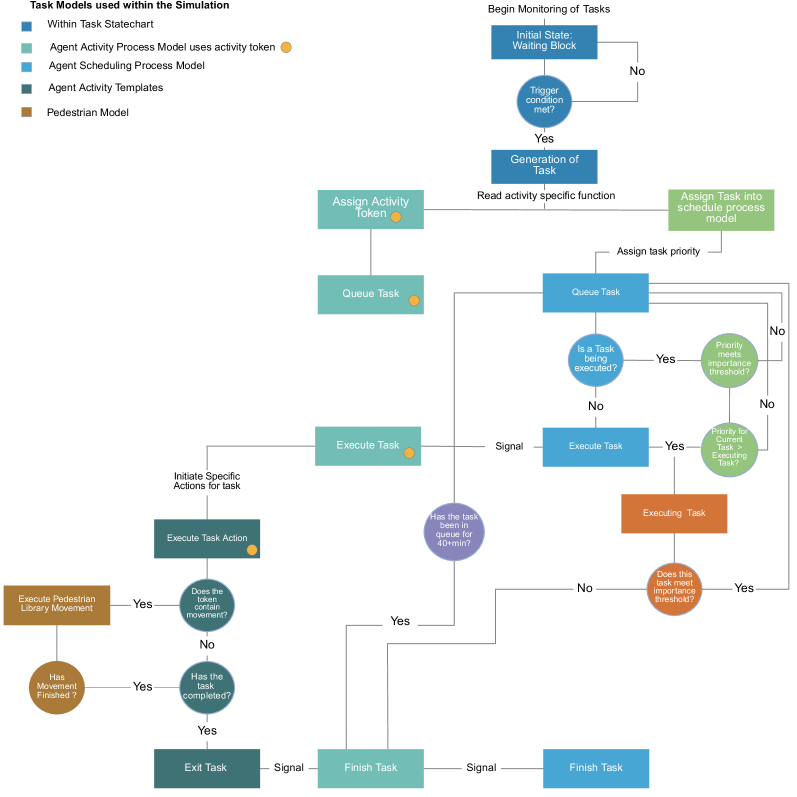
- Methodology Developed a transferable agent-based modeling framework specifically for aged care settings, parameterized with empirical survey data from 21 aged care workers to capture realistic staff-resident interaction patterns.
- Methodology Integrated proximity-based contact definitions (1.5m and 3m thresholds with 3-second duration) with temporal analysis to identify high-risk contact clustering during structured daily routines like communal activities and care tasks.
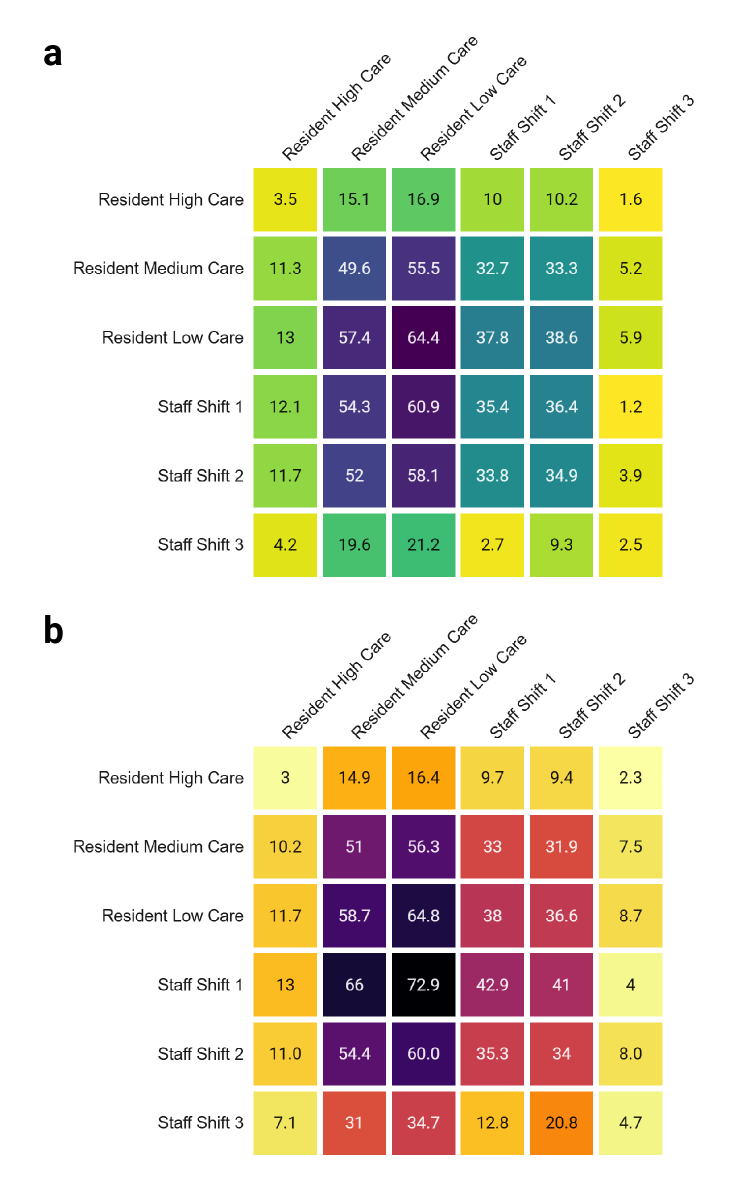
- Biology Demonstrated that medium care residents experience the highest infection risk despite not having the highest contact frequency, revealing non-linear relationships between contact patterns and transmission outcomes.
主要结论
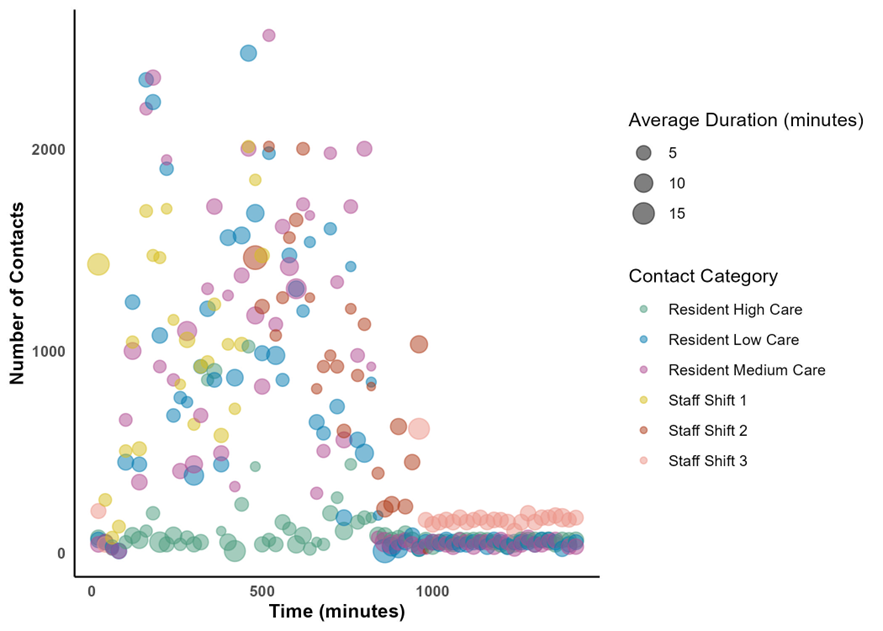
- Low and medium care residents had the highest contact frequencies (particularly with morning/afternoon shift staff), while high care residents and night staff had substantially fewer contacts, with Poisson regression confirming significant variation by care level and shift (p<0.001).
- Vaccination scenarios reduced predicted transmission by up to 68%, with maximum impact achieved when both staff and residents were vaccinated, demonstrating the multiplicative protective effect of comprehensive vaccination coverage.
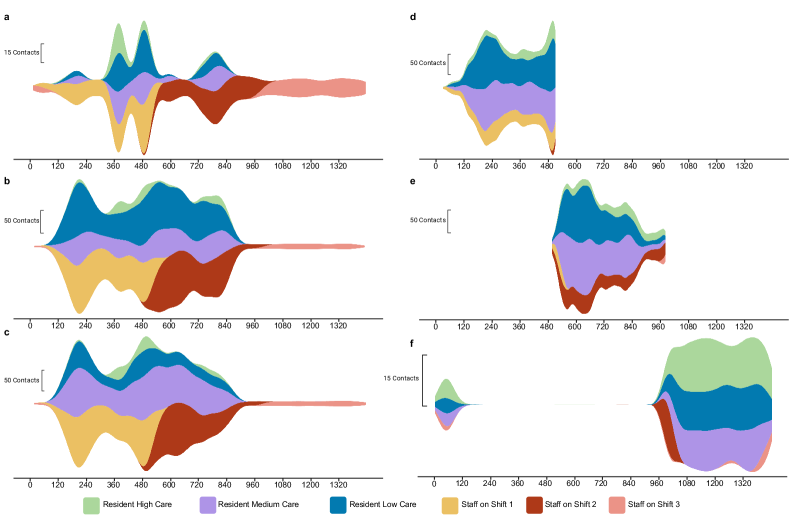
- Temporal analysis revealed clustering of high-risk contacts during structured daily routines, with infection risk highest during high-contact shifts and among medium care residents, highlighting the importance of timing in intervention strategies.
摘要: This study presents an agent-based model (ABM) developed to simulate staff and resident interactions within a synthetic aged care facility, capturing movement, task execution, and proximity-based contact events across three staff shifts and varying levels of resident care. Contacts were defined by spatial thresholds (1.5 m and 3 m) and cumulative duration, enabling the generation of detailed contact matrices. Simulation results showed that low and medium care residents experienced the highest frequency of interactions, particularly with staff on morning and afternoon shifts, while high care residents and night staff had substantially fewer contacts. Contact rates varied significantly by care level and shift, confirmed through Poisson-based regression modelling. Temporal analyses revealed clustering of high-risk contacts during structured daily routines, especially communal and care activities. An integrated airborne transmission module, seeded with a single infectious staff member, demonstrated that infection risk was highest during high-contact shifts and among medium care residents. Vaccination scenarios reduced predicted transmission by up to 68%, with the greatest impact observed when both staff and residents were vaccinated. These findings highlight the importance of accounting for contact heterogeneity in aged care and demonstrate the utility of ABMs for evaluating targeted infection control strategies in high-risk, enclosed environments.