
Paper List
-
Formation of Artificial Neural Assemblies by Biologically Plausible Inhibition Mechanisms
This work addresses the core limitation of the Assembly Calculus model—its fixed-size, biologically implausible k-WTA selection process—by introducing...
-
How to make the most of your masked language model for protein engineering
This paper addresses the critical bottleneck of efficiently sampling high-quality, diverse protein sequences from Masked Language Models (MLMs) for pr...
-
Module control in youth symptom networks across COVID-19
This paper addresses the core challenge of distinguishing whether a prolonged societal stressor (COVID-19) fundamentally reorganizes the architecture ...
-
JEDI: Jointly Embedded Inference of Neural Dynamics
This paper addresses the core challenge of inferring context-dependent neural dynamics from noisy, high-dimensional recordings using a single unified ...
-
ATP Level and Phosphorylation Free Energy Regulate Trigger-Wave Speed and Critical Nucleus Size in Cellular Biochemical Systems
This work addresses the core challenge of quantitatively predicting how the cellular energy state (ATP level and phosphorylation free energy) governs ...
-
Packaging Jupyter notebooks as installable desktop apps using LabConstrictor
This paper addresses the core pain point of ensuring Jupyter notebook reproducibility and accessibility across different computing environments, parti...
-
SNPgen: Phenotype-Supervised Genotype Representation and Synthetic Data Generation via Latent Diffusion
This paper addresses the core challenge of generating privacy-preserving synthetic genotype data that maintains both statistical fidelity and downstre...
-
Continuous Diffusion Transformers for Designing Synthetic Regulatory Elements
This paper addresses the challenge of efficiently generating novel, cell-type-specific regulatory DNA sequences with high predicted activity while min...
An AI Implementation Science Study to Improve Trustworthy Data in a Large Healthcare System
Georgia Institute of Technology, Atlanta, GA, USA | Shriners Hospitals for Children, Tampa, FL, USA
30秒速读
IN SHORT: This paper addresses the critical gap between theoretical AI research and real-world clinical implementation by providing a practical framework for assessing and improving healthcare data quality using trustworthy AI principles.
核心创新
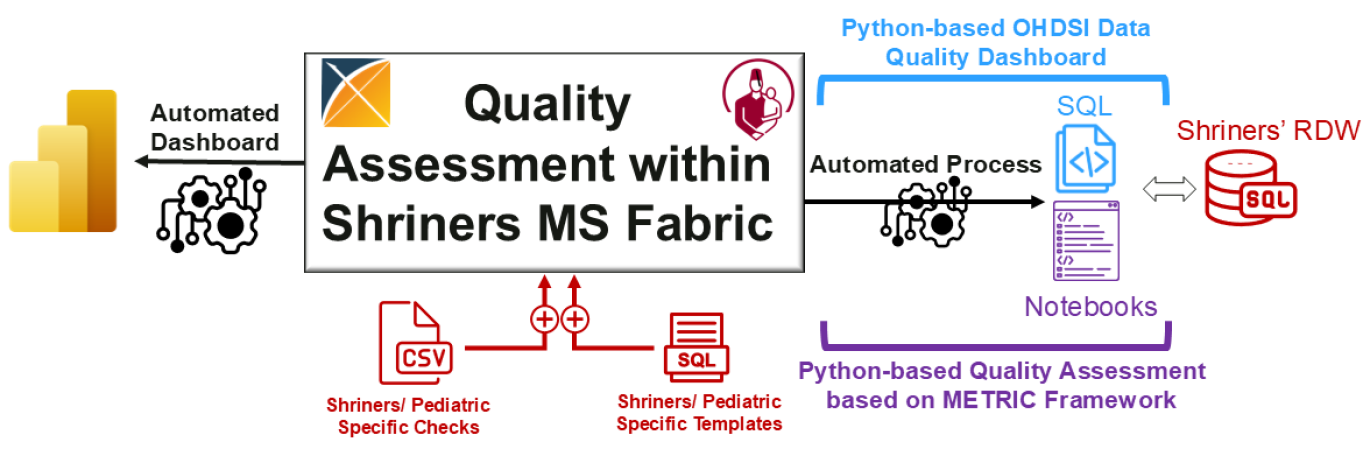
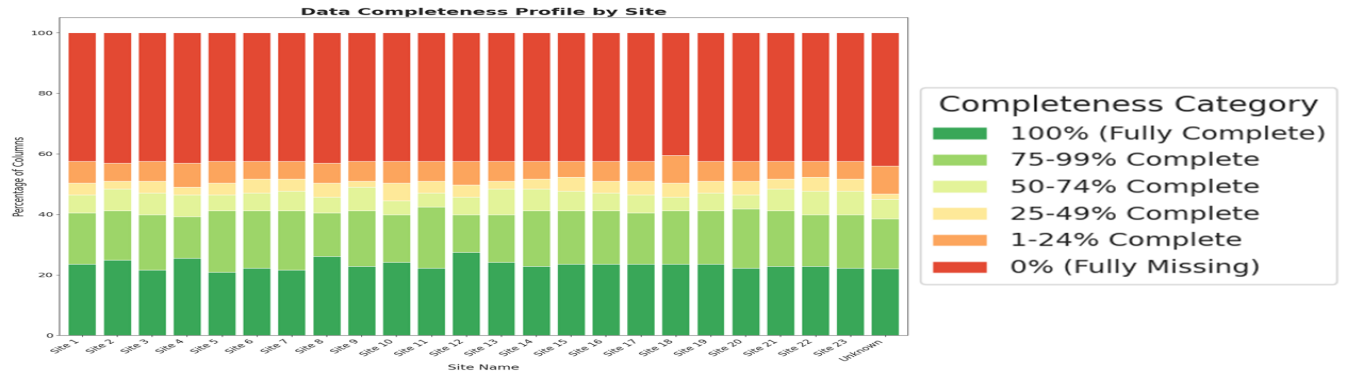
- Methodology Developed a Python-based extension of OHDSI's Data Quality Dashboard (DQD) that integrates the METRIC framework for trustworthy AI assessment, addressing informative missingness, timeliness, and distribution consistency.
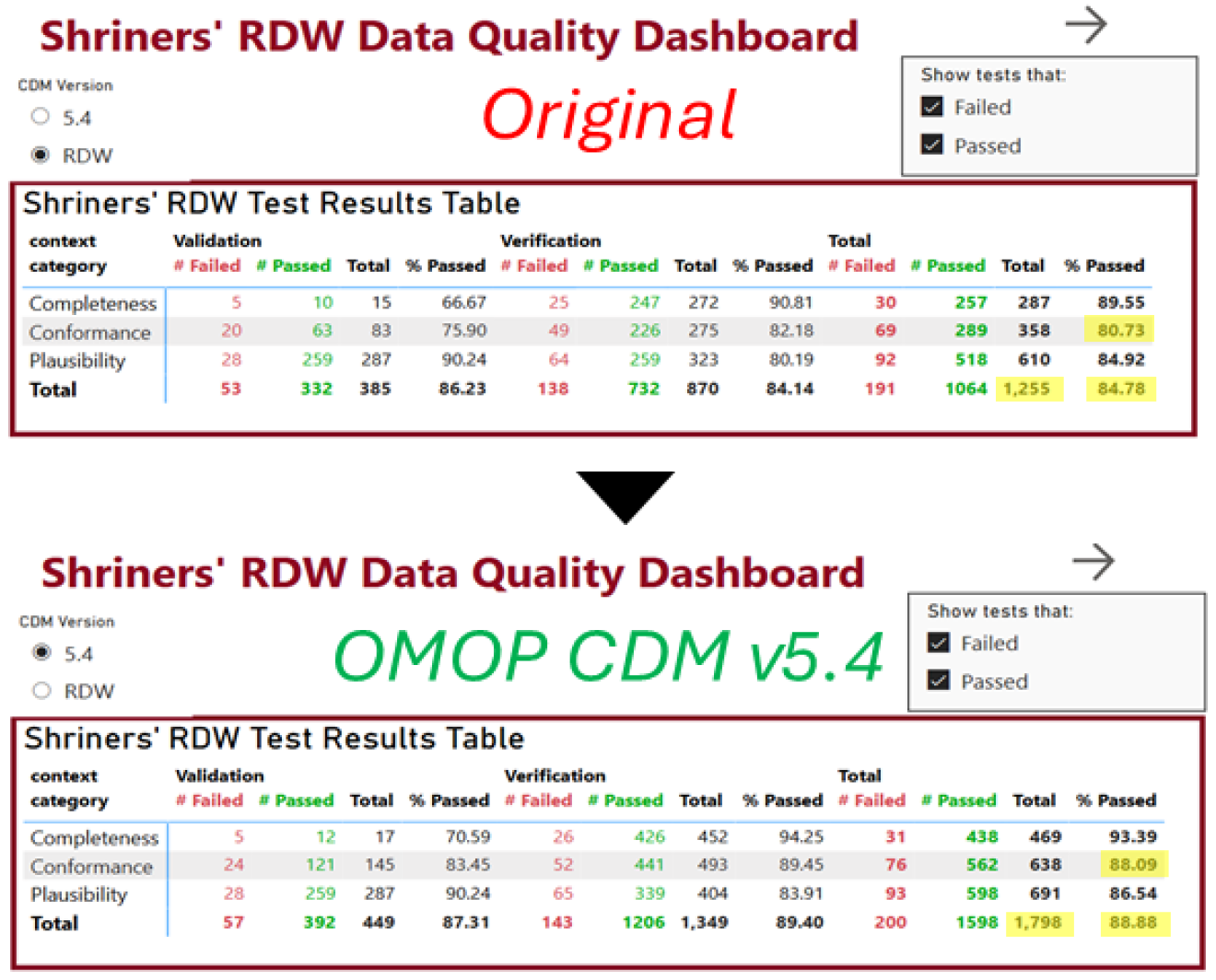
- Methodology Implemented a real-world case study modernizing a large pediatric healthcare system's Research Data Warehouse from OMOP CDM v5.1/5.2 to v5.4 within Microsoft Fabric, achieving 4% improvement in data quality test success rate (84.78% to 88.88%).
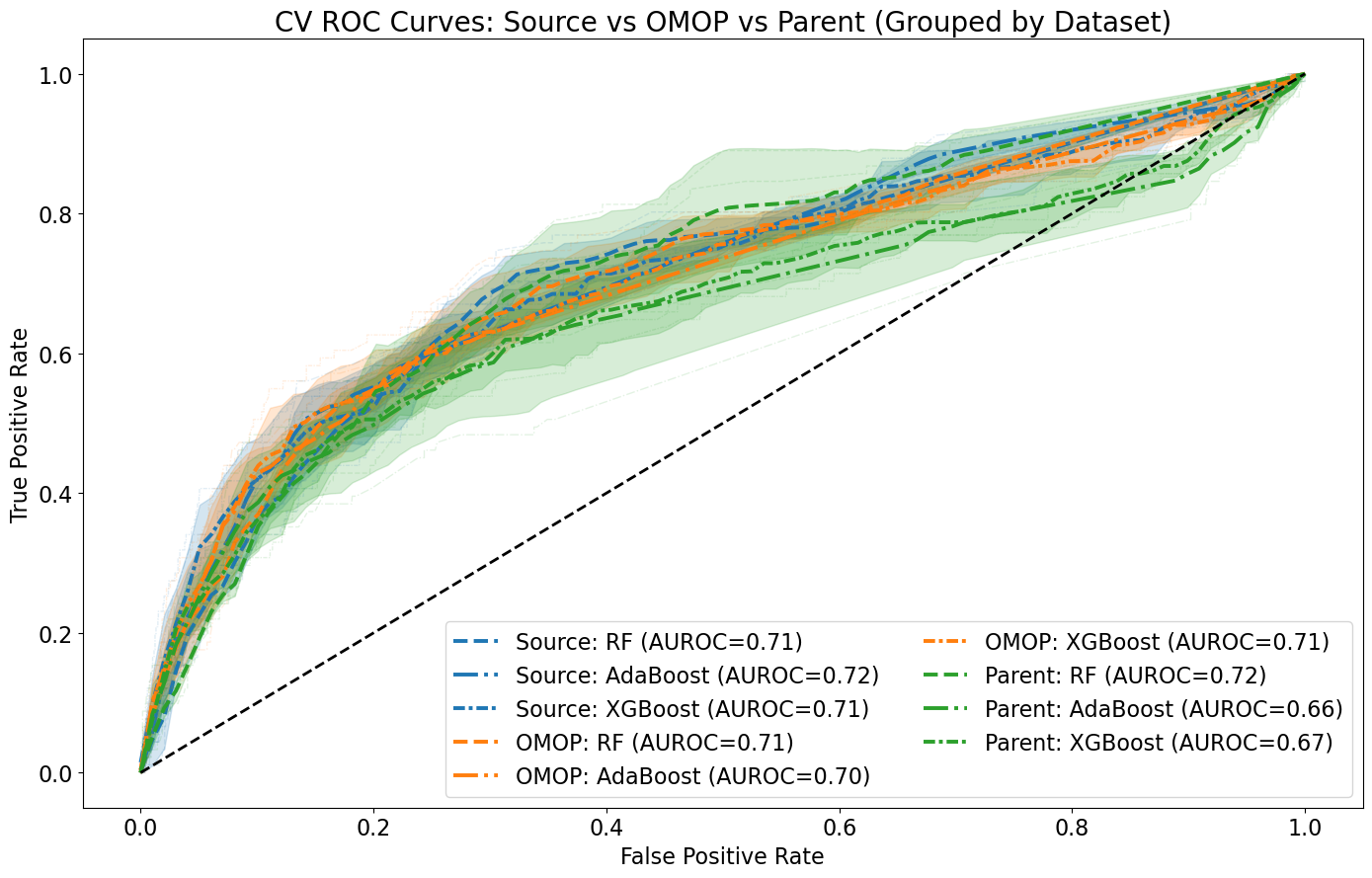
- Biology Demonstrated that data harmonization using OMOP CDM concept codes does not significantly impact AI model performance (mean AUROC: 71.3% with source codes vs. 70.0% with OMOP codes) while increasing interoperability for Craniofacial Microsomia case study.
主要结论
- Modernizing SC's OMOP CDM database from v5.1/5.2 to v5.4 improved overall data quality by 4% (84.78% to 88.88% success rate) and conformance by 8% (80.73% to 88.09%).
- Data harmonization using OMOP CDM concept codes maintained comparable AI model performance (mean AUROC difference: 1.3%) while enabling better interoperability across healthcare systems.
- Only 50% of ICD-9 codes shared common mappings with ICD-10 codes, revealing significant vocabulary transition challenges that could degrade AI model performance when encountering mixed coding systems.
摘要: The rapid growth of Artificial Intelligence (AI) in healthcare has sparked interest in Trustworthy AI and AI Implementation Science, both of which are essential for accelerating clinical adoption. Yet, barriers such as strict regulations, gaps between research and clinical settings, and challenges in evaluating AI systems hinder real-world implementation. This study presents an AI implementation case study within Shriners Children’s (SC), a large multisite pediatric system, showcasing the modernization of SC’s Research Data Warehouse (RDW) to OMOP CDM v5.4 within a secure Microsoft Fabric environment. We introduce a Python-based data quality assessment tool compatible with SC’s infrastructure, an extension of OHDSI’s R/Java-based Data Quality Dashboard (DQD) that integrates Trustworthy AI principles using the METRIC framework. This extension enhances data quality evaluation by addressing informative missingness, redundancy, timeliness, and distributional consistency. We also compare systematic and case-specific AI implementation strategies for Craniofacial Microsomia (CFM) using the FHIR standard. Our contributions include a real-world evaluation of AI implementations, integration of Trustworthy AI in data quality assessment, and evidence-based insights into hybrid implementation strategies, highlighting the need to blend systematic infrastructure with use-case-driven approaches to advance AI in healthcare.