
Paper List
-
A Unified Variational Principle for Branching Transport Networks: Wave Impedance, Viscous Flow, and Tissue Metabolism
This paper solves the core problem of predicting the empirically observed branching exponent (α≈2.7) in mammalian arterial trees, which neither Murray...
-
Household Bubbling Strategies for Epidemic Control and Social Connectivity
This paper addresses the core challenge of designing household merging (social bubble) strategies that effectively control epidemic risk while maximiz...
-
Empowering Chemical Structures with Biological Insights for Scalable Phenotypic Virtual Screening
This paper addresses the core challenge of bridging the gap between scalable chemical structure screening and biologically informative but resource-in...
-
A mechanical bifurcation constrains the evolution of cell sheet folding in the family Volvocaceae
This paper addresses the core problem of why there is an evolutionary gap in species with intermediate cell numbers (e.g., 256 cells) in Volvocaceae, ...
-
Bayesian Inference in Epidemic Modelling: A Beginner’s Guide Illustrated with the SIR Model
This guide addresses the core challenge of estimating uncertain epidemiological parameters (like transmission and recovery rates) from noisy, real-wor...
-
Geometric framework for biological evolution
This paper addresses the fundamental challenge of developing a coordinate-independent, geometric description of evolutionary dynamics that bridges gen...
-
A multiscale discrete-to-continuum framework for structured population models
This paper addresses the core challenge of systematically deriving uniformly valid continuum approximations from discrete structured population models...
-
Whole slide and microscopy image analysis with QuPath and OMERO
使QuPath能够直接分析存储在OMERO服务器中的图像而无需下载整个数据集,克服了大规模研究的本地存储限制。
An AI Implementation Science Study to Improve Trustworthy Data in a Large Healthcare System
Georgia Institute of Technology, Atlanta, GA, USA | Shriners Hospitals for Children, Tampa, FL, USA
30秒速读
IN SHORT: This paper addresses the critical gap between theoretical AI research and real-world clinical implementation by providing a practical framework for assessing and improving healthcare data quality using trustworthy AI principles.
核心创新
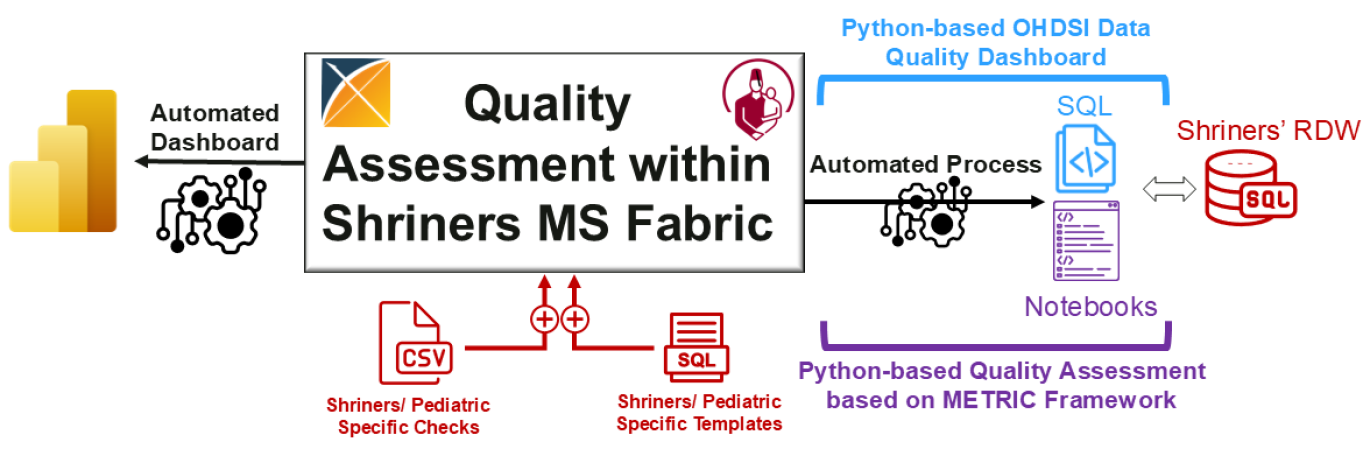
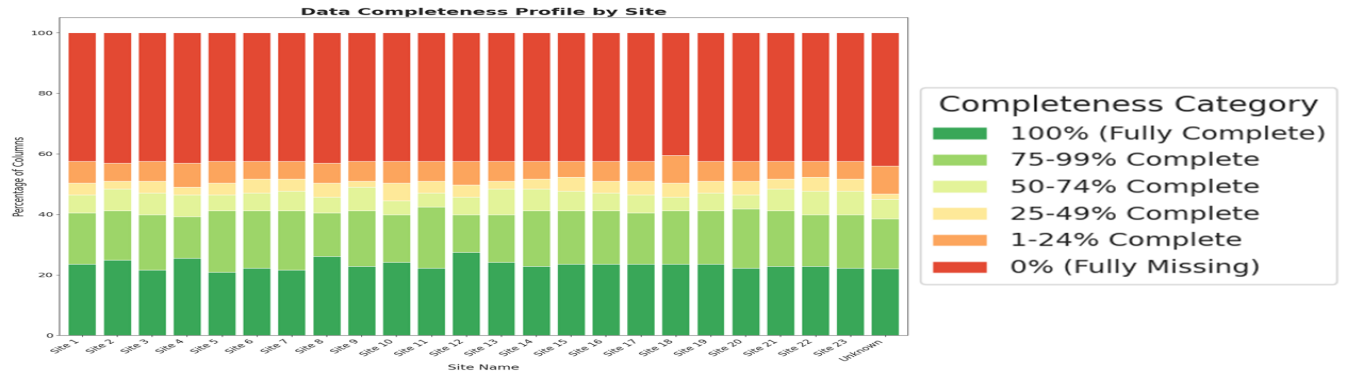
- Methodology Developed a Python-based extension of OHDSI's Data Quality Dashboard (DQD) that integrates the METRIC framework for trustworthy AI assessment, addressing informative missingness, timeliness, and distribution consistency.
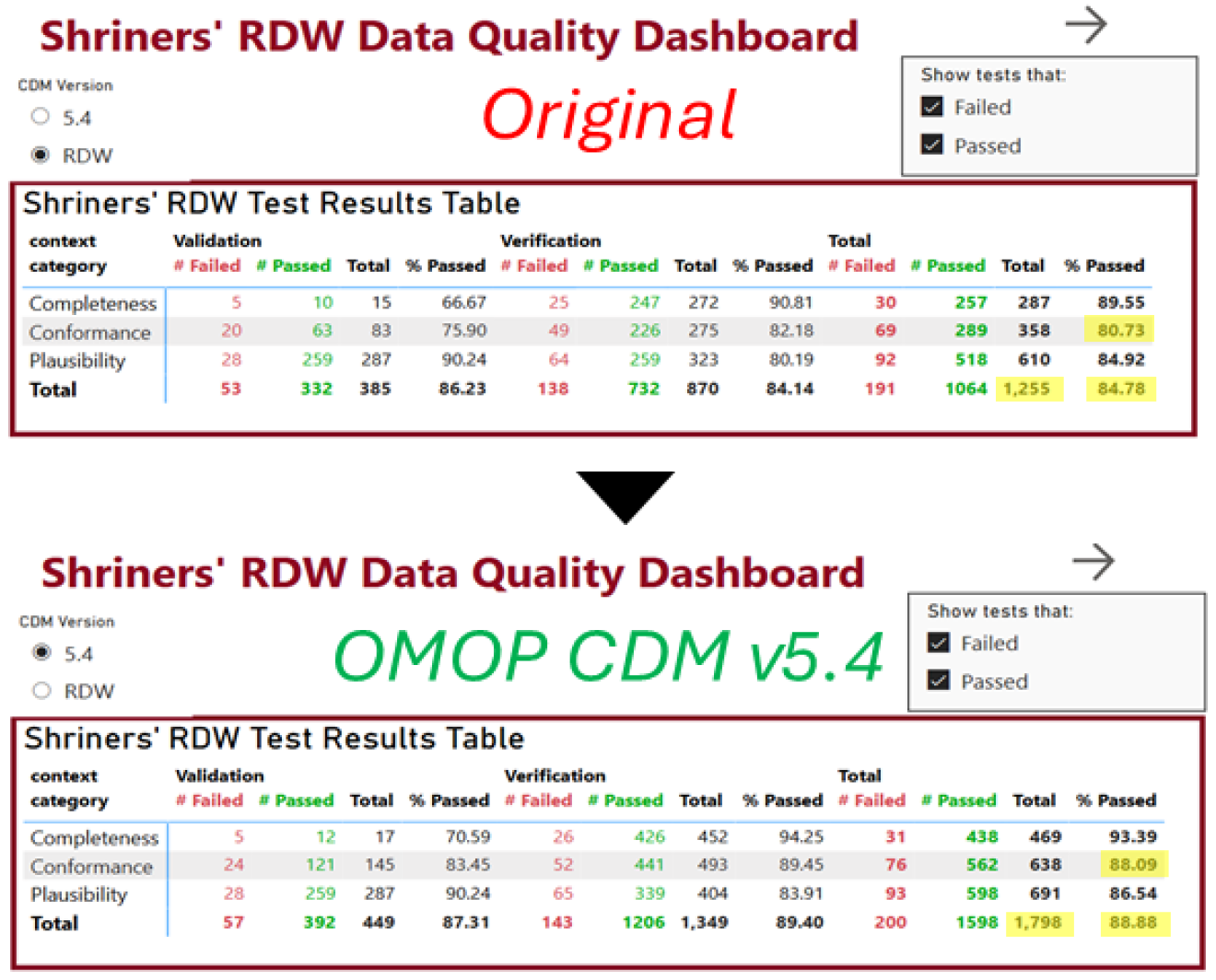
- Methodology Implemented a real-world case study modernizing a large pediatric healthcare system's Research Data Warehouse from OMOP CDM v5.1/5.2 to v5.4 within Microsoft Fabric, achieving 4% improvement in data quality test success rate (84.78% to 88.88%).
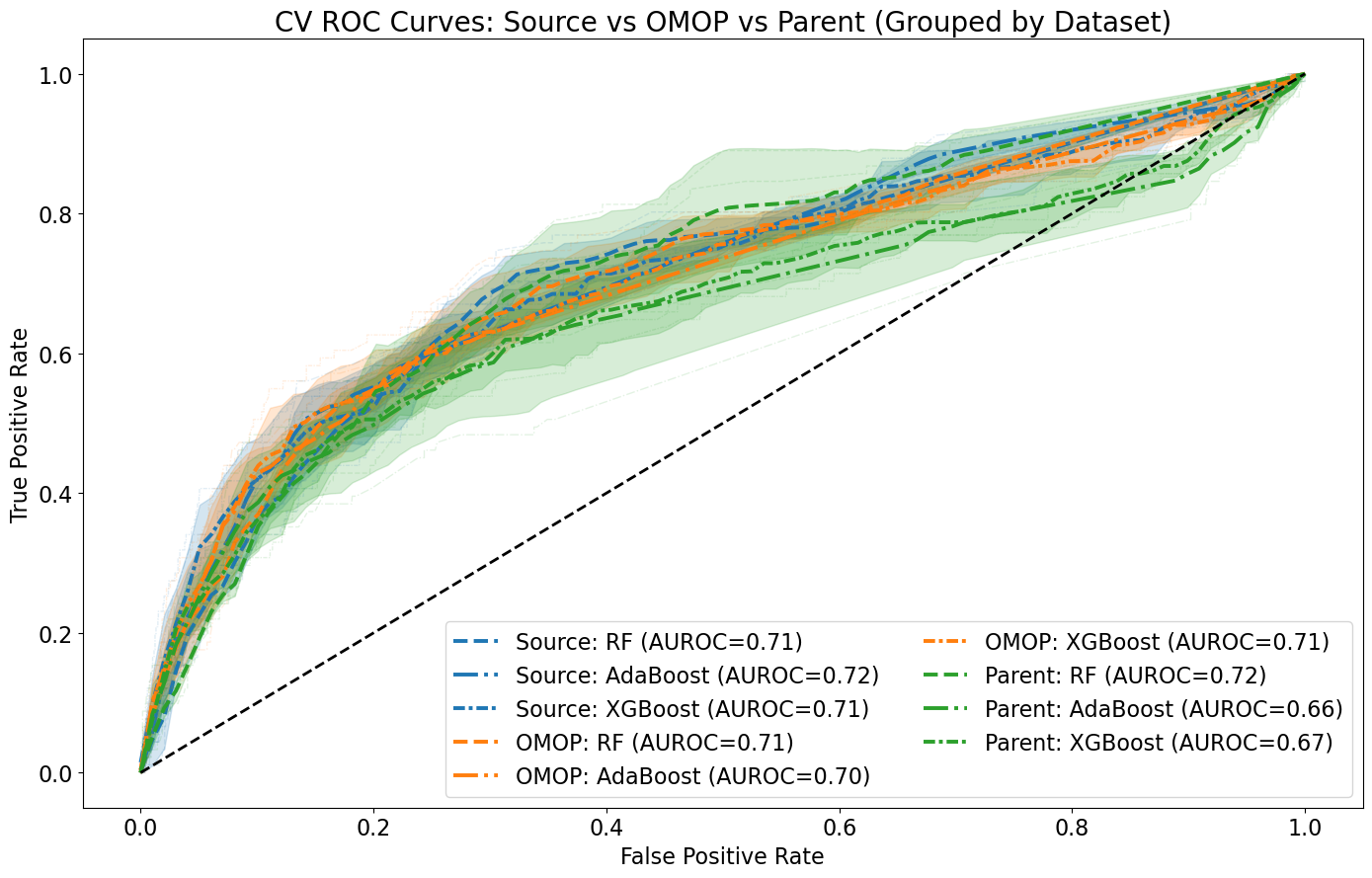
- Biology Demonstrated that data harmonization using OMOP CDM concept codes does not significantly impact AI model performance (mean AUROC: 71.3% with source codes vs. 70.0% with OMOP codes) while increasing interoperability for Craniofacial Microsomia case study.
主要结论
- Modernizing SC's OMOP CDM database from v5.1/5.2 to v5.4 improved overall data quality by 4% (84.78% to 88.88% success rate) and conformance by 8% (80.73% to 88.09%).
- Data harmonization using OMOP CDM concept codes maintained comparable AI model performance (mean AUROC difference: 1.3%) while enabling better interoperability across healthcare systems.
- Only 50% of ICD-9 codes shared common mappings with ICD-10 codes, revealing significant vocabulary transition challenges that could degrade AI model performance when encountering mixed coding systems.
摘要: The rapid growth of Artificial Intelligence (AI) in healthcare has sparked interest in Trustworthy AI and AI Implementation Science, both of which are essential for accelerating clinical adoption. Yet, barriers such as strict regulations, gaps between research and clinical settings, and challenges in evaluating AI systems hinder real-world implementation. This study presents an AI implementation case study within Shriners Children’s (SC), a large multisite pediatric system, showcasing the modernization of SC’s Research Data Warehouse (RDW) to OMOP CDM v5.4 within a secure Microsoft Fabric environment. We introduce a Python-based data quality assessment tool compatible with SC’s infrastructure, an extension of OHDSI’s R/Java-based Data Quality Dashboard (DQD) that integrates Trustworthy AI principles using the METRIC framework. This extension enhances data quality evaluation by addressing informative missingness, redundancy, timeliness, and distributional consistency. We also compare systematic and case-specific AI implementation strategies for Craniofacial Microsomia (CFM) using the FHIR standard. Our contributions include a real-world evaluation of AI implementations, integration of Trustworthy AI in data quality assessment, and evidence-based insights into hybrid implementation strategies, highlighting the need to blend systematic infrastructure with use-case-driven approaches to advance AI in healthcare.