
Paper List
-
Formation of Artificial Neural Assemblies by Biologically Plausible Inhibition Mechanisms
This work addresses the core limitation of the Assembly Calculus model—its fixed-size, biologically implausible k-WTA selection process—by introducing...
-
How to make the most of your masked language model for protein engineering
This paper addresses the critical bottleneck of efficiently sampling high-quality, diverse protein sequences from Masked Language Models (MLMs) for pr...
-
Module control in youth symptom networks across COVID-19
This paper addresses the core challenge of distinguishing whether a prolonged societal stressor (COVID-19) fundamentally reorganizes the architecture ...
-
JEDI: Jointly Embedded Inference of Neural Dynamics
This paper addresses the core challenge of inferring context-dependent neural dynamics from noisy, high-dimensional recordings using a single unified ...
-
ATP Level and Phosphorylation Free Energy Regulate Trigger-Wave Speed and Critical Nucleus Size in Cellular Biochemical Systems
This work addresses the core challenge of quantitatively predicting how the cellular energy state (ATP level and phosphorylation free energy) governs ...
-
Packaging Jupyter notebooks as installable desktop apps using LabConstrictor
This paper addresses the core pain point of ensuring Jupyter notebook reproducibility and accessibility across different computing environments, parti...
-
SNPgen: Phenotype-Supervised Genotype Representation and Synthetic Data Generation via Latent Diffusion
This paper addresses the core challenge of generating privacy-preserving synthetic genotype data that maintains both statistical fidelity and downstre...
-
Continuous Diffusion Transformers for Designing Synthetic Regulatory Elements
This paper addresses the challenge of efficiently generating novel, cell-type-specific regulatory DNA sequences with high predicted activity while min...
Stability analysis of action potential generation using Markov models of voltage‑gated sodium channel isoforms
School of Mathematics and Statistics, Rochester Institute of Technology | School of Physics, Rochester Institute of Technology | School of Physics and Astronomy & School of Mathematics and Statistics, Rochester Institute of Technology
30秒速读
IN SHORT: This work addresses the challenge of systematically characterizing how the high-dimensional parameter space of Markov models for different sodium channel isoforms influences the robustness and excitability of neuronal firing.
核心创新
- Methodology Integrates a six-state Markov model for nine human NaV isoforms with a simplified KV3.1 model, enabling a unified framework for isoform-specific stability analysis.
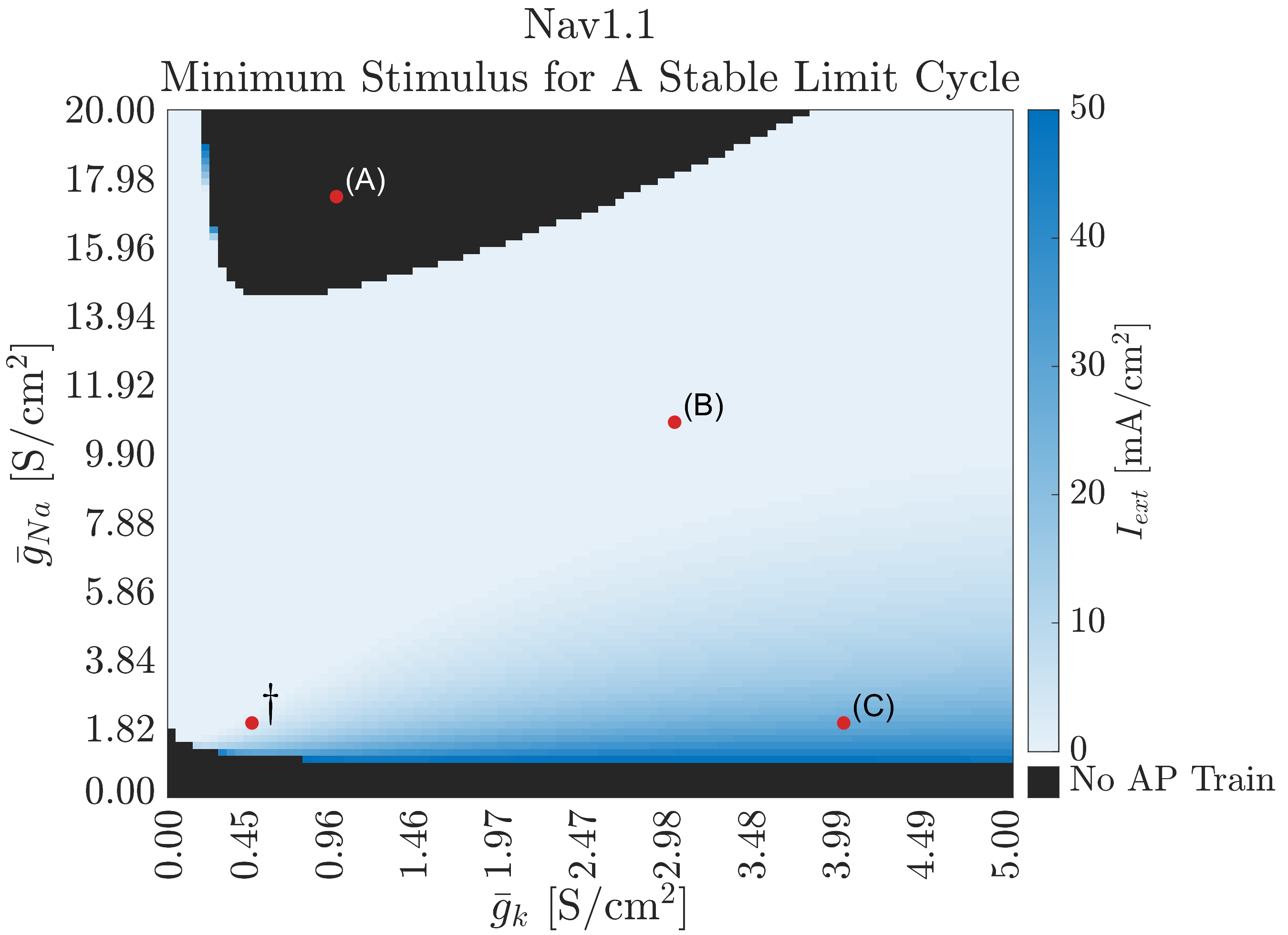
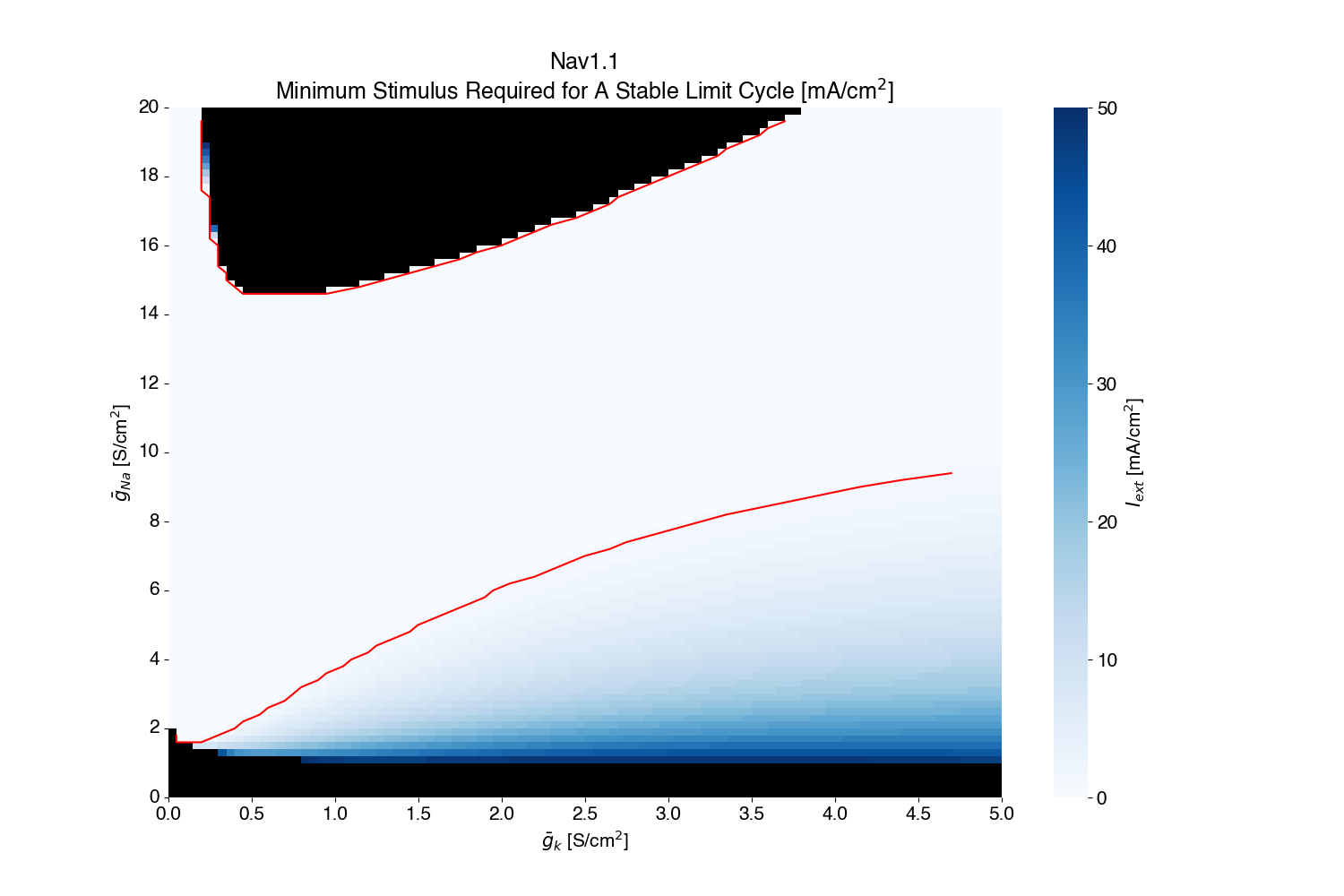
- Methodology Applies bifurcation theory and local stability analysis to map 'excitable landscapes' across the (g_Na, g_K) parameter space, visualizing regions supporting stable oscillatory behavior.
- Biology Quantitatively ranks NaV isoforms by their supported excitable regimes, identifying NaV1.3, 1.4, and 1.6 as broadly supportive and NaV1.7 and 1.9 as minimally oscillatory.
主要结论
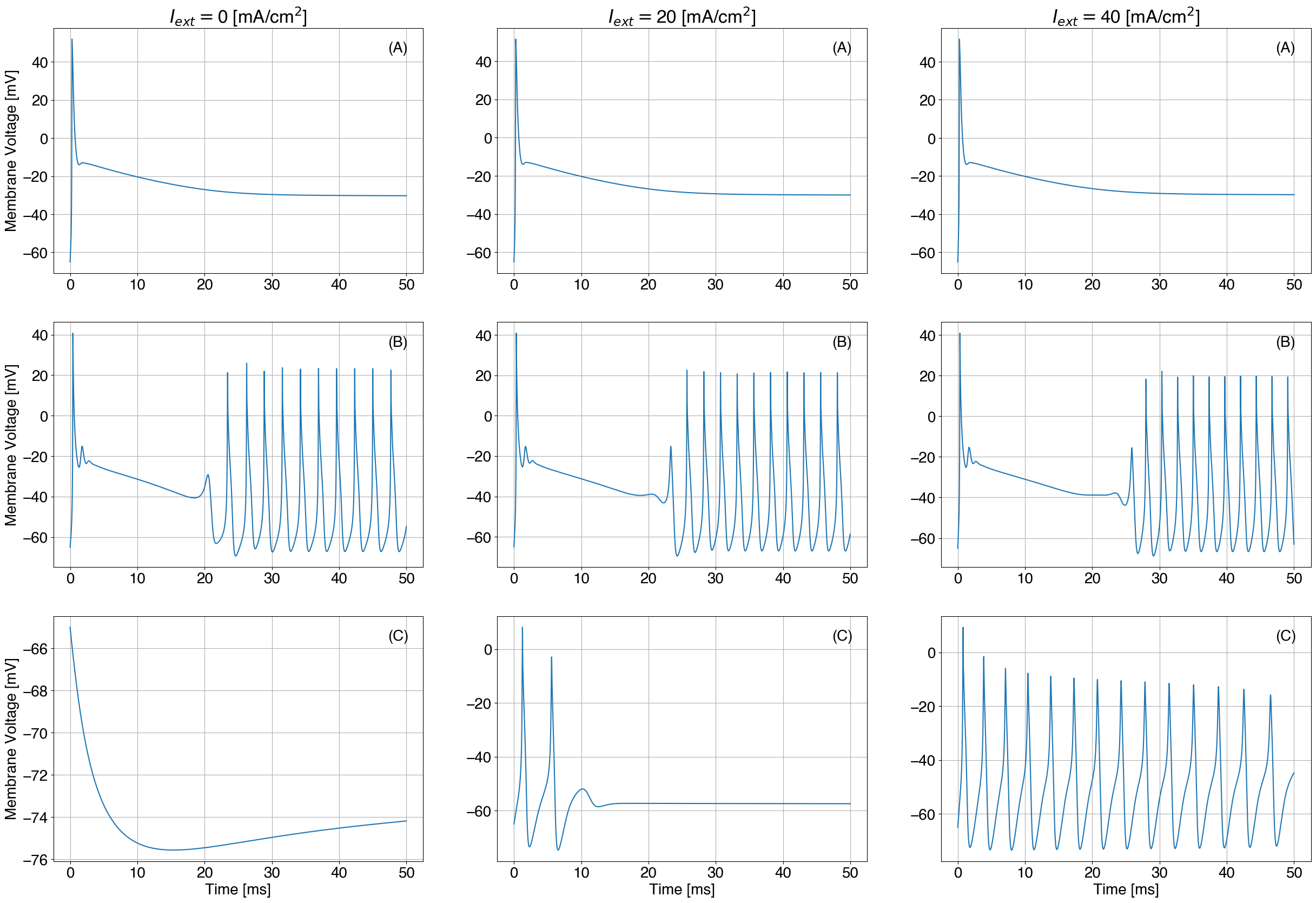
- Isoforms NaV1.3, NaV1.4, and NaV1.6 support the broadest parameter regions for stable limit cycles (oscillatory firing), indicating their robustness in sustaining action potential trains.
- Isoforms NaV1.7 and NaV1.9 exhibit minimal oscillatory behavior across the tested conductance parameter space, correlating with their specialized roles in peripheral nociception.
- The hybrid Markov-HH modeling and stability analysis framework successfully narrows the vast parameter search space for designing synthetic excitable systems, moving from trial-and-error to principled design.
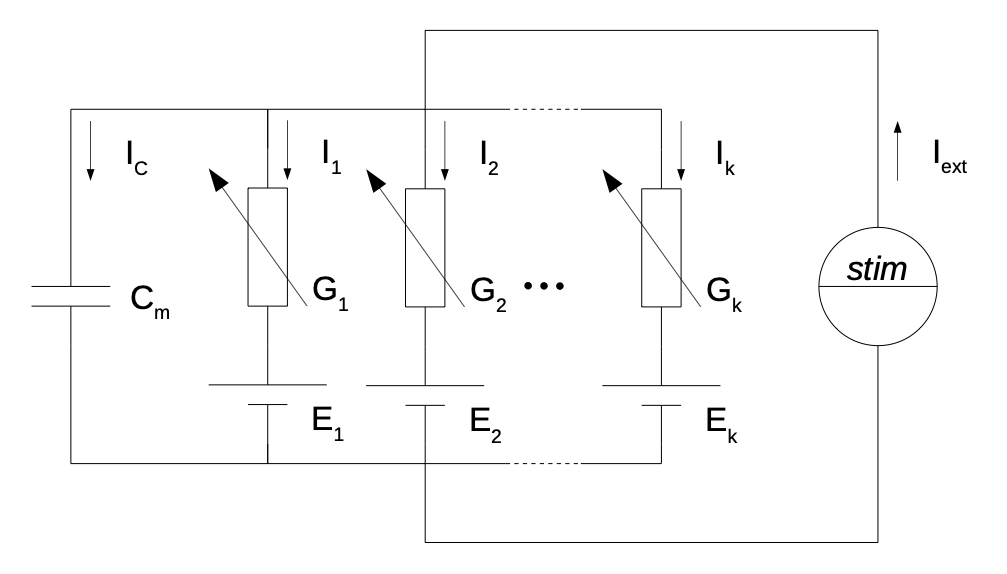
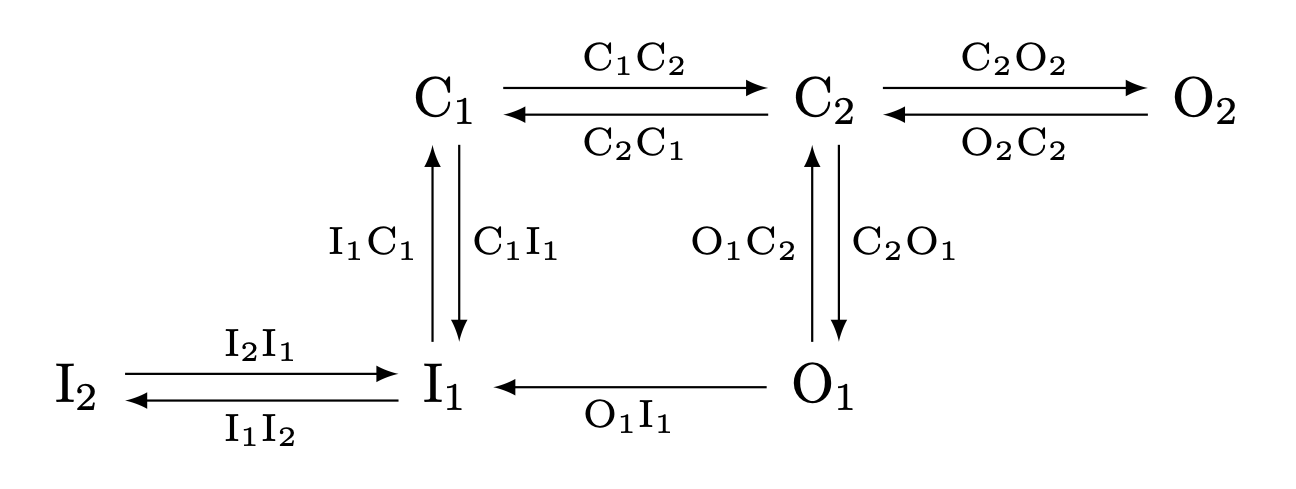
摘要: We investigate a conductance‑based neuron model to explore how voltage‑gated ion channel isoforms influence action‑potential generation. The model combines a six‑state Markov representation of NaV channels with a first‑order KV3.1 model, allowing us to vary maximal sodium and potassium conductances and compare nine NaV isoforms. Using bifurcation theory and local stability analysis, we map regions of stable limit cycles and visualize excitability landscapes via heatmap‑based diagrams. These analyses show that isoforms NaV1.3, NaV1.4 and NaV1.6 support broad excitable regimes, while isoforms NaV1.7 and NaV1.9 exhibit minimal oscillatory behavior. Our findings provide insights into the role of channel heterogeneity in neuronal dynamics and may help to guide the design of synthetic excitable systems by narrowing the parameter space needed for robust action‑potential trains.