
Paper List
-
STAR-GO: Improving Protein Function Prediction by Learning to Hierarchically Integrate Ontology-Informed Semantic Embeddings
This paper addresses the core challenge of generalizing protein function prediction to unseen or newly introduced Gene Ontology (GO) terms by overcomi...
-
Incorporating indel channels into average-case analysis of seed-chain-extend
This paper addresses the core pain point of bridging the theoretical gap for the widely used seed-chain-extend heuristic by providing the first rigoro...
-
Competition, stability, and functionality in excitatory-inhibitory neural circuits
This paper addresses the core challenge of extending interpretable energy-based frameworks to biologically realistic asymmetric neural networks, where...
-
Enhancing Clinical Note Generation with ICD-10, Clinical Ontology Knowledge Graphs, and Chain-of-Thought Prompting Using GPT-4
This paper addresses the core challenge of generating accurate and clinically relevant patient notes from sparse inputs (ICD codes and basic demograph...
-
Learning From Limited Data and Feedback for Cell Culture Process Monitoring: A Comparative Study
This paper addresses the core challenge of developing accurate real-time bioprocess monitoring soft sensors under severe data constraints: limited his...
-
Cell-cell communication inference and analysis: biological mechanisms, computational approaches, and future opportunities
This review addresses the critical need for a systematic framework to navigate the rapidly expanding landscape of computational methods for inferring ...
-
Generating a Contact Matrix for Aged Care Settings in Australia: an agent-based model study
This study addresses the critical gap in understanding heterogeneous contact patterns within aged care facilities, where existing population-level con...
-
Emergent Spatiotemporal Dynamics in Large-Scale Brain Networks with Next Generation Neural Mass Models
This work addresses the core challenge of understanding how complex, brain-wide spatiotemporal patterns emerge from the interaction of biophysically d...
Stability analysis of action potential generation using Markov models of voltage‑gated sodium channel isoforms
School of Mathematics and Statistics, Rochester Institute of Technology | School of Physics, Rochester Institute of Technology | School of Physics and Astronomy & School of Mathematics and Statistics, Rochester Institute of Technology
30秒速读
IN SHORT: This work addresses the challenge of systematically characterizing how the high-dimensional parameter space of Markov models for different sodium channel isoforms influences the robustness and excitability of neuronal firing.
核心创新
- Methodology Integrates a six-state Markov model for nine human NaV isoforms with a simplified KV3.1 model, enabling a unified framework for isoform-specific stability analysis.
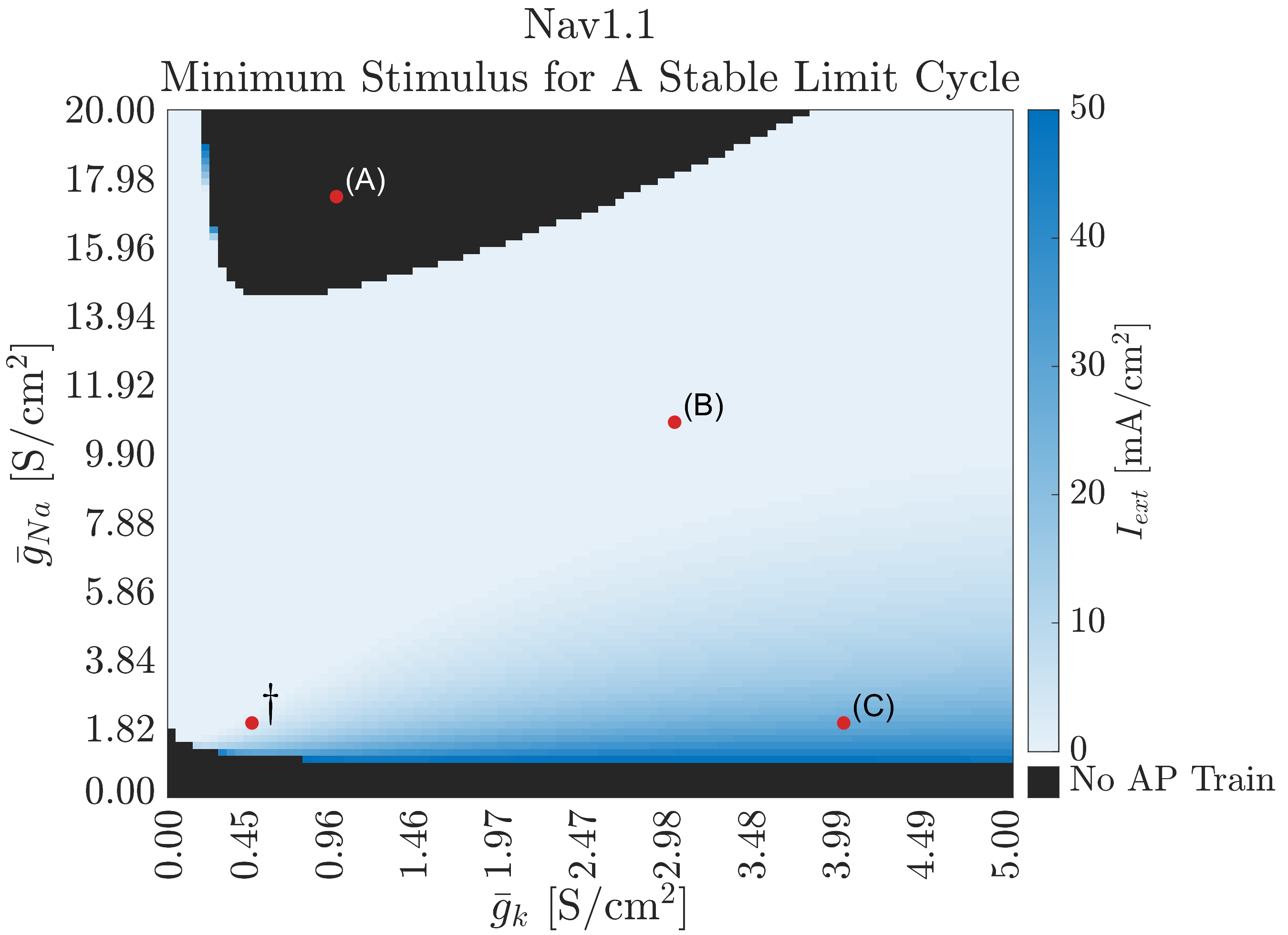
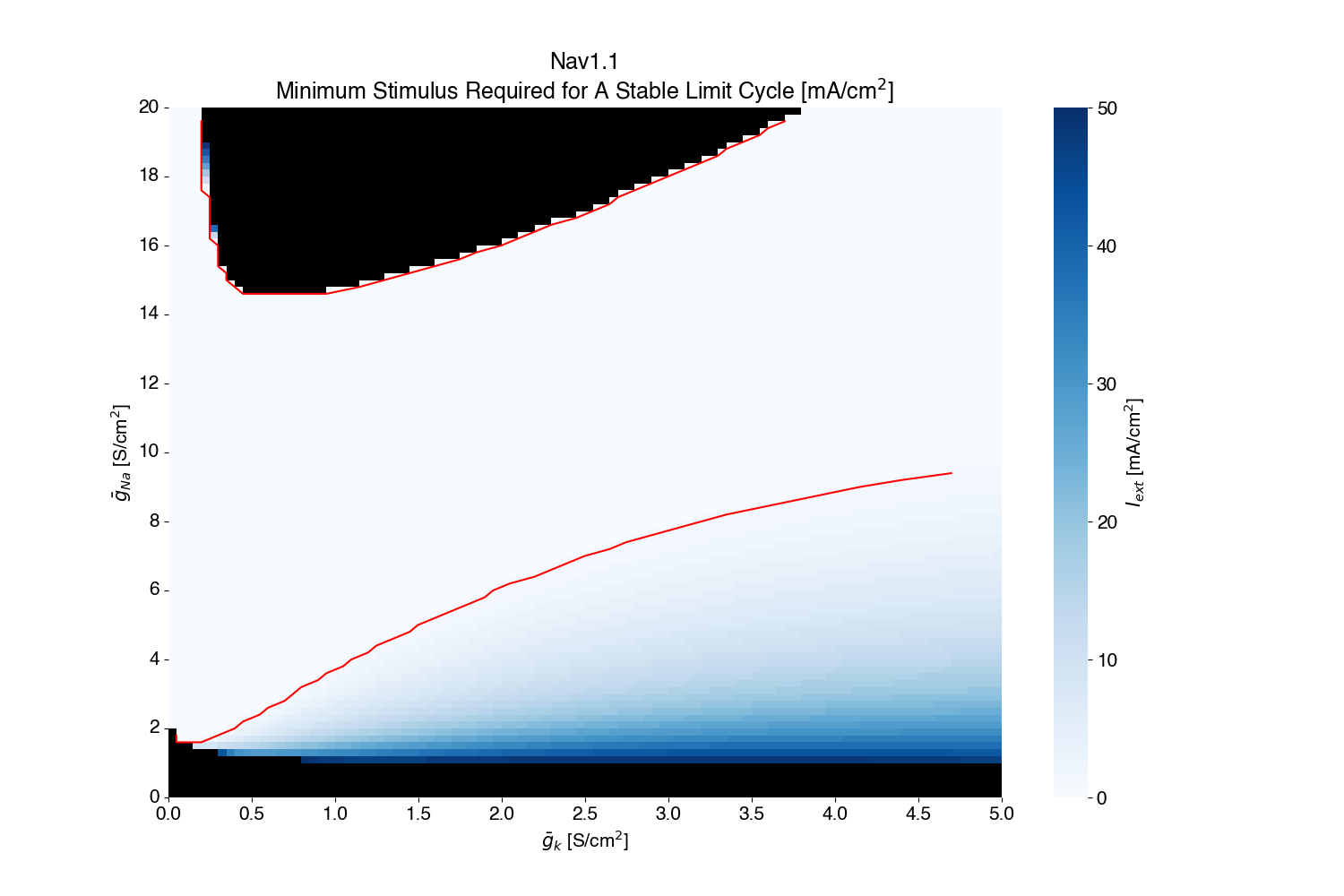
- Methodology Applies bifurcation theory and local stability analysis to map 'excitable landscapes' across the (g_Na, g_K) parameter space, visualizing regions supporting stable oscillatory behavior.
- Biology Quantitatively ranks NaV isoforms by their supported excitable regimes, identifying NaV1.3, 1.4, and 1.6 as broadly supportive and NaV1.7 and 1.9 as minimally oscillatory.
主要结论
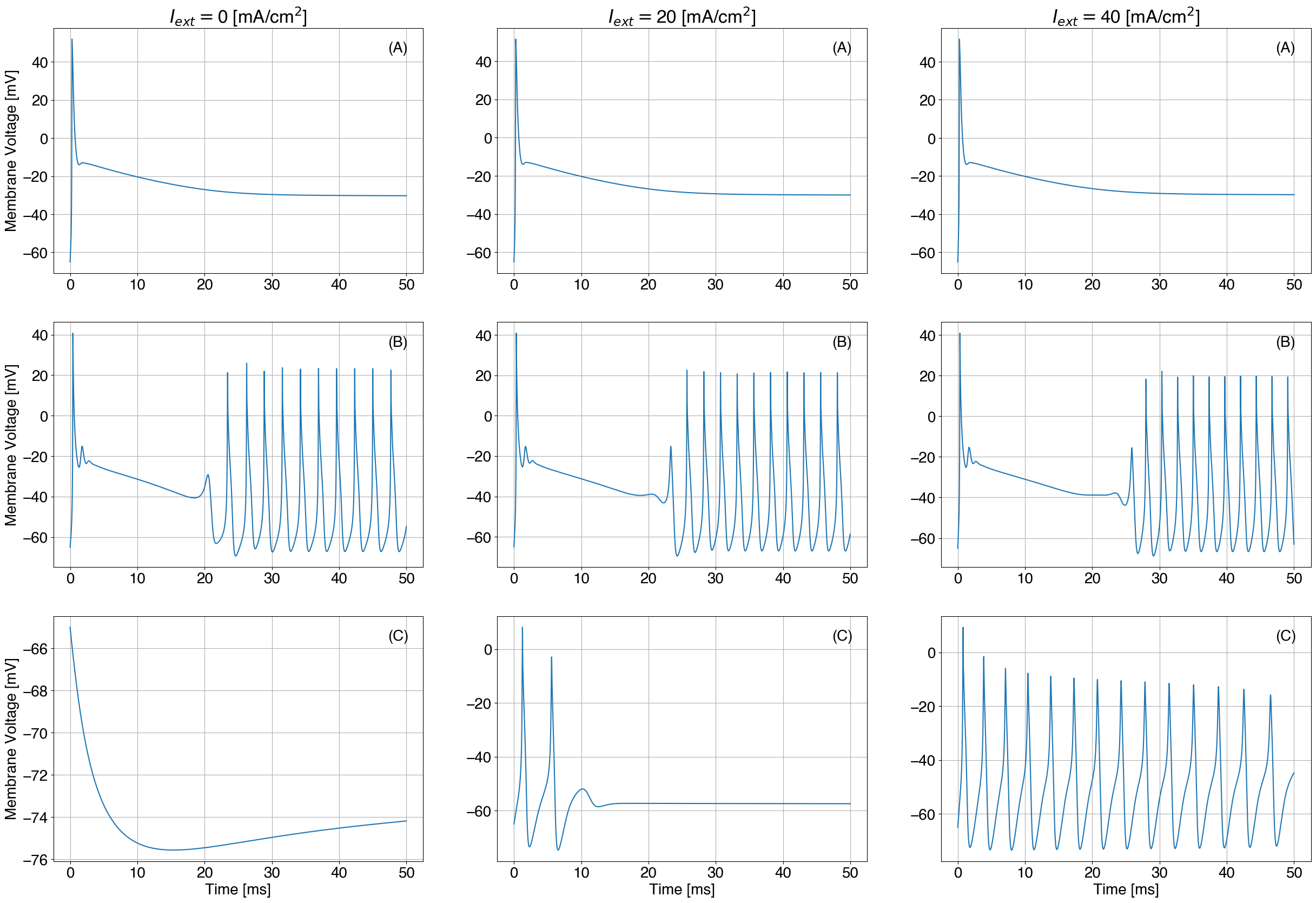
- Isoforms NaV1.3, NaV1.4, and NaV1.6 support the broadest parameter regions for stable limit cycles (oscillatory firing), indicating their robustness in sustaining action potential trains.
- Isoforms NaV1.7 and NaV1.9 exhibit minimal oscillatory behavior across the tested conductance parameter space, correlating with their specialized roles in peripheral nociception.
- The hybrid Markov-HH modeling and stability analysis framework successfully narrows the vast parameter search space for designing synthetic excitable systems, moving from trial-and-error to principled design.
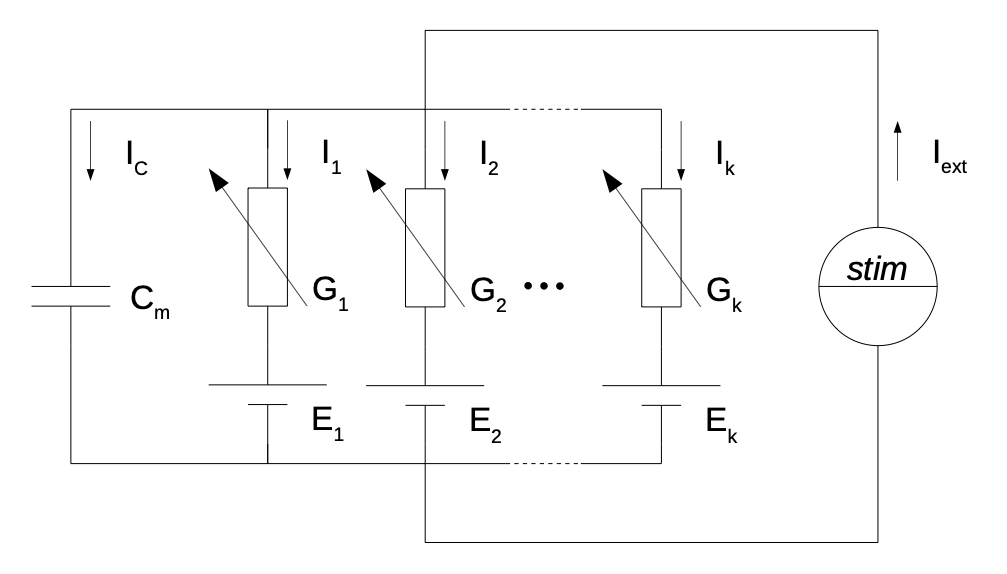
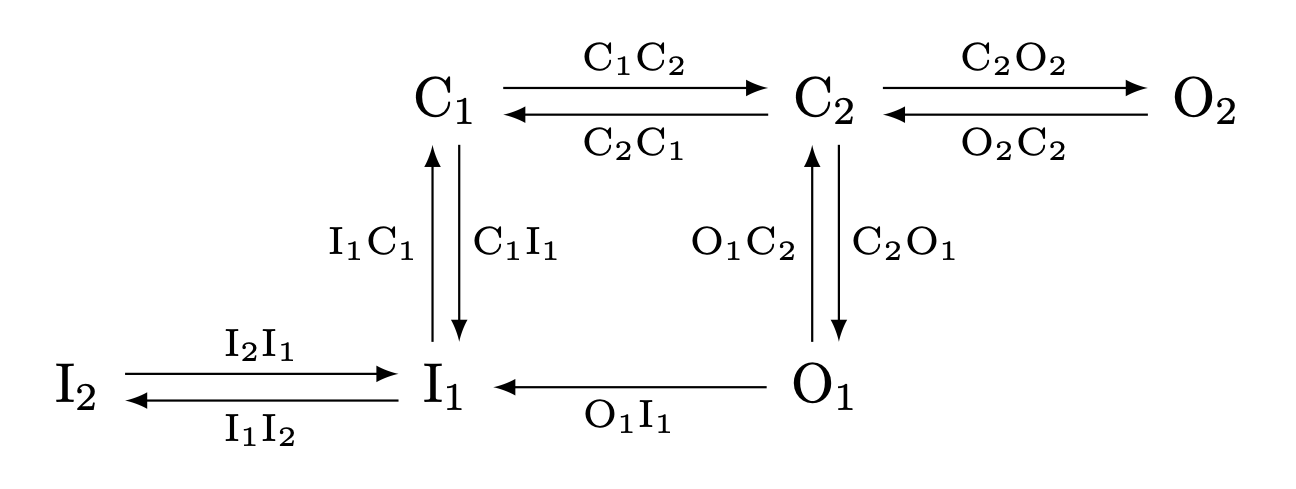
摘要: We investigate a conductance‑based neuron model to explore how voltage‑gated ion channel isoforms influence action‑potential generation. The model combines a six‑state Markov representation of NaV channels with a first‑order KV3.1 model, allowing us to vary maximal sodium and potassium conductances and compare nine NaV isoforms. Using bifurcation theory and local stability analysis, we map regions of stable limit cycles and visualize excitability landscapes via heatmap‑based diagrams. These analyses show that isoforms NaV1.3, NaV1.4 and NaV1.6 support broad excitable regimes, while isoforms NaV1.7 and NaV1.9 exhibit minimal oscillatory behavior. Our findings provide insights into the role of channel heterogeneity in neuronal dynamics and may help to guide the design of synthetic excitable systems by narrowing the parameter space needed for robust action‑potential trains.