
Paper List
-
GOPHER: Optimization-based Phenotype Randomization for Genome-Wide Association Studies with Differential Privacy
This paper addresses the core challenge of balancing rigorous privacy protection with data utility when releasing full GWAS summary statistics, overco...
-
Real-time Cricket Sorting By Sex A low-cost embedded solution using YOLOv8 and Raspberry Pi
This paper addresses the critical bottleneck in industrial insect farming: the lack of automated, real-time sex sorting systems for Acheta domesticus ...
-
Training Dynamics of Learning 3D-Rotational Equivariance
This work addresses the core dilemma of whether to use computationally expensive equivariant architectures or faster symmetry-agnostic models with dat...
-
Fast and Accurate Node-Age Estimation Under Fossil Calibration Uncertainty Using the Adjusted Pairwise Likelihood
This paper addresses the dual challenge of computational inefficiency and sensitivity to fossil calibration errors in Bayesian divergence time estimat...
-
Few-shot Protein Fitness Prediction via In-context Learning and Test-time Training
This paper addresses the core challenge of accurately predicting protein fitness with only a handful of experimental observations, where data collecti...
-
scCluBench: Comprehensive Benchmarking of Clustering Algorithms for Single-Cell RNA Sequencing
This paper addresses the critical gap of fragmented and non-standardized benchmarking in single-cell RNA-seq clustering, which hinders objective compa...
-
Simulation and inference methods for non-Markovian stochastic biochemical reaction networks
This paper addresses the computational bottleneck of simulating and performing Bayesian inference for non-Markovian biochemical systems with history-d...
-
Assessment of Simulation-based Inference Methods for Stochastic Compartmental Models
This paper addresses the core challenge of performing accurate Bayesian parameter inference for stochastic epidemic models when the likelihood functio...
Tissue stress measurements with Bayesian Inversion Stress Microscopy
Institut Jacques Monod, CNRS, Université Paris Cité | Institut Curie, Paris Université Sciences et Lettres | Friedrich-Alexander Universität Erlangen-Nürnberg | Max-Planck-Zentrum für Physik und Medizin | Physique et Mécanique des Milieux Hétérogènes, CNRS, ESPCI Paris

30秒速读
IN SHORT: This paper addresses the core challenge of measuring absolute, tissue-scale mechanical stress without making assumptions about tissue rheology, which is crucial for understanding mechanobiology in complex, heterogeneous tissues.
核心创新
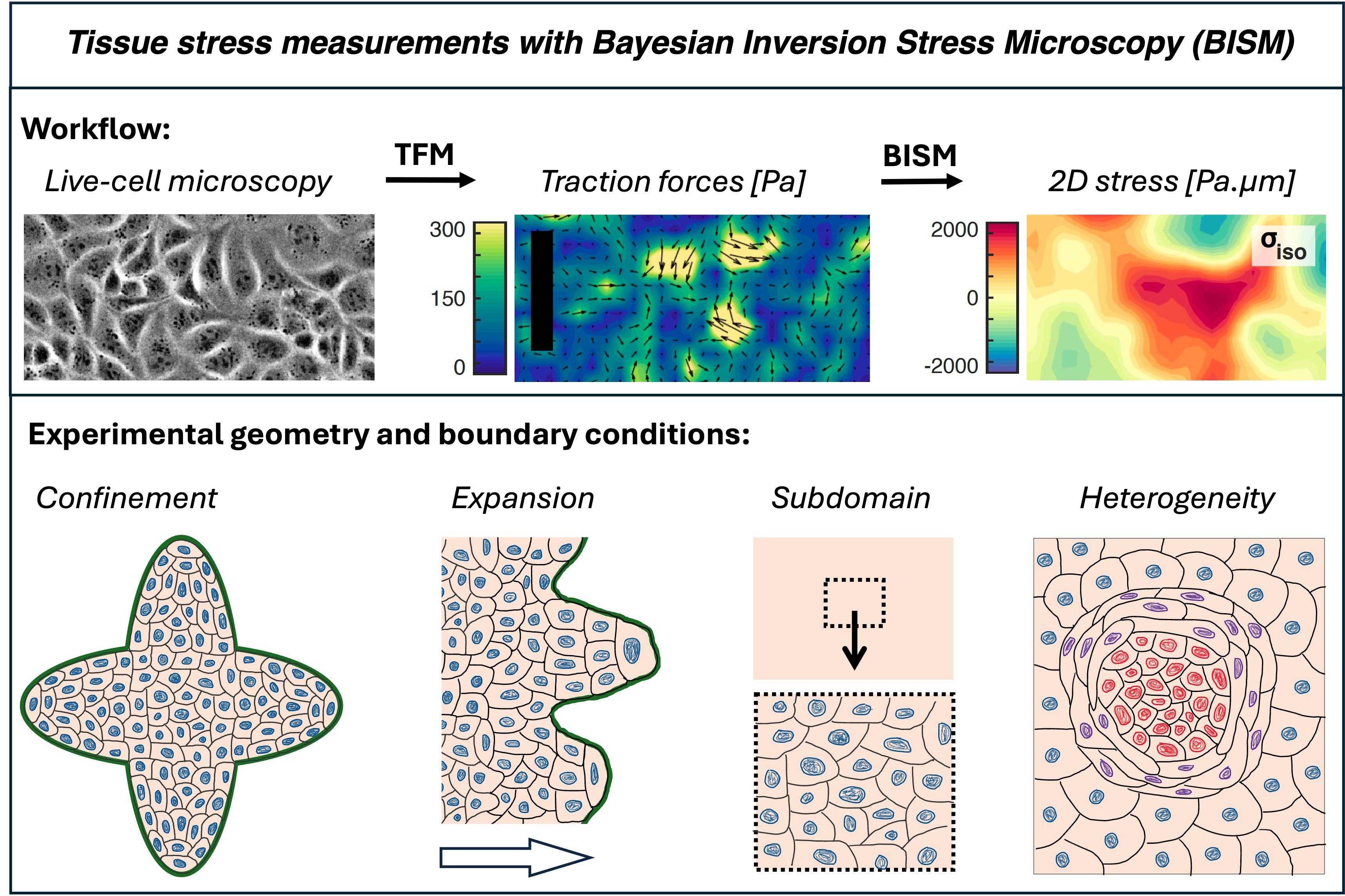
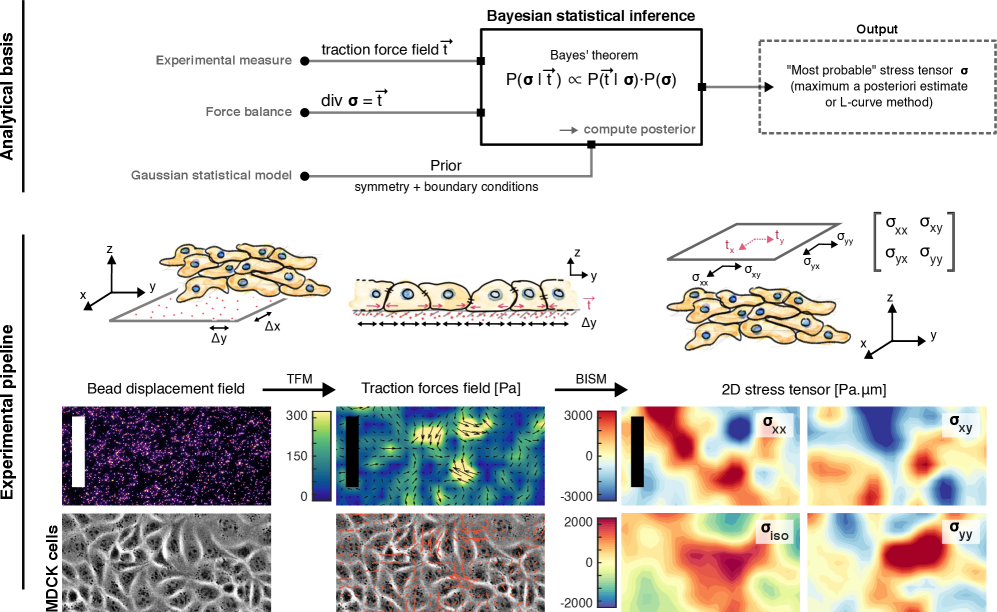
- Methodology Introduces Bayesian Inversion Stress Microscopy (BISM), a method that infers the complete 2D stress tensor (σ_xx, σ_yy, σ_xy) from traction force data by solving an underdetermined inverse problem using Bayesian inference, without requiring rheological assumptions.
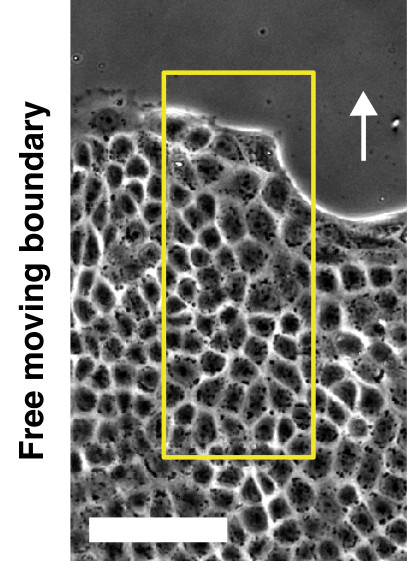
- Methodology Demonstrates robust applicability across diverse experimental geometries and boundary conditions, including confined tissues of arbitrary shape (e.g., star-shaped, elliptic) and systems with free boundaries (e.g., wound healing assays).
- Biology Provides absolute stress measurements, enabling the testing of fundamental assumptions in tissue mechanics. For example, it shows that a fourfold increase in cell density does not necessarily lead to compressive stress (mean tension decreased by a factor of three but remained positive), challenging the simple density-stress paradigm.
主要结论
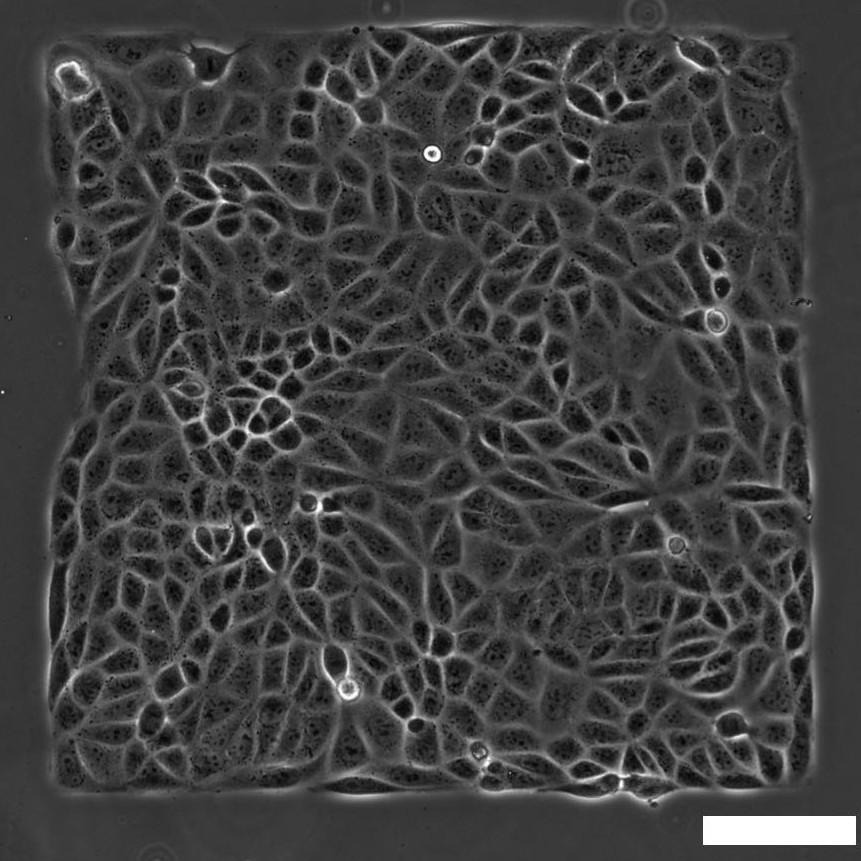
- BISM provides absolute stress measurements validated against traction force moments. In a confined square MDCK monolayer, inferred mean isotropic stress (⟨σ_iso_inf⟩ = 7.76 kPa·μm) closely matched the calculated true value (⟨σ_iso_true⟩ = 7.77 kPa·μm), with a coefficient of determination R_t² = 1.0.
- The method is geometry-agnostic. Applied to a star-shaped MDCK island, BISM inferred stresses (e.g., ⟨σ_iso_inf⟩ = 1.57 kPa·μm) that excellently agreed with traction force moments (⟨σ_iso_true⟩ = 1.56 kPa·μm), demonstrating reliability in arbitrary confined shapes.
- BISM reveals a linear relationship between mean tissue tension and mean traction force amplitude (slope ~15.5 μm, on the order of a cell diameter), providing a quantitative link between external cell-substrate forces and internal tissue stress.
摘要: Cells within biological tissue are constantly subjected to dynamic mechanical forces. Measuring the internal stress of tissues has proven crucial for our understanding of the role of mechanical forces in fundamental biological processes like morphogenesis, collective migration, cell division or cell elimination and death. Previously, we have introduced Bayesian Inversion Stress Microscopy (BISM), which is relying on measuring cell-generated traction forces in vitro and has proven particularly useful to measure absolute stresses in confined cell monolayers. We further demonstrate the applicability and robustness of BISM across various experimental settings with different boundary conditions, ranging from confined tissues of arbitrary shape to monolayers composed of different cell types. Importantly, BISM does not require assumptions on cell rheology. Therefore, it can be applied to complex heterogeneous tissues consisting of different cell types, as long as they can be grown on a flat substrate. Finally, we compare BISM to other common stress measurement techniques using a coherent experimental setup, followed by a discussion on its limitations and further perspectives.